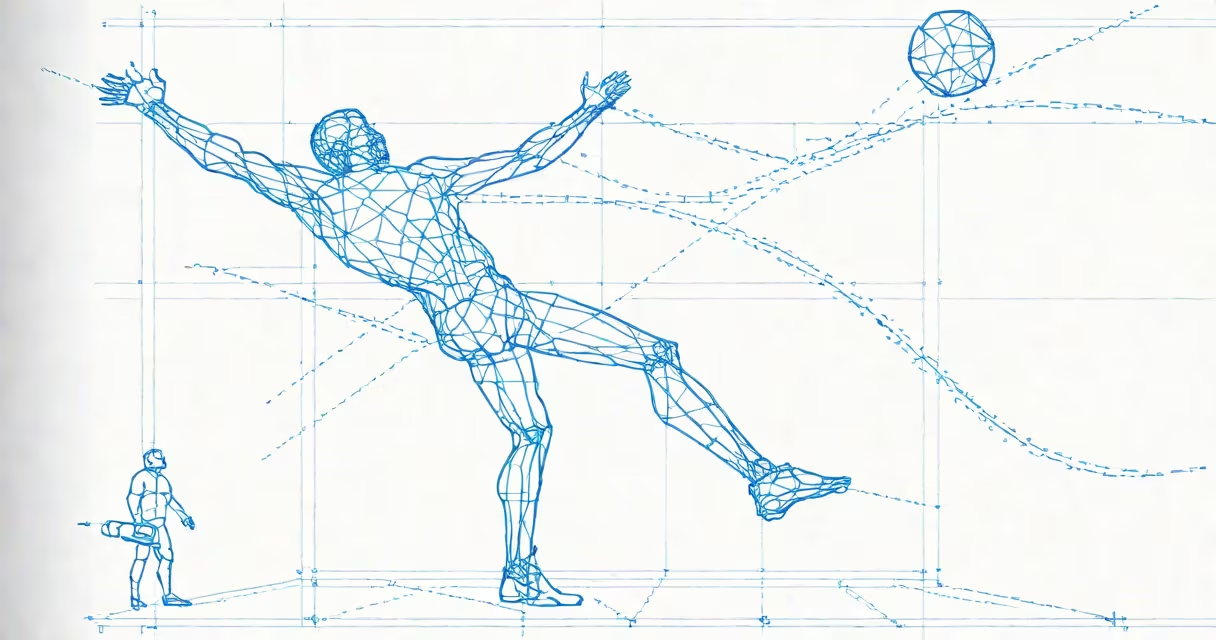
Abduction is the anatomical term for the movement of a limb or body part away from the body's central axis, typically performed at a joint such as the shoulder or hip. This motion occurs in the frontal plane and is essential for daily activities like reaching, walking, and maintaining balance.
Abduction is distinct from adduction, which brings a limb toward the midline. For example, raising your arm sideways from your side is abduction; lowering it back down is adduction. These movements are fundamental in physical examination and rehabilitation planning.
The term originates from Latin *abducere*, meaning "to lead away." In clinical settings, abduction is quantified using a goniometer, a tool measuring joint angles. Normal shoulder abduction ranges from 0° to 180°, with deficits indicating injury or disease.
Abduction occurs when muscles contract to move a limb laterally. In the shoulder, the deltoid muscle-the primary abductor-contracts to lift the arm away from the torso. The supraspinatus initiates the motion, while the trapezius stabilizes the scapula during elevation.
In the hip, abduction involves the gluteus medius and minimus. These muscles stabilize the pelvis during walking. Weakness in these muscles leads to a Trendelenburg gait, where the pelvis drops on the opposite side during stance phase.
Neurological conditions affecting motor control can impair abduction. Stroke patients often show reduced shoulder abduction on the affected side. Physical therapists assess abduction strength using manual muscle testing, grading from 0 (no contraction) to 5 (full resistance).
Abduction applies to multiple joints and body regions. The most common sites include the shoulder, hip, fingers, and toes. Each has specific functional roles and clinical relevance.
| Joint/Body Part | Normal Range | Clinical Relevance |
|---|---|---|
| Shoulder | 0°-180° | Restricted motion may indicate rotator cuff tear or adhesive capsulitis (frozen shoulder). |
| Hip | 0°-45° | Reduced abduction correlates with hip arthritis or labral tears. |
| Fingers | 0°-60° (each finger) | Loss of finger abduction suggests median nerve compression or hand trauma. |
| Toes | 0°-30° | Toe abduction deficits may signal peripheral neuropathy. |
A 2020 study published in *The Journal of Orthopaedic Research* found that patients with rotator cuff injuries had a mean shoulder abduction deficit of 37° compared to healthy controls. This objective measurement aids in diagnosing and monitoring recovery.
Abduction is frequently confused with extension, especially in the shoulder. Extension moves the arm backward along the sagittal plane, while abduction moves it sideways. A patient who says "I can't raise my arm above my head" may be describing limited flexion or extension, not abduction.
Another error is equating abduction with external rotation. While both occur at the shoulder, they involve different planes. Abduction is frontal-plane motion; external rotation occurs in the transverse plane. For example, rotating your arm outward so your palm faces backward is external rotation-not abduction.
Some assume abduction only applies to limbs. However, facial abduction exists in the form of jaw opening. The temporomandibular joint allows the mandible to move downward and laterally during chewing, though this is rarely labeled as "abduction" in standard terminology.
A 58-year-old woman presented with right shoulder pain and difficulty lifting her arm above her head. On exam, passive shoulder abduction was limited to 90°, while active abduction dropped to 60°. Strength testing revealed grade 3/5 abduction against resistance.
Imaging showed a partial-thickness tear of the supraspinatus tendon. The patient underwent physical therapy focusing on strengthening the deltoid and scapular stabilizers. After six weeks, active abduction improved to 150°, and she reported reduced pain during overhead tasks.
This case illustrates how abduction assessment guides diagnosis and treatment. Without precise terminology, clinicians might mislabel the issue as "shoulder stiffness" rather than identifying a specific rotator cuff deficiency.
During a routine physical, I observed a patient struggling to raise her arms to comb her hair. Her abduction was limited bilaterally. Further evaluation revealed early-stage rheumatoid arthritis. Early detection through movement analysis prevented irreversible joint damage.
Abduction remains a core concept in clinical medicine, guiding diagnosis, treatment, and rehabilitation. Its precise definition ensures accurate communication among healthcare providers and improves patient outcomes.