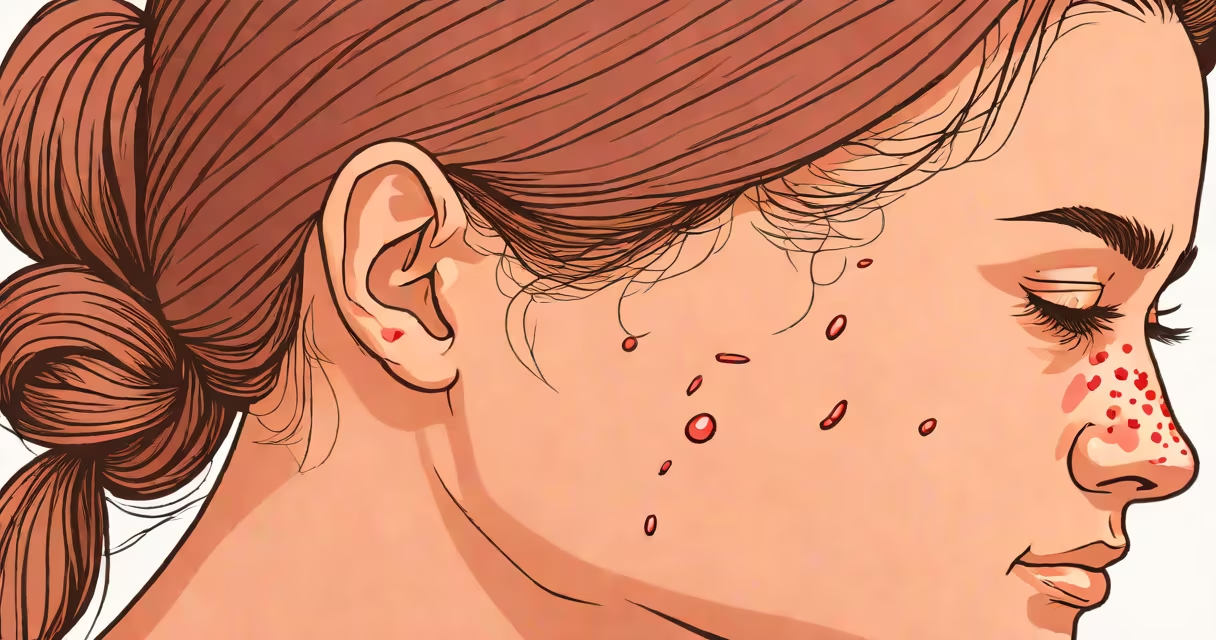
Seborrheic dermatitis happens when an overgrowth of Malassezia yeast on oily skin triggers inflammation and flaking, especially in areas rich in sebaceous glands like the scalp, face, and chest. This condition results from a mix of genetic predisposition, abnormal immune responses to yeast, and compromised skin barrier function.
Malassezia is a type of fungus naturally present on human skin. In people with seborrheic dermatitis, this yeast metabolizes sebum into irritating fatty acids. These compounds disrupt the skin's protective barrier and activate immune cells, leading to redness, itching, and flaking. The condition often worsens during cold, dry weather or periods of high stress, which further weaken skin defenses.
Research shows that individuals with seborrheic dermatitis have higher levels of inflammatory cytokines like IL-1β and TNF-α in affected skin. A 2021 study published in *The Journal of Investigative Dermatology* confirmed that Malassezia-specific IgE antibodies are elevated in patients, indicating a heightened allergic-type immune reaction. This immune overdrive explains why symptoms flare even with stable yeast levels.
Seborrheic dermatitis begins with excess sebum production, common in adolescence and early adulthood. Sebaceous glands secrete lipids that feed Malassezia yeasts. As the yeast population grows, it converts triglycerides in sebum into free fatty acids-especially oleic acid-which penetrate the skin and trigger inflammation.
These fatty acids damage keratinocytes, the primary cells in the outer skin layer. Damaged cells die faster and shed prematurely, forming visible scales. The process is not simply "dandruff"-it's a chronic inflammatory state driven by microbial imbalance and host sensitivity.
A 2019 clinical review in *Dermatologic Clinics* noted that 60% of adult cases occur between ages 20 and 50, peaking around age 30. Flares are more frequent in people with neurological conditions such as Parkinson's disease, possibly due to altered sebum composition and reduced skin immunity.
Several factors increase risk, though none alone cause the condition. The most significant include:
One non-obvious fact: Malassezia species are not universally harmful. In healthy individuals, they maintain microbial balance. But in susceptible people, their metabolic byproducts become irritants. This distinction separates normal flora from pathogenic overgrowth.
Many assume seborrheic dermatitis stems from poor hygiene. That's incorrect. The condition persists despite regular washing because it's rooted in biology, not cleanliness. In fact, harsh shampoos can worsen flaking by stripping natural oils and disrupting the skin barrier.
Another confusion: seborrheic dermatitis versus psoriasis. Both cause scaling, but psoriasis features thick, silvery plaques and affects knees, elbows, and lower back. Seborrheic dermatitis is limited to sebum-rich zones and typically presents with yellowish, greasy flakes.
Also, while dandruff is a mild form of seborrheic dermatitis, not all dandruff progresses to severe flaring. The transition depends on immune reactivity and yeast strain variation. Some Malassezia strains produce more inflammatory byproducts than others.
A 34-year-old man presented with persistent scaly patches on his scalp, eyebrows, and behind ears. He reported worsening during winter months and after sleep deprivation. Skin biopsy showed spongiosis (fluid buildup between cells), increased neutrophils, and abundant Malassezia hyphae in follicular openings.
He was treated with a ketoconazole shampoo twice weekly and a low-potency topical corticosteroid for two weeks. After four weeks, flaking reduced by 80%, and redness resolved. His symptoms returned when he stopped treatment, confirming the chronic nature of the condition.
This case illustrates that long-term management is needed. Symptoms don't vanish with one treatment cycle. Maintenance therapy prevents relapse.
Self-management works for mild cases. Over-the-counter shampoos containing zinc pyrithione, selenium sulfide, or coal tar can control flaking. For moderate to severe cases, prescription antifungals or corticosteroids are necessary.
Why does seborrheic dermatitis happen? It arises from a complex interaction between Malassezia yeast, individual immune response, and skin barrier integrity. The condition is not caused by dirt or poor hygiene. Instead, it reflects a biological imbalance in sebum-rich areas. Recognizing triggers and seeking appropriate care reduces flare frequency and improves quality of life.