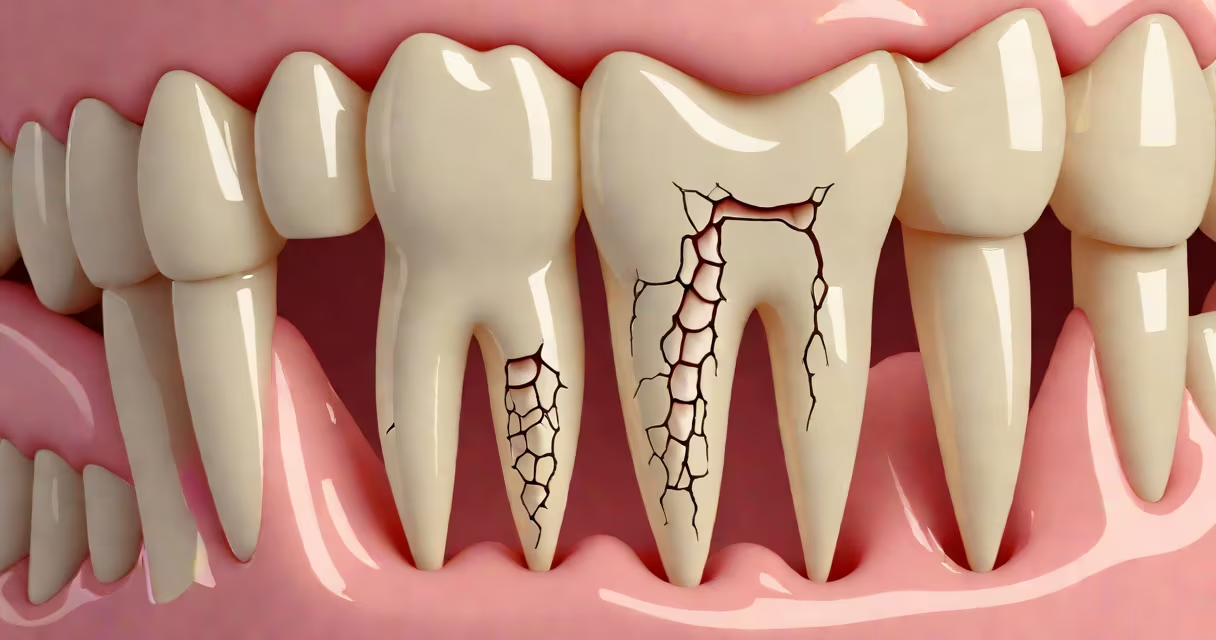
Cracks in teeth develop when the hard outer layer-enamel-fractures due to pressure, wear, or trauma. These cracks may extend into dentin or deeper, causing pain, sensitivity, or structural failure. They're not always visible to the naked eye and often progress silently.
Tooth cracks form when forces exceed the strength of enamel and underlying dentin. Enamel resists compression well but fractures under shear or bending stress. Common triggers include biting hard objects, clenching during sleep, or sudden temperature changes. A single incident-like chewing ice or hitting a hard piece of food-can initiate a crack. Over time, repetitive stress weakens the tooth structure, leading to microfractures that grow larger.
Not all cracks require treatment, but untreated ones can lead to infection, nerve damage, or tooth loss. Early signs include sharp pain when chewing, sensitivity to hot or cold, or discomfort when biting down. Some people feel a slight "catch" with their tongue when running it along the tooth's edge. Because cracks often start beneath the gumline or within the crown, they may go unnoticed until symptoms worsen.
Teeth endure daily forces: chewing, grinding, and temperature shifts. Enamel, while strong, is brittle. When pressure exceeds its tensile strength, it fractures. This typically happens at points of stress concentration-such as cusps (the raised parts of molars) or existing fillings.
A study published in the Journal of Prosthetic Dentistry found that 68% of cracked teeth were associated with bruxism (tooth grinding), especially in adults aged 30-50. The constant lateral forces from grinding wear down enamel and create stress lines that eventually fracture. Another common cause is thermal shock-drinking hot coffee then immediately eating ice cream. Rapid expansion and contraction of tooth materials can trigger microcracks.
Cracks don't always appear suddenly. Some begin as tiny, invisible fissures in enamel. As chewing continues, the crack propagates through dentin-the softer layer beneath enamel-increasing pain and risk of pulp exposure. Once the inner pulp becomes involved, infection can set in, requiring root canal therapy or extraction.
Not all cracks are the same. They vary by location, depth, and pattern. Understanding the type helps determine severity and treatment.
| Type | Location | Symptoms | Treatment |
|---|---|---|---|
| Fissure | Enamel only, usually on molar chewing surfaces | Occasional pain when chewing; may feel like a small chip | Sealant or filling; rarely requires removal |
| Craze Line | Superficial enamel cracks; common in adults | Visible as fine lines; no pain or sensitivity | Usually cosmetic; no treatment needed |
| Vertical Crack | From crown toward root; may split tooth | Pain when biting; sensitivity to temperature | Root canal + crown; extraction if split |
| Split Tooth | Complete separation of tooth halves | Severe pain; mobility; may bleed | Extraction or surgical repair; high failure rate |
One non-obvious fact: craze lines-superficial cracks in enamel-are extremely common. Research from the American Dental Association shows that over 90% of adults over 40 have at least one craze line. These are harmless and don't affect function. However, they can be mistaken for decay or early cavities during exams.
Another distinction: a cracked tooth is not the same as a chipped tooth. A chip involves loss of tooth material, often from trauma. A crack runs through the tooth structure. Chips may heal with bonding; cracks require intervention to prevent progression.
Many assume that tooth cracks only happen from accidents. But chronic habits like nail-biting, using teeth to open packages, or chewing on pens contribute. A 2021 study in the Journal of Oral Rehabilitation found that 43% of patients with cracked teeth reported habitual tooth use beyond chewing.
Some people think pain only occurs when biting down. But persistent sensitivity to cold drinks or air drafts can signal a crack. The nerve inside the tooth reacts to stimuli that pass through the crack. If you feel a dull ache that lingers after eating or drinking, it may indicate pulp involvement.
I once examined a patient who reported intermittent jaw pain and a "loose" feeling in a molar. On x-ray, there was no decay. Under magnification, a thin vertical crack extended from the crown into the root. The tooth had no visible damage. Only the patient's symptom history-pain when chewing, relieved by stopping-led to diagnosis. This case highlights that cracks often hide until symptoms escalate.
If you experience consistent pain when chewing, sensitivity to temperature, or notice a visible line on a tooth, see a dentist. Delaying care increases the chance of irreversible damage. A dentist uses tools like transillumination (shining light through the tooth) or dye staining to detect cracks invisible to the naked eye.
Prevention focuses on reducing mechanical stress. Wear a night guard if you grind your teeth-this reduces force on molars by up to 70%, according to the American Academy of Sleep Medicine. Avoid chewing ice, hard candy, or popcorn kernels. Use scissors or bottle openers instead of teeth.
For those with existing cracks, treatment depends on depth. Superficial cracks may be sealed with resin. Deeper cracks often require a crown to stabilize the tooth. If the pulp is exposed, root canal therapy removes infected tissue and prevents abscesses. In severe cases, extraction is necessary.
Ignoring a crack can lead to spreading infection, bone loss, or tooth loss. One patient I treated had a vertical crack that went undiagnosed for six months. By the time he sought care, the tooth had to be extracted. He later said, "I thought it was just sensitivity."