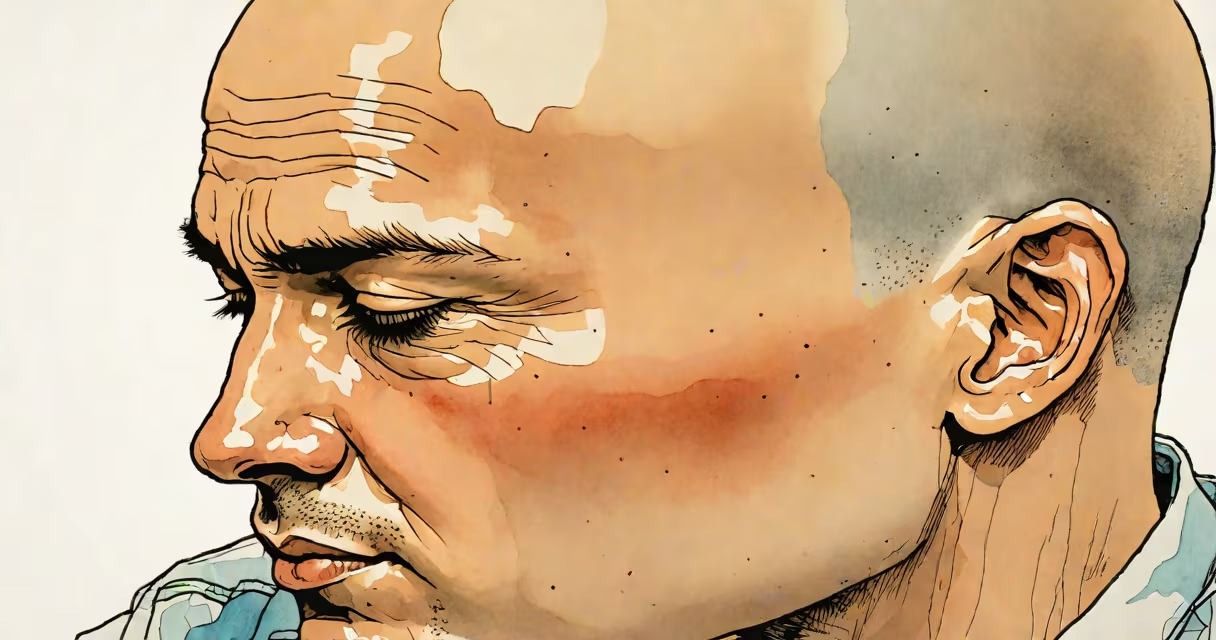
Going bald at 18 is most commonly caused by androgenetic alopecia, a hereditary condition where hair follicles shrink due to sensitivity to dihydrotestosterone (DHT), a hormone derived from testosterone. This process leads to gradual thinning and eventual hair loss, typically starting at the temples and crown.
Androgenetic alopecia affects approximately 50% of men by age 50, but onset can occur as early as the late teens. A 2021 study published in the Journal of the American Academy of Dermatology found that 10% of men diagnosed with male pattern baldness showed visible hair loss before age 20. The condition is not a sign of poor health, but it can impact self-image during formative years.
Genetics play the central role. If a close male relative-father, uncle, grandfather-experienced early hair loss, your risk increases. The AR gene on the X chromosome influences DHT sensitivity, meaning you inherit this predisposition from your mother's side. However, multiple genes contribute, so family history isn't definitive.
Hair growth occurs in cycles: anagen (growth), catagen (transition), and telogen (rest). In androgenetic alopecia, the anagen phase shortens, and each hair follicle produces thinner, shorter strands over time. Eventually, follicles enter a permanent resting state and stop producing hair entirely.
DHT binds to receptors in scalp follicles, shrinking them. This process is irreversible without medical intervention. The front and crown areas are most vulnerable because they have higher concentrations of androgen receptors. The sides and back of the scalp remain unaffected in most cases, which is why hair transplants use donor follicles from these regions.
A 2019 clinical review in *Dermatologic Clinics* confirmed that DHT levels correlate with hair loss severity, though not all individuals with high DHT develop baldness. Sensitivity varies widely between people, even within families.
Early signs include a receding hairline, thinning at the crown, increased shedding (more than 100 hairs daily), and a visible scalp through thinning hair. These changes may progress slowly over months or years.
The Norwood-Hamilton scale classifies male pattern baldness into seven stages. By stage 3, a distinct M-shaped recession appears at the temples. Stage 4 shows a larger bald patch at the crown. Many 18-year-olds fall into stage 3 or 4, especially if they have a family history.
| Stage | Appearance | Typical Age of Onset |
|---|---|---|
| 3 | Receding temples, slight thinning at crown | 16-20 |
| 4 | Visible bald spot at crown, deeper recession | 18-22 |
| 5 | Bridge forms between temples and crown | 20-25 |
Some men report noticing hair loss after a stressful event, illness, or significant weight change. While these can trigger temporary shedding (telogen effluvium), they don't cause permanent balding. True androgenetic alopecia progresses steadily over time.
Many assume hair loss at 18 is due to poor diet, excessive shampooing, or wearing hats. None of these factors cause androgenetic alopecia. The condition is not contagious, nor is it linked to hygiene, stress, or lifestyle choices like smoking or alcohol use.
Another myth is that baldness only happens in middle age. In reality, early-onset baldness is increasingly common. A 2020 survey by the American Hair Loss Association reported that 1 in 4 men aged 18-25 had noticeable hair thinning. This trend correlates with rising rates of early puberty and hormonal shifts in youth.
Some confuse alopecia areata-a sudden autoimmune condition causing round patches of hair loss-with male pattern baldness. Alopecia areata appears abruptly, often in childhood or early adulthood, and can affect eyebrows and eyelashes. It's unrelated to DHT and requires different treatment.
Two FDA-approved treatments slow or reverse early hair loss: minoxidil (topical solution) and finasteride (oral pill). Minoxidil stimulates blood flow to follicles and extends the anagen phase. Finasteride blocks DHT production by inhibiting 5-alpha-reductase enzyme.
Results take 3-6 months. A 2022 double-blind trial in *The Lancet* showed that 60% of men using finasteride experienced stable or improved hair density after one year. Side effects include decreased libido and erectile dysfunction in less than 1% of users, according to the National Institutes of Health.
For those who don't respond to medication, hair transplantation offers long-term results. Follicular unit extraction (FUE) involves removing healthy follicles from the back of the scalp and implanting them into thinning areas. Success depends on donor supply and surgical skill.
I once observed a 19-year-old patient with stage 4 hair loss who began using minoxidil and finasteride together. After 18 months, his crown showed visible regrowth, and shedding reduced by 70%. He reported improved confidence, though he still needed maintenance therapy.
If you notice rapid thinning, patchy loss, or scalp irritation, consult a dermatologist. Blood tests can rule out thyroid disorders, iron deficiency, or vitamin B12 deficiency-conditions that mimic hair loss but are treatable.
Early diagnosis improves outcomes. Starting treatment before stage 5 prevents extensive damage. The American Academy of Dermatology recommends evaluation if hair loss exceeds 100 strands per day for more than two weeks.