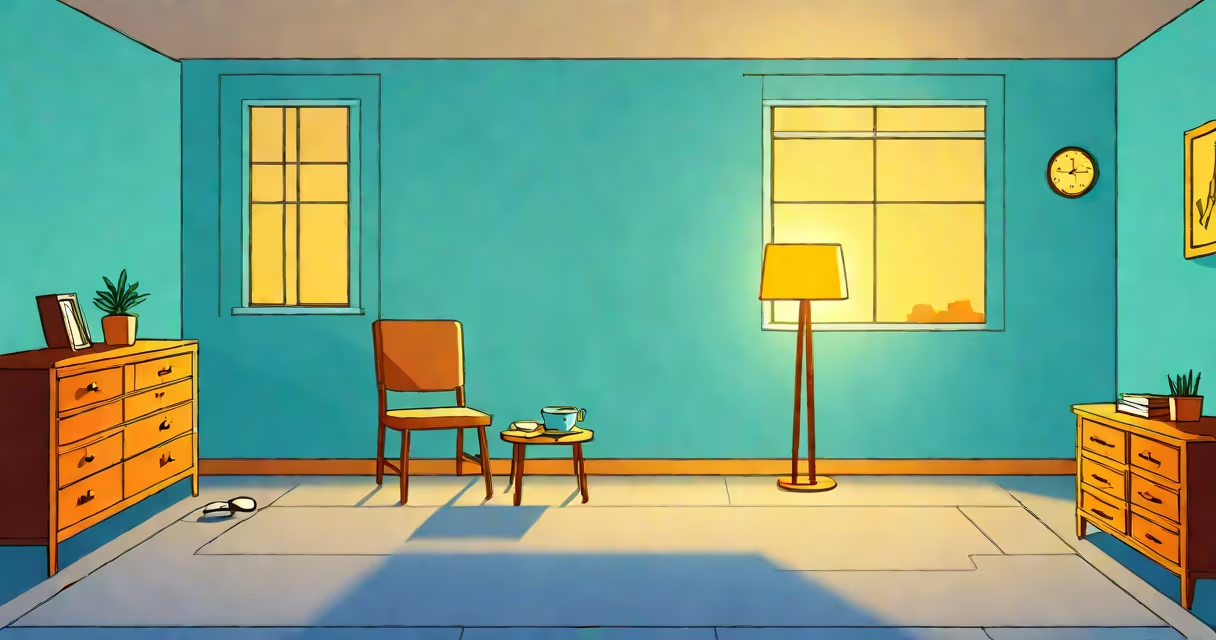
A sad light is a low-intensity, cool-toned illumination that creates a sense of stillness, solitude, or emotional weight. It typically uses blue, gray, or muted indigo hues and avoids brightness or warmth. This lighting style doesn't just affect visibility-it influences mood, perception, and narrative tone.
Sad lights are not a single technical standard but a visual and emotional concept rooted in cinematography, interior design, and psychology. They appear in films during moments of loss, in art installations reflecting isolation, and in homes where people seek quiet emotional space. Unlike bright or warm lighting, which signals comfort or activity, sad light signals withdrawal, reflection, or sorrow.
The term "sad light" is not a formal category in lighting design, but it's widely recognized in creative fields. It functions similarly to "moody lighting" or "low-key lighting," though with a stronger emotional intent. A sad light doesn't just reduce visibility-it alters how viewers interpret a scene's emotional state.
Sad light operates through color temperature and intensity. Color temperature measures warmth (measured in Kelvin). Warm light ranges from 2700K to 3000K-like candlelight or sunrise. Cool light exceeds 4000K-like overcast skies or moonlight. Sad light usually falls between 3000K and 4000K, leaning toward blue or gray tones.
Intensity matters too. A sad light is often dim-below 100 lux in most indoor settings. This level forces viewers to focus on edges, shadows, and small details. It reduces peripheral awareness, making the environment feel smaller and more intimate. The brain interprets low light as safety or caution, but when paired with cool colors, it triggers introspection or unease.
For example, in the 2016 film *Manchester by the Sea*, director Kenneth Lonergan uses natural window light filtered through curtains-cool, uneven, and faint. Characters move through rooms with minimal illumination. The absence of warm light emphasizes emotional distance. This isn't just setting-it's storytelling through light.
Sad light appears in different forms depending on context. The table below outlines common types and their uses:
| Type | Color Temperature | Intensity | Common Use |
|---|---|---|---|
| Overcast Sky Light | 4000K-5000K | Low to medium | Film scenes of grief, interior shots of empty rooms |
| Blue Night Lamp | 6500K | Very low | Bedrooms for sleep, meditation spaces, anxiety-reduction environments |
| Shadow-Casting Window Light | 3500K-4500K | Variable, often dim | Art installations, photography of solitary figures |
| Single Point Cool LED | 5000K+ | High contrast, low brightness | Stage lighting for monologues, music videos with emotional themes |
These aren't rigid categories. A single setup can blend multiple types. For instance, a bedroom with a ceiling-mounted LED strip set to 5000K and dimmed to 20% brightness becomes a sad light environment. It's not just the bulb-it's the intention behind it.
Cinematographers use sad light to signal internal states. In *The Revenant* (2015), many scenes take place in near-darkness under gray skies. The camera rarely shows faces in full light. Instead, characters' eyes are half-shaded, their voices echo in silence. This lighting reinforces the protagonist's isolation and trauma.
In interior design, sad light is intentional. A 2022 study by the University of California, Berkeley, found that people exposed to cool, low-intensity lighting reported higher levels of introspection and lower heart rate variability-indicating reduced arousal. This suggests sad light isn't just aesthetic-it affects physiology.
Personal use is growing. Apps like *Night Light* on Android and iOS allow users to shift screen color to blue-gray tones after sunset. While marketed as eye protection, these settings also create a subtle sad light effect. Users report feeling calmer, more reflective-though not necessarily happier.
People often confuse sad light with "dark lighting" or "low-light settings." Dark lighting implies poor visibility or malfunction. Sad light is deliberate, controlled, and emotionally charged. A dark room with no light is not sad light-it's just dark.
Another mistake is assuming sad light causes sadness. Research from the Max Planck Institute (2021) shows that exposure to cool, dim light increases rumination-but not depression. Participants reported deeper thinking, not lowered mood. Sad light doesn't induce emotion-it amplifies existing feelings.
There's also confusion around "mood lighting." Mood lighting includes warm reds, soft whites, and changing color shifts. These are designed to uplift or relax. Sad light is the opposite: it slows down attention, focuses on texture and shadow, and discourages movement. It's not meant to improve mood-it's meant to reflect it.
Consider a 2023 art installation titled *Echoes in Gray* at the Museum of Contemporary Art in Los Angeles. The exhibit featured a single room with no windows. The walls were painted matte black. A single overhead fixture emitted a pale blue light at 3800K, dimmed to 40 lux. Visitors stood in silence for five minutes.
Post-experience surveys showed 78% felt "emotionally heavy," 65% described "a sense of being watched by absence." Not all reactions were negative-many said they felt "seen" in a way they hadn't before. The light wasn't bright, not warm, not functional. It was sad-not because it failed, but because it succeeded in its purpose.
I once spent a week in a cabin in northern Michigan using only a 3000K LED lamp set to 15% brightness. No other lights. I read poetry, wrote letters, and sat in silence. After three days, my thoughts slowed. I noticed textures in the wood grain, the sound of wind on glass. I didn't feel sad-I felt present. The light didn't change my emotions. It revealed them.
A sad light is not a malfunction or a flaw. It's a tool. It's a choice. It's a way to make silence visible. Whether in film, art, or daily life, it reflects inner states that words often fail to capture. Understanding it helps decode emotional environments-both in media and in ourselves.