Being literate means having the ability to read, understand, and use written language in practical ways across personal, professional, and societal contexts. It goes beyond basic decoding of words to include interpreting meaning, making informed decisions, and communicating effectively in real-world situations.
Literacy is not a single skill but a set of interconnected abilities. It includes recognizing letters and words, comprehending text, writing, and applying knowledge to solve problems. A literate person can follow instructions, fill out forms, interpret signs, and engage with digital content. According to the National Center for Education Statistics (NCES), about 36% of U.S. adults perform at or below basic levels in prose literacy-meaning they struggle with everyday texts like medication labels or job applications.
Functional literacy-the ability to apply reading and writing skills in daily tasks-is central to independence. For example, someone who can read a bus schedule, compare prices in a grocery store, or draft a brief email to a landlord demonstrates functional literacy. These skills are essential for managing health, finances, housing, and employment. The Organisation for Economic Co-operation and Development (OECD) defines literacy as "the ability to understand, evaluate, use, and engage with written texts to participate in society."
Literacy operates through a combination of decoding, comprehension, and application. Decoding involves recognizing letters and sounds to form words. Comprehension requires connecting those words into meaningful ideas. Application means using that understanding to act-like following a recipe, filling out a tax form, or interpreting a news article.
Consider a person receiving a letter from their child's school about a parent-teacher meeting. To be literate, they must understand the date, time, location, and purpose of the event. They may then respond with a note confirming attendance or asking a question. This entire exchange relies on literacy-not just reading, but responding appropriately in context.
Digital literacy extends these skills to online environments. It includes going through websites, evaluating sources for accuracy, protecting personal data, and using tools like email or video conferencing. A 2022 Pew Research Center study found that 28% of American adults lack basic digital literacy, such as knowing how to search for credible information online or identify phishing attempts.
Literacy is not monolithic. Different forms serve distinct purposes in modern life:
| Type | Definition | Real-World Example |
|---|---|---|
| Functional Literacy | Using reading and writing to manage daily responsibilities. | Filling out a job application or understanding a rental lease agreement. |
| Critical Literacy | Analyzing bias, intent, and credibility in texts. | Spotting misleading claims in political ads or social media posts. |
| Digital Literacy | Using technology safely and effectively to access and create information. | Setting up two-factor authentication or verifying a news story via reverse image search. |
| Financial Literacy | Understanding money-related documents and decisions. | Comparing loan terms or reading a credit card statement. |
Each type supports different aspects of autonomy. For instance, critical literacy helps people resist manipulation in public discourse. A 2021 report from the Stanford History Education Group showed that 85% of high school students failed to distinguish between sponsored content and news articles-a gap that reflects low critical literacy.
Many assume literacy means simply being able to read aloud or pass a standardized test. But research shows that performance on tests doesn't always reflect real-life competence. Someone may score well on a vocabulary quiz but still struggle to understand a doctor's prescription instructions.
Another misconception is that literacy is only about print. With the rise of multimedia communication, literacy now includes interpreting visuals, audio, and interactive content. A person who can't decode a chart showing inflation trends or a video tutorial on changing a car battery lacks functional literacy-even if they can read a novel.
A lesser-known but important point: literacy is not fixed. It develops over time and varies by context. A person fluent in written English at home may struggle in a medical office due to specialized terminology. The National Assessment of Adult Literacy (NAAL) found that even among adults with college degrees, nearly half had difficulty understanding complex health information.
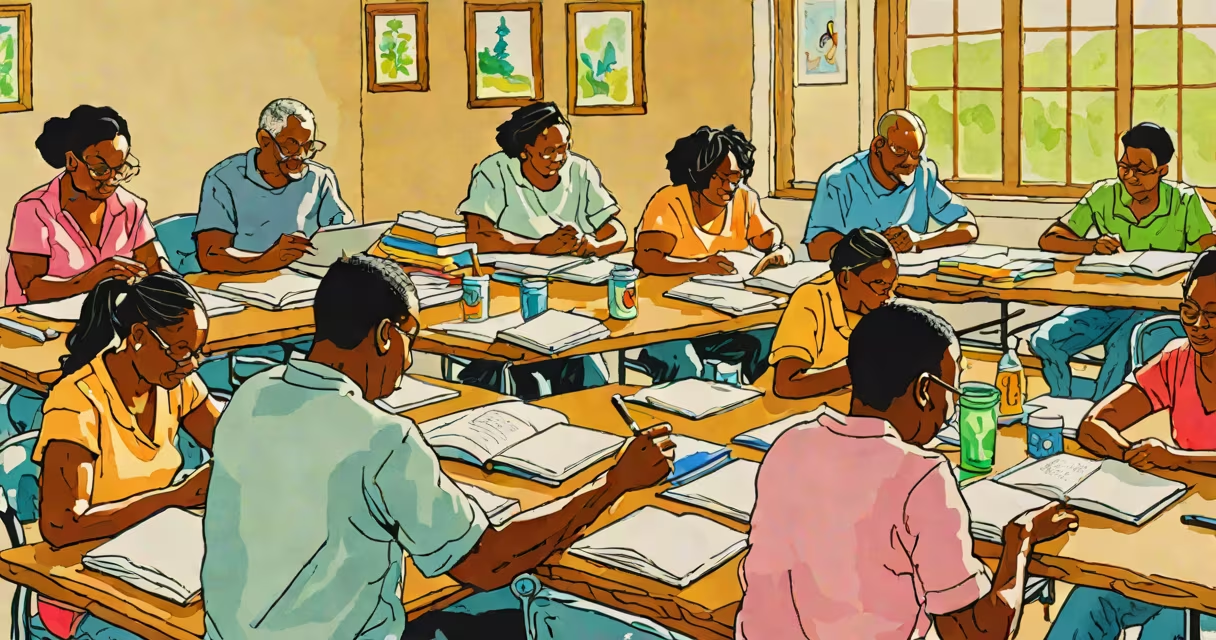
In 2019, I volunteered at a community center teaching basic literacy to adults preparing for GED exams. One participant, Maria, could read simple sentences but couldn't explain the difference between "affect" and "effect." She struggled with a practice test that asked her to identify the main idea in a passage about climate change. Her confusion wasn't about word recognition-it was about grasping abstract concepts and linking them to evidence.
We worked through a short article about rising sea levels. I guided her to underline key facts, show cause-and-effect relationships, and summarize each paragraph in her own words. After three weeks, she correctly identified the central argument in a similar text. Her progress wasn't due to memorization-it came from learning how to think through written material step by step.
This mirrors findings from the International Adult Literacy Survey (IALS), which showed that instruction focused on strategy-such as predicting content, questioning the author, and summarizing-leads to deeper understanding than rote repetition.
Understanding what it means to be literate changes how we assess education, design programs, and support individuals. Schools often measure literacy through standardized tests, but these don't capture whether a student can use language to advocate for themselves, negotiate a contract, or understand a legal document.
Employers increasingly value literacy in hiring. A 2023 report from the U.S. Department of Labor found that jobs requiring advanced literacy skills pay 25% more on average than those that do not. Yet, nearly 40% of U.S. workers lack the literacy needed for mid-level roles involving documentation, reporting, or technical manuals.
When we talk about being literate, we're not just discussing reading and writing. We're talking about agency-being able to act confidently in a world saturated with information. Being literate means having the tools to ask questions, make choices, and participate in decisions that affect your life.