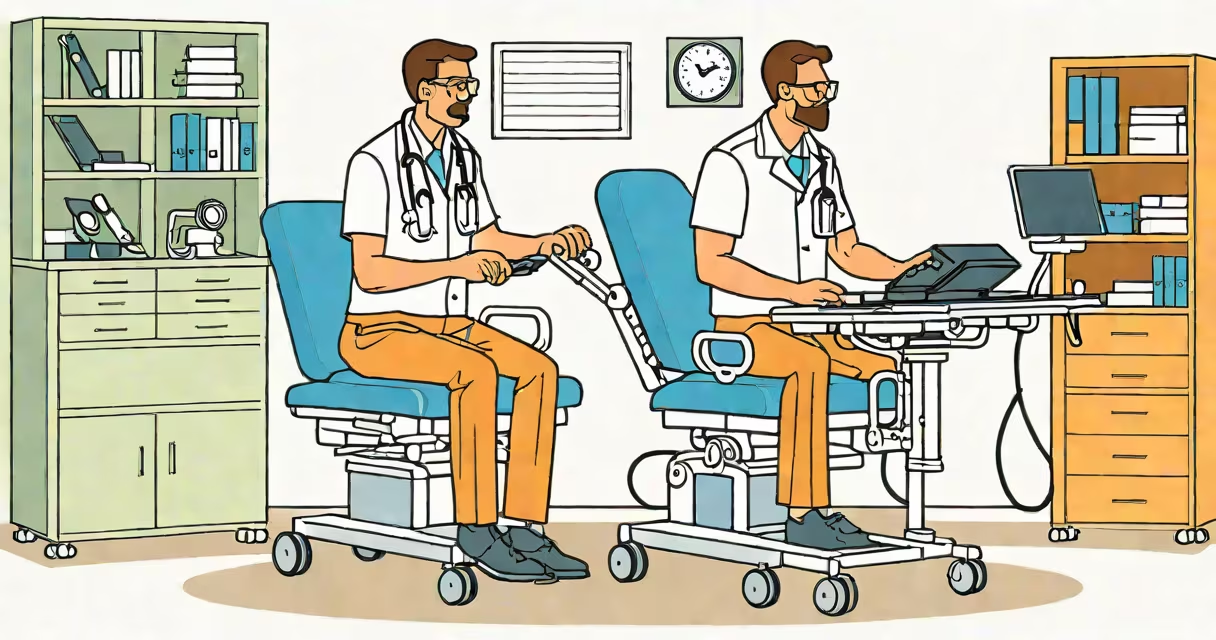
A physiatrist is a medical doctor who specializes in physical medicine and rehabilitation, focusing on restoring function after injury, illness, or chronic condition. They treat movement problems caused by nerve, muscle, or bone issues without surgery, using therapies, medications, and assistive devices.
Physiatrists work with patients recovering from strokes, spinal cord injuries, sports injuries, and chronic pain. Their goal is to improve quality of life by maximizing independence in daily activities. Unlike surgeons, they avoid invasive procedures and prioritize functional outcomes.
The American Academy of Physical Medicine and Rehabilitation (AAPM&R) states that physiatrists complete four years of medical school followed by a three-year residency in physical medicine and rehabilitation. Board certification requires passing an exam administered by the American Board of Physical Medicine and Rehabilitation (ABPM&R).
When evaluating a patient, a physiatrist begins with a detailed history and physical examination focused on mobility, strength, coordination, and pain. They assess gait, balance, reflexes, and muscle tone to identify impairments affecting movement.
Diagnostic tools include imaging (MRI, CT), electromyography (EMG), and nerve conduction studies. These tests help pinpoint whether dysfunction stems from nerves, muscles, or joints. For example, EMG can detect nerve compression in carpal tunnel syndrome.
Treatment plans are individualized. A patient with lower back pain might receive a combination of targeted exercises, manual therapy, and injections. A stroke survivor may start with gait training and adaptive equipment like walkers or wheelchairs. All interventions aim to restore function, not just relieve symptoms.
Physiatrists manage many conditions affecting movement and function. Common diagnoses include:
Interventions fall into several categories:
| Intervention Type | Examples | Typical Use Case |
|---|---|---|
| Therapeutic Exercise | Strengthening, stretching, balance drills | Post-stroke mobility loss |
| Injections | Facet joint, epidural, trigger point | Chronic neck or back pain |
| Electrodiagnostic Testing | EMG, NCS | Diagnosing peripheral nerve entrapment |
| Assistive Devices | Braces, orthotics, mobility aids | Arthritis-related joint instability |
| Medication Management | Pain relievers, muscle relaxants, anti-inflammatories | Acute flare-ups in fibromyalgia |
For instance, a 52-year-old office worker with persistent sciatica underwent EMG testing that revealed L5 nerve root compression. The physiatrist prescribed a lumbar stabilization program, advised ergonomic workstation changes, and administered a series of facet joint injections. After 10 weeks, the patient reported a 60% reduction in leg pain and resumed walking 3 miles daily.
Physiatrists work in diverse settings: outpatient clinics, hospitals, rehabilitation centers, and private practices. Many serve in multidisciplinary teams alongside physical therapists, occupational therapists, psychologists, and social workers.
They often collaborate with neurologists, orthopedic surgeons, and pain specialists. However, their focus differs. While a neurologist diagnoses neurological diseases, a physiatrist treats the functional consequences. A surgeon may recommend spine fusion for degenerative disc disease, but a physiatrist explores conservative options first-such as core strengthening, activity modification, and injection therapy.
A common misconception is that physiatrists only treat athletes or people with sports injuries. While they do support elite athletes, their scope includes anyone with functional limitations due to illness or trauma. For example, a child with cerebral palsy receives care from a physiatrist to improve sitting balance and reduce spasticity through medication and bracing.
I observed a physiatrist lead a team session for a patient recovering from a T12 spinal fracture. The patient had lost sensation below the waist and struggled with transfers. Over six weeks, the team introduced standing frames, wheelchair propulsion training, and mental visualization techniques. By week eight, the patient achieved independent bed-to-chair transfers and began community outings with a walker.
This case illustrates how physiatrists don't just treat anatomy-they rebuild confidence and autonomy. One study published in *Archives of Physical Medicine and Rehabilitation* found that patients receiving early physiatry intervention after spinal injury had a 34% higher rate of returning home independently compared to those who did not.
Unlike orthopedic surgeons or neurosurgeons, physiatrists do not perform operations. Their expertise lies in optimizing function through non-invasive strategies. This makes them essential for patients seeking alternatives to surgery or those who aren't surgical candidates due to comorbidities.
For example, a 78-year-old with severe osteoarthritis and heart failure may not tolerate hip replacement. A physiatrist can design a low-impact exercise plan, prescribe a cane, and use intra-articular corticosteroid injections to reduce pain and improve mobility-without anesthesia or hospitalization.
According to the Mayo Clinic, patients under physiatrist care report better long-term outcomes in activities of daily living, especially when rehabilitation begins within 72 hours of acute events like stroke or major trauma.
Understanding what a physiatrist does clarifies their unique role in healthcare. They are not just pain managers or rehab coordinators-they are specialists in restoring human potential through science, skill, and sustained effort.