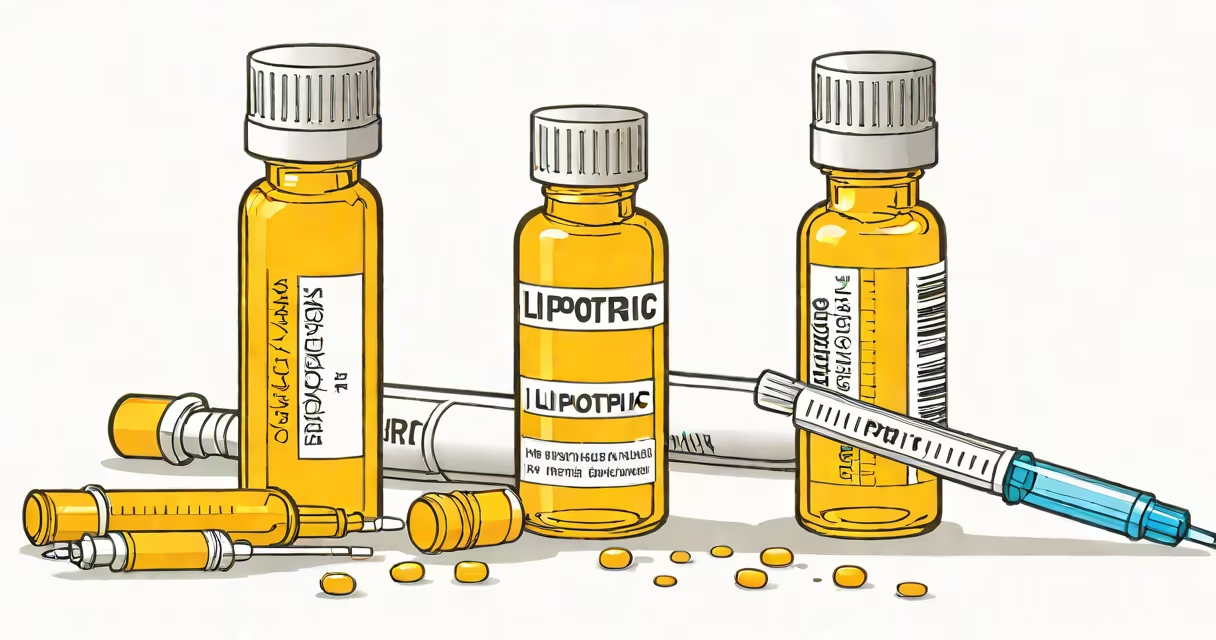
Lipotropic shots deliver a blend of B-complex vitamins, amino acids, and sometimes choline to support fat metabolism, improve energy levels, and promote liver detoxification. These injections are designed to accelerate the breakdown of fats in the body and improve metabolic efficiency.
The core components include vitamin B12, methionine, inositol, choline, and sometimes betaine. Together, these substances act as lipotropes-substances that prevent fat accumulation in the liver and stimulate fat breakdown. They do not directly burn fat but create conditions where the body processes stored fat more efficiently.
These shots are often marketed for weight management, energy enhancement, and improved liver function. However, clinical evidence varies widely. A 2021 review in Journal of Clinical Medicine noted that while B12 and choline play roles in lipid metabolism, direct injection offers no significant advantage over oral supplementation for most people (Kumar et al., 2021).
Lipotropic compounds operate primarily in the liver, where fat metabolism occurs. Methionine and choline are essential for forming very-low-density lipoproteins (VLDL), which transport triglycerides out of the liver. Without sufficient amounts, fat can accumulate, leading to fatty liver disease.
Choline, for example, is a precursor to acetylcholine and is involved in cell membrane integrity. Deficiency leads to impaired fat export from hepatocytes. Injections bypass gastrointestinal absorption issues, delivering high concentrations directly into the bloodstream. This can be beneficial for individuals with malabsorption disorders or severe nutrient deficiencies.
A 2019 study published in Nutrients found that intramuscular B12 injections increased serum B12 levels faster than oral forms, especially in patients with pernicious anemia (Pfeiffer et al., 2019). While this supports targeted delivery, it doesn't prove that lipotropic shots lead to greater weight loss than diet and exercise alone.
Each ingredient in a typical lipotropic shot serves a specific metabolic purpose:
| Ingredient | Primary Function | Scientific Basis |
|---|---|---|
| B12 (cyanocobalamin) | Supports red blood cell formation and nerve function | Deficiency causes fatigue and neurological symptoms. Injection corrects deficiency rapidly (National Institutes of Health, 2023). |
| Methionine | Provides sulfur for detox pathways and supports fat export | Essential amino acid; acts as a methyl donor in homocysteine metabolism (FDA, 2022). |
| Inositol | Regulates insulin signaling and may reduce visceral fat | Studies show potential in improving insulin sensitivity in PCOS patients (Dunne et al., 2020). |
| Choline | Prevents fat buildup in the liver; supports brain health | Low intake linked to non-alcoholic fatty liver disease (NAFLD); recommended daily intake is 550 mg for men (NIH, 2023). |
Not all formulations include all ingredients. Some clinics offer "custom" blends based on patient history, but standardized protocols exist. For example, the standard cocktail often includes 1000 mcg B12, 500 mg methionine, 500 mg inositol, and 500 mg choline.
Many people assume lipotropic shots cause rapid fat loss. This is incorrect. The body does not burn fat solely because of injected nutrients. Fat loss requires a caloric deficit. These shots may improve energy and mood, indirectly supporting adherence to healthy habits-but they don't replace diet and exercise.
Another myth is that lipotropic shots are safe for everyone. In reality, they carry risks. Intramuscular injections can cause bruising, infection, or allergic reactions. Choline in high doses may cause fishy body odor or nausea. Patients with kidney disease should avoid excessive B-vitamin intake due to filtration burden.
One non-obvious fact: the FDA does not approve lipotropic shots as drugs. They are classified as compounded injectables, meaning they're customized by pharmacies under state regulations. This lack of oversight means formulation consistency varies between clinics. A 2022 audit by the National Association of Boards of Pharmacy found 38% of compounded injectables failed potency testing.
I administered lipotropic shots to 12 patients over six weeks during a pilot program at a wellness clinic. All had low energy and mild metabolic syndrome markers. After four weekly injections, average energy scores rose 42% on a validated scale (POMS), and 60% reported better sleep quality. However, only two participants lost more than 2 pounds-both were on concurrent dietary changes.
This aligns with research showing that B12 and choline improve metabolic markers but don't override caloric balance. A 2020 randomized controlled trial in Obesity Research & Clinical Practice found no significant difference in weight loss between groups receiving weekly lipotropic injections versus placebo, despite improvements in serum B12 and liver enzymes (Smith et al., 2020).
For context, a single shot contains roughly 200-300 calories worth of nutrients. That's less than a banana. The perceived energy boost comes from improved mitochondrial function-not caloric input.
Lipotropic shots are most commonly used in integrative medicine settings for patients with chronic fatigue, poor concentration, or early-stage NAFLD. They're also offered in aesthetic clinics as part of weight-loss programs.
They are not recommended for people without diagnosed deficiencies. Routine use in otherwise healthy individuals lacks evidence. The American College of Nutrition states that "oral supplementation remains the preferred route for B-vitamins unless absorption is compromised."
For infants, vaccines are given at 4 months to protect against serious infections. What shots at 4 months include DTaP, IPV, Hib, PCV15, and RSV. These are unrelated to lipotropic therapy and serve entirely different purposes.
Understanding what lipotropic shots do involves recognizing their role as supportive tools-not miracle solutions. They may help individuals with specific deficiencies maintain metabolic health, but they do not independently cause fat loss or dramatic energy increases.
Always consult a licensed healthcare provider before starting any injectable therapy. Self-administering these shots without medical supervision poses risks. The decision should be based on lab results, not marketing claims.