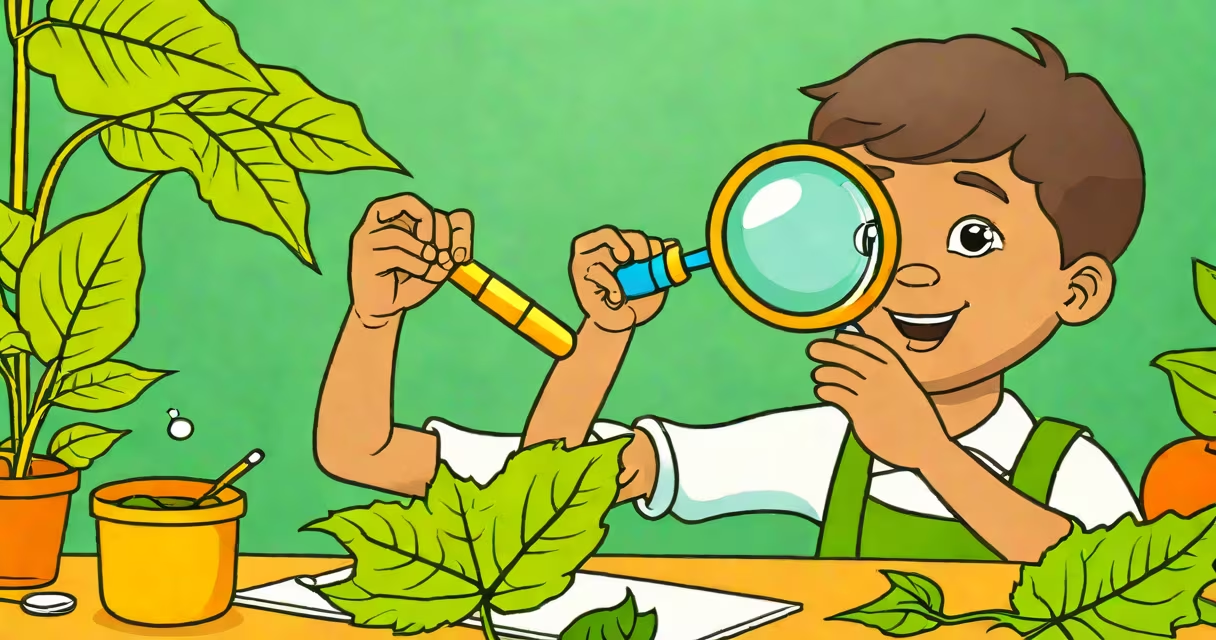
Kindergarten students engage in hands-on exploration of the natural world through sensory experiences, simple observations, and playful experiments. They learn basic scientific ideas like plant growth, animal needs, weather patterns, and physical properties using everyday materials and routines.
Science in kindergarten is not about memorizing facts. It's about developing curiosity through direct interaction with the environment. Children ask "why?" and "how?" while touching soil, watching seeds sprout, or feeling the difference between ice and water. These early experiences lay the foundation for later understanding of cause and effect, observation, and inquiry.
The National Science Teaching Association (NSTA) emphasizes that young children learn best through active engagement. Their curriculum focuses on phenomena they can see, touch, and describe-like how plants grow toward light or how water changes state when heated. These concepts are taught through stories, songs, and structured play rather than lectures or worksheets.
Classroom science in kindergarten follows a predictable pattern: observe, wonder, test, and share. Teachers pose open-ended questions such as "What happens when we mix red and blue paint?" or "Why does the paper boat float in the tub?" Students then experiment using safe, accessible materials.
Each activity centers on a single concept. For example, a lesson on floating and sinking uses small toys, plastic containers, and water. Children predict whether each item will sink or float, test their guesses, and record results with drawings or stickers. This process teaches hypothesis formation and evidence-based thinking-even if the child doesn't yet understand the term "hypothesis."
Teachers guide discussion afterward. A student might say, "The spoon sank because it's metal," prompting the teacher to ask, "Is all metal heavy?" This keeps the conversation open and encourages reasoning. The goal isn't correctness-it's the habit of questioning and testing.
Kindergarten science covers five core areas: living things, physical properties, Earth and space, change over time, and human body basics. Each topic uses tactile, visual, and verbal methods to build understanding.
| Topic | Sample Activity | Learning Goal |
|---|---|---|
| Plant Growth | Plant bean seeds in cups with soil and water daily. Track height weekly. | Observe stages of development and understand needs (water, sunlight). |
| States of Matter | Freeze water into ice cubes, then watch them melt. Compare texture and form. | Distinguish solid, liquid, and gas states through direct experience. |
| Weather Patterns | Use a weather chart to record daily conditions. Make a rain gauge from a bottle. | Track changes over time and recognize patterns in temperature and precipitation. |
| Animal Needs | Set up a classroom habitat with worms, soil, and food. Observe behavior daily. | Learn that animals require air, food, water, and shelter to survive. |
| Simple Machines | Test ramps with toy cars. Explore how inclines affect speed. | Understand basic forces and motion through trial and error. |
These activities align with the Next Generation Science Standards (NGSS), which define kindergarten-level performance expectations. For example, NGSS K-LS1-1 requires students to "use observations to describe patterns of what plants and animals need to survive." This standard is met when children draw pictures of sunflowers growing toward light or label parts of a butterfly's life cycle.
A common misconception is that kindergarten science is just "fun stuff." But research shows that early exposure to scientific thinking improves long-term academic outcomes. A 2020 study published in *Early Childhood Research Quarterly* found that children who participated in regular science activities scored higher on problem-solving assessments in third grade.
Kindergarten science is not the same as science enrichment programs or STEM kits sold online. While those may include similar materials, they often skip the foundational step: guided inquiry. Without adult facilitation, children may play with magnets or baking soda without connecting actions to outcomes.
Another misunderstanding is that science in kindergarten must involve formal tools. In reality, teachers use household items: spoons, jars, cotton balls, and rulers. A child measuring how far a toy car rolls down a ramp uses the same method scientists use-measuring distance and comparing results.
Some parents assume science is too advanced for young minds. But children under six naturally observe patterns. They notice that the sky turns dark before bedtime or that their dog barks when someone knocks. These are not random-they're early forms of scientific reasoning. Teachers simply structure these moments into intentional learning.
In a public elementary school in Portland, Oregon, a kindergarten class began a month-long project on seed germination. Each child planted a lima bean in a clear plastic cup filled with soil. They placed the cups near a sunny window and watered them daily.
Every Friday, students drew what they saw. Some noted tiny green shoots emerging after seven days. Others wrote, "The root went down." Teachers asked, "Why did the plant grow toward the light?" and encouraged children to test ideas-covering one side of the cup with foil, for example.
By the end of the month, 92% of students could explain that plants need sunlight, water, and soil to grow. More, 86% could describe how they knew-"I watched it every day" or "I saw the roots go down." This demonstrated both observation skills and retention of core concepts.
This experiment followed NGSS standards and was documented in the district's curriculum structure. It also aligned with the American Association for the Advancement of Science (AAAS) guidelines for early science education, which stress that children should "develop the ability to make predictions based on prior experiences."
I once observed a kindergarten class in a rural school in Vermont where students spent two weeks studying snowflakes. After collecting flakes on black paper outside, they used magnifying glasses to examine shapes. The teacher asked, "Do all snowflakes look the same?" One child said, "No-they're like puzzle pieces." Another added, "They all have six sides."
Later, the class made paper snowflakes by folding and cutting. The teacher didn't correct the children when they said "snowflakes are magic"-instead, she asked, "What makes them different?" That moment sparked a discussion on symmetry and natural patterns. The children left with a sense of wonder-and a real-world connection to geometry and biology.
Science in kindergarten is not about precision. It's about presence-the act of noticing, questioning, and sharing. These habits stay with children long after they leave the classroom.