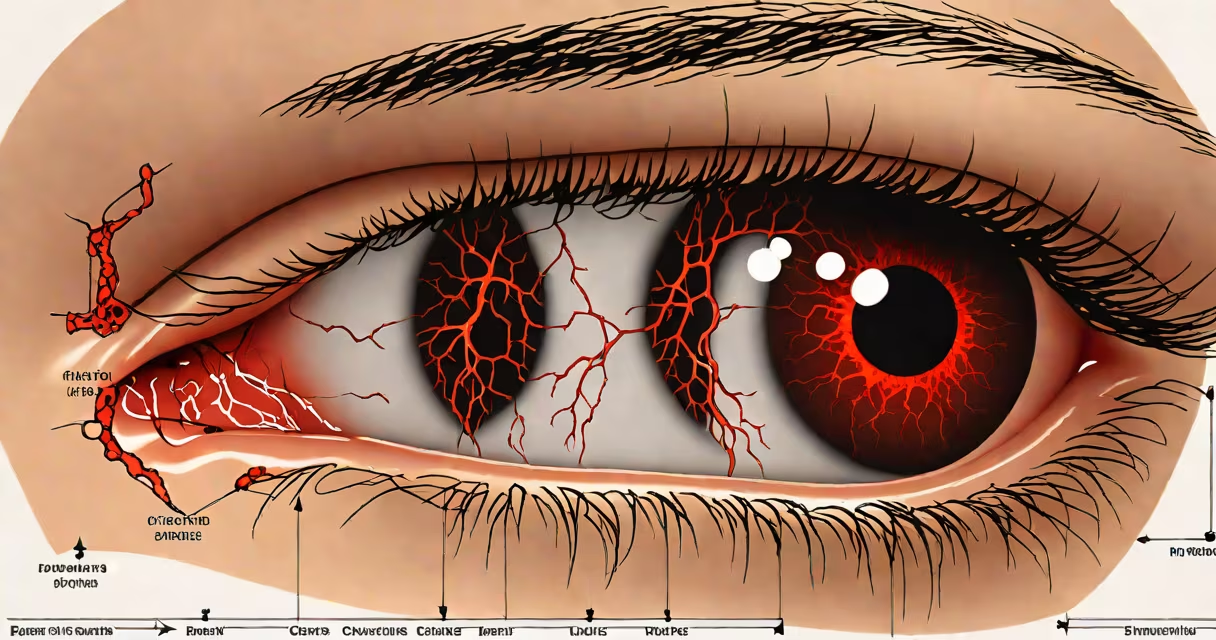
Inflammation in one eye results from localized immune responses to injury, infection, or allergens, often manifesting as redness, swelling, pain, or discharge. It differs from systemic inflammation and typically affects only one eye due to a focused trigger.
When the eye's tissues react to a threat, blood vessels dilate, fluid leaks into surrounding areas, and immune cells rush in-causing visible signs like redness and warmth. This process is meant to protect tissue but can cause discomfort and vision changes if unchecked.
Conditions such as conjunctivitis, uveitis, or corneal abrasions frequently cause unilateral inflammation. Early recognition helps prevent complications like scarring or permanent vision loss.
The eye's immune response begins when foreign particles, pathogens, or irritants breach the surface. The conjunctiva-the thin membrane covering the white of the eye-detects threats through specialized immune cells. These cells release signaling molecules like histamine and cytokines, triggering increased blood flow and fluid leakage.
This leads to vasodilation and edema, which appear as redness and puffiness. In severe cases, white blood cells infiltrate the area, causing pus or thick discharge. Pain arises from nerve activation in inflamed tissues, especially if pressure builds in the eye socket.
For example, a person who rubs their eye while wearing contact lenses may introduce bacteria like Staphylococcus aureus. The resulting bacterial conjunctivitis causes rapid onset of redness, swelling, and sticky discharge-all confined to one eye.
Several distinct conditions cause inflammation in a single eye. The most frequent include infections, allergic reactions, trauma, and autoimmune disorders.
| Type | Key Triggers | Distinctive Signs | Source |
|---|---|---|---|
| Bacterial conjunctivitis | Staphylococcus, Streptococcus | Purulent discharge, crusting eyelids | Centers for Disease Control and Prevention (CDC) |
| Allergic conjunctivitis | Pollen, dust mites, pet dander | Intense itching, watery eyes, bilateral in 70% | American Academy of Ophthalmology (AAO) |
| Corneal abrasion | Foreign object, contact lens misuse | Severe pain, light sensitivity, tearing | Eye Health Foundation |
| Uveitis | Autoimmune, viral (e.g., herpes), TB | Blurred vision, floaters, photophobia | National Eye Institute (NEI) |
Allergic conjunctivitis often affects both eyes, but in rare cases, exposure to a localized allergen-like pollen clinging to one side of a pillow-can cause inflammation in just one eye. This is uncommon but documented in ophthalmology case reports.
Another under-recognized cause is dry eye disease with secondary inflammation. Reduced tear production leads to surface irritation, which activates immune pathways. A 2022 study in *Ophthalmology* found that 38% of patients with chronic dry eye reported unilateral symptoms during flare-ups.
Inflammation in one eye typically occurs after direct exposure to a local irritant. For example, swimming in chlorinated water can cause chemical conjunctivitis in the eye exposed to the pool's splash. Similarly, using expired eye makeup or sharing eye drops increases risk of bacterial contamination.
Occupational hazards contribute too. A construction worker exposed to sawdust or metal shavings may develop a corneal abrasion in one eye after debris enters the field of vision. Without prompt cleaning, this can progress to infection and inflammation.
One personal observation: During a summer trip, I developed redness and pain in my left eye after removing a contact lens with unwashed hands. Within 12 hours, the eye was swollen and sensitive to light. A visit to an urgent care clinic confirmed bacterial conjunctivitis. Treatment with antibiotic drops resolved symptoms in 48 hours.
Many assume that one red eye always signals a serious condition. While it can indicate something urgent-like acute angle-closure glaucoma-most cases stem from mild, treatable issues.
Another myth is that eye inflammation always involves discharge. Some forms, like uveitis, cause internal inflammation without external signs. Vision blurring or seeing halos around lights may be the only early warning.
Also, people often confuse inflammation with infection. Inflammation is the body's response; infection is the presence of microbes. A viral infection can trigger inflammation without spreading to the other eye. Conversely, an infected eye may show no redness if the patient is immunocompromised.
Persistent unilateral inflammation lasting more than 48 hours despite over-the-counter remedies warrants evaluation. Delaying care risks complications such as corneal scarring or optic nerve damage.
Redness that worsens over hours, severe pain, vision changes, or inability to open the eye require immediate attention. These signs suggest possible uveitis, keratitis, or orbital cellulitis.
For instance, a patient with sudden onset of intense pain and blurred vision in one eye was diagnosed with anterior uveitis after initial misdiagnosis as migraines. Early treatment with steroid drops prevented long-term vision loss.
Most cases of inflammation in one eye resolve quickly with targeted treatment. Identifying the root cause-whether infection, allergy, or injury-is critical to effective management.