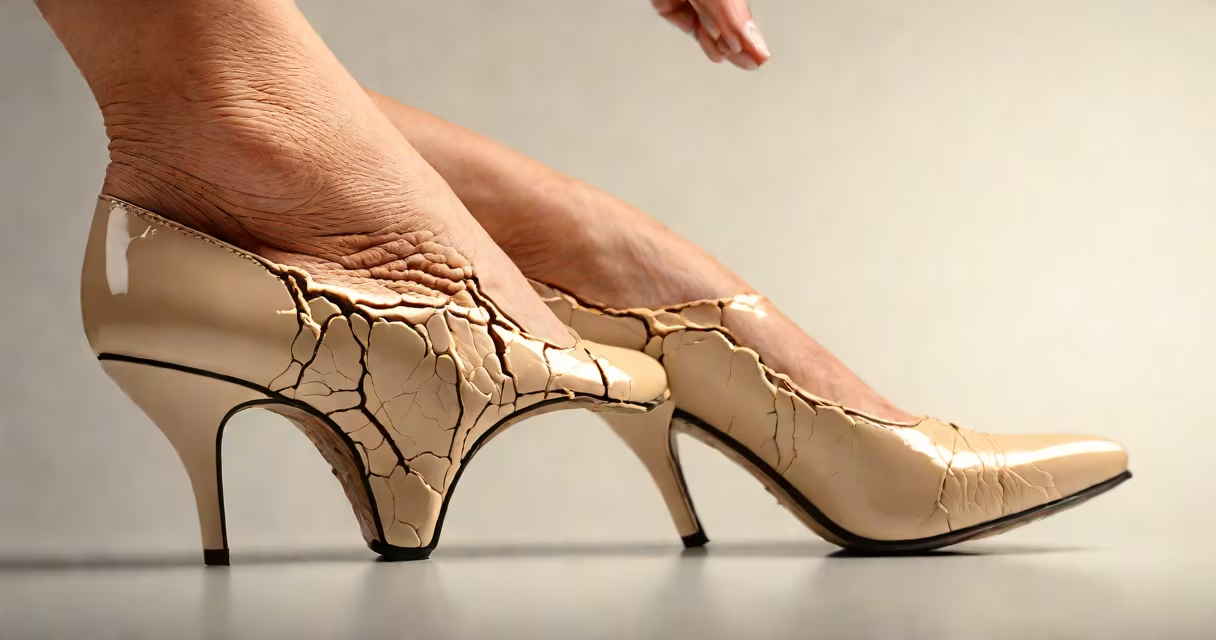
Deep cracks in heels result from severe skin dehydration, mechanical stress, and underlying medical conditions that compromise the skin's integrity. They form when the thickened outer layer of the foot's sole splits under pressure, often exposing sensitive tissue beneath.
Heel skin aims to withstand weight-bearing, but it lacks oil glands. Without regular hydration, the stratum corneum-the outermost dead skin layer-dries out and loses flexibility. When this brittle layer is repeatedly stretched during walking or standing, it tears. Repeated trauma leads to deep fissures, especially in areas where pressure concentrates, such as the heel's center and sides.
These cracks are not merely cosmetic. They can bleed, become infected, and cause sharp pain with each step. Left untreated, they may develop into chronic wounds requiring medical intervention. The American Podiatric Medical Association notes that untreated heel fissures contribute to mobility issues in older adults and people with diabetes.
Crack formation begins with mild scaling and tightness. Over time, the skin thickens in response to friction-this is callus formation. Calluses are protective layers, but excessive buildup creates uneven pressure points. When the skin cannot stretch further, it splits.
Pressure distribution matters. Standing for long periods, wearing open-back shoes, or walking barefoot on hard surfaces increases strain on the heel pad. A single step can apply up to 1.5 times body weight to the heel. Repeated impact over months degrades collagen and elastin fibers in the dermis, weakening the skin's structural support.
For example, a warehouse worker who stands 10 hours daily on concrete floors reports heel fissures within six months. Despite using moisturizer, the constant pressure and lack of footwear protection led to deep vertical cracks. The skin failed to regenerate fast enough to keep pace with wear.
Dry skin is the primary contributor. Low humidity, frequent washing with hot water, and harsh soaps strip natural lipids. The National Institute of Arthritis and Musculoskeletal and Skin Diseases (NIAMS) confirms that reduced sebum production in aging skin increases susceptibility to fissures.
Medical conditions raise risk. Psoriasis causes rapid skin cell turnover, leading to thick, scaly patches that crack under pressure. Eczema (atopic dermatitis) inflames the skin barrier, making it prone to micro-tears. Diabetes impairs nerve function and blood flow, slowing healing and increasing infection risk. A 2021 study in *Dermatology Practical & Conceptual* found that 38% of diabetic patients with peripheral neuropathy developed heel fissures within two years.
Other contributors include obesity, flat feet, and improper gait. Excess weight increases load on the heel. Flat feet alter pressure distribution, concentrating force on the heel's central area. Wearing flip-flops or worn-out shoes removes cushioning and support, accelerating skin breakdown.
Heel cracks are categorized by depth and visibility of tissue:
| Depth | Description | Common Triggers |
|---|---|---|
| Superficial | Only affects outer skin layer; appears as fine lines or flaking. | Dry air, mild dehydration, occasional walking. |
| Mild | Visible gap, 1-2 mm deep; may itch or burn. | Repeated pressure, poor footwear, infrequent moisturizing. |
| Deep | Reaches dermis; may bleed or hurt with movement. | Chronic dryness, callus buildup, medical conditions. |
| Severe | Exposes fat or muscle; high infection risk. | Untreated deep cracks, diabetes, immunosuppression. |
Deep cracks are not simply "dry skin." They represent a failure of skin repair mechanisms. Unlike minor fissures, deep ones require consistent treatment and often medical oversight.
Many confuse deep heel cracks with fungal infections like athlete's foot. While both cause peeling and itching, fungal infections typically affect the spaces between toes and show redness, swelling, and blistering. Fungal lesions do not form deep vertical fissures.
Another common error is attributing cracks solely to dryness. While dryness is a factor, it's rarely the sole cause. A 2019 study in *Journal of Foot and Ankle Research* showed that 62% of patients with deep heel fissures had at least one comorbid condition-such as psoriasis or diabetes-despite normal hydration levels.
People assume home remedies like petroleum jelly or coconut oil are sufficient. These provide temporary sealing but don't address root causes like pressure imbalance or skin pathology. Over-reliance on topical treatments delays proper diagnosis and treatment.
In 2022, a 58-year-old woman with type 2 diabetes reported a 1.2 cm deep fissure on her left heel. She had been applying over-the-counter moisturizers twice daily for three months with no improvement. The wound was tender, oozed clear fluid, and had a faint odor.
A podiatrist diagnosed a combination of diabetic neuropathy, callus overgrowth, and secondary infection. Standard care included removing excess callus with a surgical blade, applying antiseptic dressing, and prescribing a prescription-strength urea cream (40%). After four weeks, the crack closed by 80%, and pain resolved.
The patient later admitted she avoided seeing a doctor because she believed it was "just dry skin." This delay increased infection risk and extended recovery time. Early intervention prevented potential amputation.
Prevention focuses on maintaining skin elasticity and reducing pressure. Daily application of a cream containing lactic acid or urea improves hydration and exfoliates dead cells. Use a pumice stone once weekly to gently remove callus-never scrape aggressively.
Wear supportive footwear with cushioned insoles. Avoid going barefoot indoors. Keep indoor humidity above 40% during winter. For those with diabetes, inspect feet daily and seek care at the first sign of cracking.
If a crack bleeds or shows signs of infection-redness, warmth, pus-seek medical attention. Topical antibiotics or oral antibiotics may be needed. In persistent cases, a dermatologist may prescribe corticosteroids or biologics if psoriasis is involved.
One non-obvious fact: heel cracks can worsen during sleep. As the body lies still, blood flow slows, and skin becomes drier. Wearing breathable cotton socks overnight with a thin layer of moisturizer reduces nighttime drying.
Deep cracks in heels are not inevitable. They result from a mix of environmental exposure, biomechanical stress, and biological vulnerability. Understanding the root causes allows for targeted prevention and faster healing.