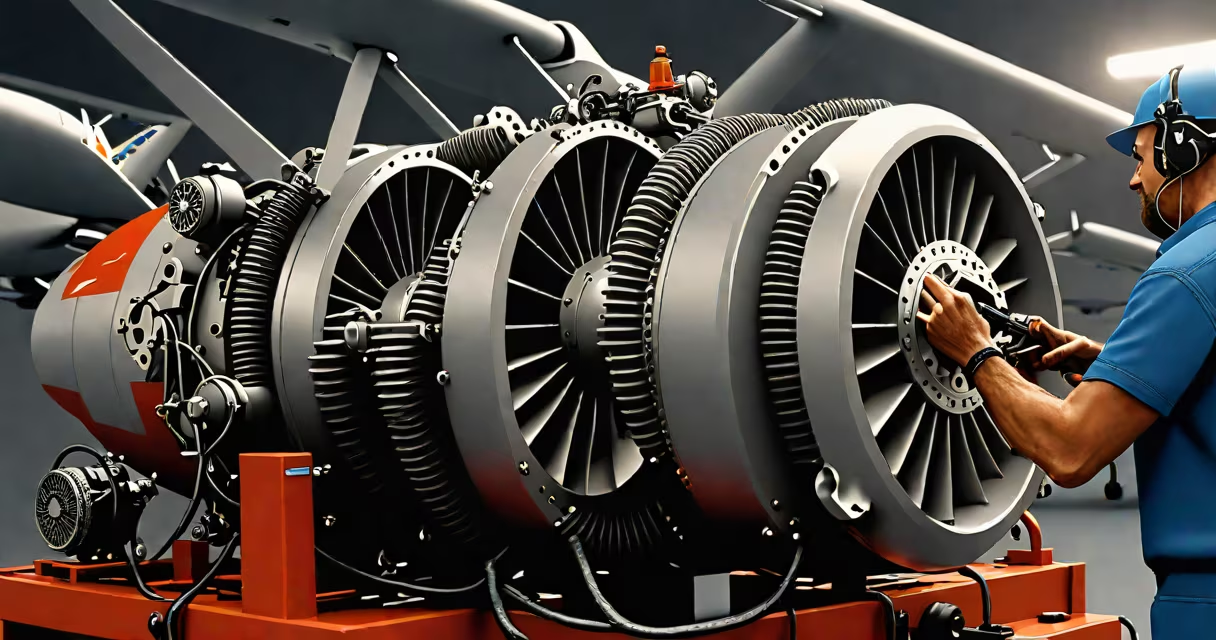
Aircraft mechanics inspect, maintain, and repair airplanes to ensure they meet strict safety standards set by the Federal Aviation Administration (FAA). They diagnose mechanical issues, replace worn parts, and document all work performed during routine checks and repairs.
These professionals work on commercial airliners, private jets, military aircraft, and helicopters. Their role is critical to preventing in-flight failures and ensuring every flight operates within regulatory limits. A mechanic's work begins long before takeoff and continues through every phase of an aircraft's service life.
The FAA requires all aircraft mechanics in the U.S. to hold a certificate issued under Part 65 of the Federal Aviation Regulations. This includes passing written, oral, and practical exams. Mechanics must also complete ongoing training to stay current with evolving technologies and design changes.
Mechanics follow detailed procedures outlined in the manufacturer's maintenance manuals and FAA-approved service bulletins. Each task is documented in the aircraft's logbook, creating a permanent record of all work done. This traceability is essential for compliance and accident investigations.
When a problem arises-such as a malfunctioning landing gear or a fuel leak-the mechanic conducts a systematic diagnosis. They may use test equipment like multimeters, pressure gauges, or specialized software to pinpoint the fault. Once identified, they disassemble components, replace damaged parts, and reassemble everything to factory specifications.
For example, if a jet's hydraulic system shows low pressure during pre-flight inspection, the mechanic traces the issue through the system's valves, pumps, and lines. They isolate the faulty component-say, a leaking seal-and replace it using torque specs and alignment tools. After repair, they run functional tests and verify performance before signing off on the aircraft's airworthiness.
Aircraft mechanics often specialize based on the type of aircraft or systems they work on. The most common categories include airframe, powerplant, and avionics technicians.
| Type | Focus Area | Examples of Work |
|---|---|---|
| Airframe | Fuselage, wings, control surfaces, doors, landing gear | Repairing cracked wing skins, replacing door seals, aligning rudder hinges |
| Powerplant | Engines, propellers, exhaust systems | Overhauling turbine engines, balancing propeller blades, checking oil pressure |
| Avionics | Navigation, communication, radar, autopilot systems | Calibrating GPS receivers, testing transponders, troubleshooting autopilot glitches |
Many mechanics begin with a combination of airframe and powerplant certification. As they gain experience, they may pursue advanced credentials in specific areas. For instance, a mechanic who works on Boeing 737s must understand the unique wiring layout and fuel management system of that model.
According to the Bureau of Labor Statistics, aircraft and avionics equipment mechanics and technicians earned a median annual wage of $68,500 in 2022. Those employed by airlines or major repair facilities typically earn more due to overtime and shift differentials.
Mechanics are essential at airports, airline maintenance hangars, military bases, and general aviation repair shops. Their work helps aircraft remain safe throughout their operational lifespan, which can exceed 30 years with proper upkeep.
Every aircraft undergoes scheduled inspections at set intervals-typically every 50, 100, or 400 flight hours. These checks range from quick walk-arounds to full teardowns. For example, a 100-hour inspection includes checking engine oil levels, tire wear, and control cable tension. A more extensive check, such as a D-check (the most thorough type), involves removing entire sections of the fuselage for internal inspection.
Non-compliance with maintenance schedules can result in grounding. In 2019, a regional jet was delayed for 72 hours because a mechanic missed a crack in a wing spar during a routine inspection. The flaw was later detected by a second inspector, highlighting the importance of rigorous oversight and peer review.
People often assume aircraft mechanics only fix broken parts. In reality, most of their time is spent preventing failure. Routine maintenance accounts for over 80% of a mechanic's workload, according to FAA data from 2021.
Another misconception is that mechanics only work on older planes. Modern aircraft like the Airbus A350 or Boeing 787 rely heavily on complex systems that require specialized knowledge. For example, the 787 uses composite materials and electrical systems instead of traditional hydraulic lines. Mechanics must be trained in fiber optics, battery management, and software diagnostics.
There's also confusion between aircraft mechanics and pilots. While both roles are important to flight operations, their responsibilities differ sharply. Pilots operate the aircraft; mechanics ensure it remains mechanically sound. A pilot cannot legally perform maintenance tasks-even minor ones-without proper certification.
I once observed a mechanic at a small regional airport diagnosing a persistent engine vibration. He used a vibration analyzer connected to the engine's mounting points. After identifying a misaligned fan blade, he corrected the balance using precision shims. The plane flew safely the next day. That moment confirmed how much skill and attention to detail go into each repair.
What aircraft mechanics do goes beyond wrenching. They apply engineering principles, interpret technical documents, and uphold national safety standards. Their work happens behind the scenes-but it's foundational to every successful flight.