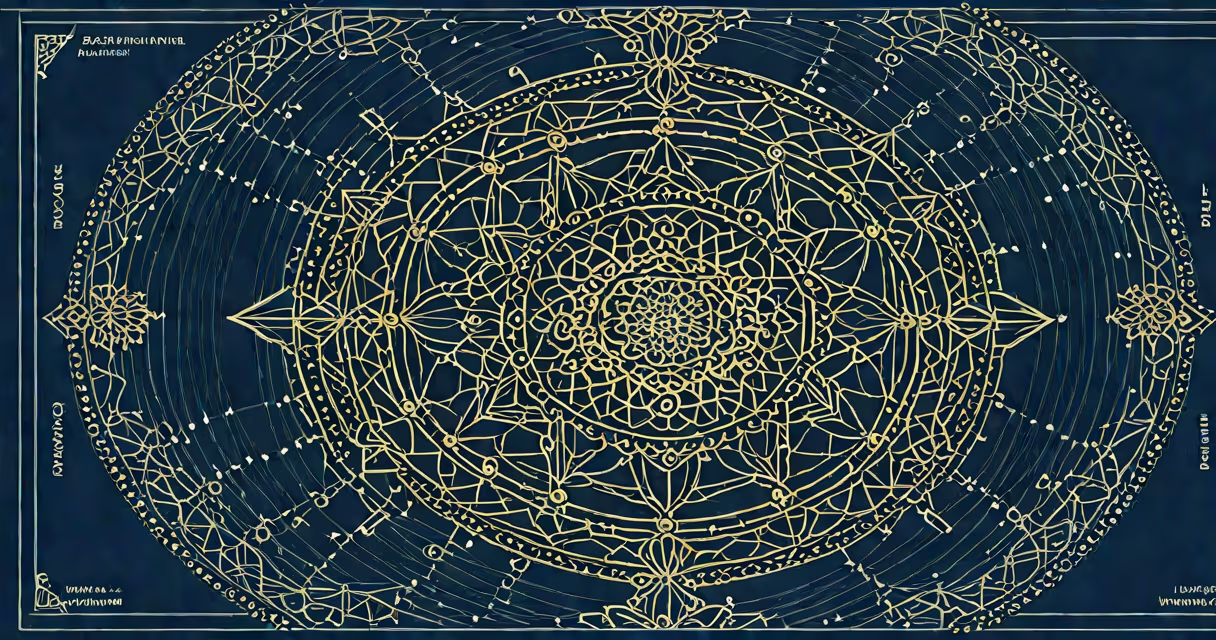
Mandalas are circular, symmetrical designs rooted in ancient spiritual traditions, especially Buddhism and Hinduism, representing the universe, inner balance, and the path to enlightenment. They serve as tools for meditation, ritual, and personal transformation.
The structure of a mandala begins with a central point-the bindu-symbolizing the origin of creation. From there, layers of geometric forms, symbols, and figures radiate outward, forming concentric zones that represent stages of spiritual development. Each element is intentional, drawn with precision using compass and ruler, reflecting cosmic order.
While mandalas appear in many cultures, the most studied and practiced forms come from Tibetan Buddhism and Indian Tantric traditions. The word "mandala" derives from Sanskrit, meaning "circle" or "center." Its use extends beyond religious contexts into psychology, art therapy, and mindfulness practices.
There are five primary categories of mandalas, each serving distinct spiritual and psychological purposes. These types differ in design, purpose, and cultural origin.
| Type | Primary Tradition | Symbolic Focus | Common Use |
|---|---|---|---|
| Tibetan Sand Mandala | Buddhist (Vajrayana) | Impermanence, cosmic order | Ritual, meditation, teaching |
| Lotus Mandala | Hindu/Buddhist | Purity, spiritual awakening | Yoga, devotional practice |
| Yantra Mandala | Indian Tantric | Divine energy, focus | Mantra repetition, visualization |
| Healing Mandala | Modern therapeutic | Emotional integration, self-reflection | Art therapy, journaling |
| Personal Mandala | Contemporary | Inner identity, life process | Self-discovery, creative expression |
These are among the most elaborate and transient forms. Created over days or weeks by monks using colored sand, they depict deities, sacred geometries, and cosmological maps. The process involves precise measurement and chanting. Once complete, the mandala is ceremonially dismantled, symbolizing the impermanence of all things-a core teaching in Mahayana Buddhism.
According to the Tibetan Buddhist tradition, as documented by the Dalai Lama in *The Art of Peace* (1997), the mandala's destruction is not failure but a demonstration of non-attachment. The sand is swept into a river to return to nature, emphasizing that nothing lasts forever.
A 2016 study published in *Mindfulness* journal found that participants who viewed or created sand mandalas reported lower stress levels and increased focus compared to control groups. This supports the idea that the act of constructing such a mandala engages the brain in sustained attention and presence.
Lotus mandalas center on the lotus flower-symbol of purity rising from mud. In both Hindu and Buddhist iconography, the lotus represents spiritual awakening and detachment from worldly suffering. The petals often form a radial pattern around a central deity or chakra point.
In Tantric yoga, the lotus mandala corresponds to the seventh chakra, Sahasrara, located at the crown of the head. It is associated with enlightenment, unity, and transcendence. Practitioners visualize energy flowing through the lotus centers during meditation.
For example, the Sri Yantra, a sacred geometric form based on nine interlocking triangles, is sometimes referred to as a lotus mandala due to its floral symmetry and association with the goddess Tripura Sundari. It is used in daily puja rituals in South India.
Yantras are geometric diagrams used in Tantric traditions to channel divine energy. Unlike decorative mandalas, yantras are designed for specific mantras and deities. Each line, angle, and intersection holds mathematical significance tied to sound frequencies and planetary influences.
The Shri Yantra, one of the most complex yantras, consists of nine interlocking triangles forming 43 smaller triangles. According to the *Tantrasara*, a 12th-century text on Tantric philosophy, this configuration represents the union of masculine and feminine energies-Shiva and Shakti-and the changing balance of creation and dissolution.
When placed under a lamp or used during mantra recitation, the yantra is believed to amplify intention. Modern practitioners report feeling a subtle shift in mental clarity after focusing on a yantra for 10 minutes daily.
Developed in the 20th century by psychologists and therapists, healing mandalas are used in expressive arts therapy. They are not bound by religious doctrine but follow principles of symmetry, color theory, and emotional mapping.
Psychologist Carl Jung introduced the concept of the mandala as a representation of the unconscious self. He noted that people across cultures spontaneously draw mandalas during times of inner crisis or transition. In his book *The Archetypes and the Collective Unconscious* (1934), Jung wrote: "The mandala is a representation of the self in its totality."
Therapists use guided mandala coloring to help clients process trauma, anxiety, and grief. A 2020 study in *The Arts in Psychotherapy* showed that patients with PTSD who engaged in weekly mandala drawing sessions experienced a 37% reduction in intrusive thoughts over eight weeks.
These are modern, individualized mandalas created to reflect a person's life stage, values, or goals. They may include symbols from dreams, family, career, or spiritual beliefs. Unlike traditional mandalas, they are not standardized and often incorporate mixed media-paint, collage, embroidery.
I once spent a weekend creating a personal mandala after a major career change. I used photographs of my old office, a map of cities I'd lived in, and handwritten affirmations. The process helped me visualize my internal shift-not as loss, but as growth. I still keep it framed above my desk.
Personal mandalas are increasingly used in coaching, journaling, and mindfulness circles. They allow individuals to externalize inner complexity and track emotional evolution over time.
Many assume mandalas are purely decorative or aesthetic. But their function is deeply intentional. A mandala is not a picture-it is a map of consciousness.
Another error is treating all mandalas as interchangeable. A Tibetan sand mandala is not meant to be kept; it is meant to be destroyed. A healing mandala is not a prayer object but a tool for introspection. Confusing these purposes undermines their power.
Some believe mandalas must be perfect. But imperfection is part of the process. In Tibetan tradition, minor errors in sand mandala construction are seen as reminders of human limitation and the need for humility.
To begin working with mandalas, start with a simple template. Draw a circle. Divide it into four quadrants. Place a symbol in each-e.g., a tree for growth, a heart for love, a mountain for resilience, a bird for freedom. Reflect on what each represents in your life.
Engage regularly. Spend 5-10 minutes daily observing or coloring your mandala. Notice shifts in mood, insight, or energy. Over time, the mandala becomes a living record of your inner world.
Understanding types of mandalas and their meanings reveals more than symbolism-it offers a pathway to presence, integration, and peace. Whether carved in stone, painted on canvas, or drawn in sand, each mandala invites us inward, toward wholeness.