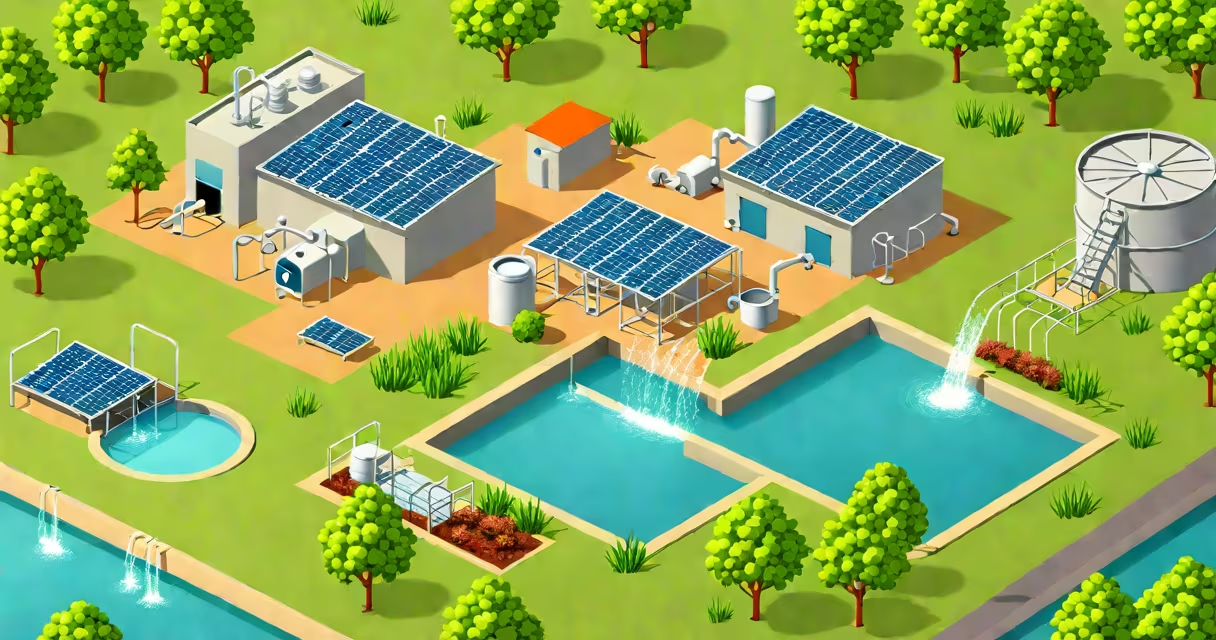
A sustainable water company develops and manages water systems that minimize environmental harm, reduce resource consumption, and maintain long-term water availability through renewable sourcing, efficient treatment, and low-impact infrastructure.
Sustainable water companies prioritize closed-loop water cycles, reuse treated wastewater for non-potable purposes, and integrate renewable energy into operations. They avoid practices that deplete aquifers or degrade watersheds. These firms often serve municipalities, industrial parks, or large residential developments aiming to meet net-zero water goals.
Unlike traditional water utilities focused on supply and distribution, sustainable water companies treat water as a regenerative resource. They measure success not just by volume delivered, but by ecological footprint reduction, energy efficiency, and community water security. According to the United Nations Environment Programme, 2.2 billion people lack access to safely managed drinking water, highlighting the urgent need for such models.
These companies deploy integrated water management systems combining source diversification, decentralized treatment, and smart monitoring. They rely on real-time sensors and AI-driven analytics to detect leaks, predict demand, and adjust supply dynamically.
For example, a sustainable water company in California uses solar-powered reverse osmosis units to treat recycled graywater from apartment buildings. The system removes contaminants and disinfects water to standards suitable for irrigation and toilet flushing. This reduces reliance on imported groundwater by 40% in the project's first year.
Water reuse is central to their model. Treated wastewater can be reused for field irrigation, cooling systems, or industrial processes. The U.S. Environmental Protection Agency reports that recycling 100 gallons of wastewater prevents 150 pounds of carbon dioxide equivalent emissions annually compared to treating freshwater from distant sources.
These companies use several proven technologies to achieve sustainability:
| Technology | Function | Typical Application | Efficiency Gain |
|---|---|---|---|
| Membrane bioreactors (MBRs) | Combines biological treatment with filtration membranes | Urban wastewater treatment plants | Removes 99.9% of pathogens and solids |
| Rainwater harvesting systems | Captures runoff from rooftops and surfaces | Residential and commercial buildings | Reduces municipal supply use by 30-60% |
| Decentralized greywater systems | Treats water from sinks, showers, and laundry | Apartment complexes, hotels | Reuses up to 70% of household wastewater |
| Atmospheric water generators | Extracts moisture from air using condensation | Dry regions, remote communities | Produces 10-30 liters/day per unit |
One non-obvious fact: many sustainable water systems don't require high-pressure pumps. Gravity-fed networks using elevated storage tanks can deliver water efficiently in hilly terrain, reducing energy use by up to 75% compared to electric pumping systems.
Some assume sustainable water companies only focus on recycling. In reality, they also prevent pollution at the source. For example, a company in Portland, Oregon, partnered with local businesses to install oil-water separators in storm drains, stopping 12,000 gallons of contaminated runoff from entering rivers each month.
Another misconception is that these systems are too expensive. A 2022 study by the Pacific Institute found that decentralized systems have lower lifecycle costs than centralized ones in urban areas with aging infrastructure. Over 20 years, a district-scale MBR system saved $1.8 million in capital and maintenance expenses compared to upgrading a central plant.
They are not limited to developed nations. In rural Kenya, a community-led sustainable water company uses solar-powered boreholes and gravity-fed pipelines to provide clean water to 1,200 households. The system runs on 15% of the energy required by diesel-powered alternatives.
In 2021, the city of San Diego launched a pilot program with a sustainable water company to manage stormwater in the Mission Valley area. The project included 12 bioswales (vegetated channels), 4 infiltration basins, and 120 rain barrels connected to gutters.
Over 18 months, the system captured 1.2 million gallons of stormwater. Of that, 85% was filtered through soil and vegetation and infiltrated into the ground, recharging local aquifers. The remaining 15% was diverted to a small treatment facility where it was disinfected and used for park irrigation.
Results showed a 60% reduction in surface runoff during heavy rains, preventing localized flooding. The project also reduced the city's annual water import costs by $220,000. Monitoring data confirmed that nitrate levels in runoff dropped from 12 mg/L to 3 mg/L-well below EPA limits.
Climate change intensifies droughts and floods, making resilient water systems essential. The World Resources Institute notes that 1.4 billion people live in areas facing high water stress. Sustainable water companies help stabilize supply under shifting weather patterns.
I've observed a similar system in action while volunteering with a nonprofit in Tucson, Arizona. We monitored a school's rooftop rainwater collection system. During a single monsoon season, it collected 4,200 gallons-enough to irrigate the campus garden for six months. The students tracked usage via a dashboard, learning how water scarcity affects daily life.
These companies don't replace public utilities-they complement them. They offer scalable, modular solutions that cities can adopt incrementally. As climate risks grow, integrating sustainable water systems into urban planning becomes not optional, but necessary.
When evaluating a sustainable water company, look beyond marketing claims. Check for third-party certifications like the Water Footprint Network's standard or ISO 14046 for water footprint assessment. Verify whether their projects include community engagement and long-term maintenance plans.