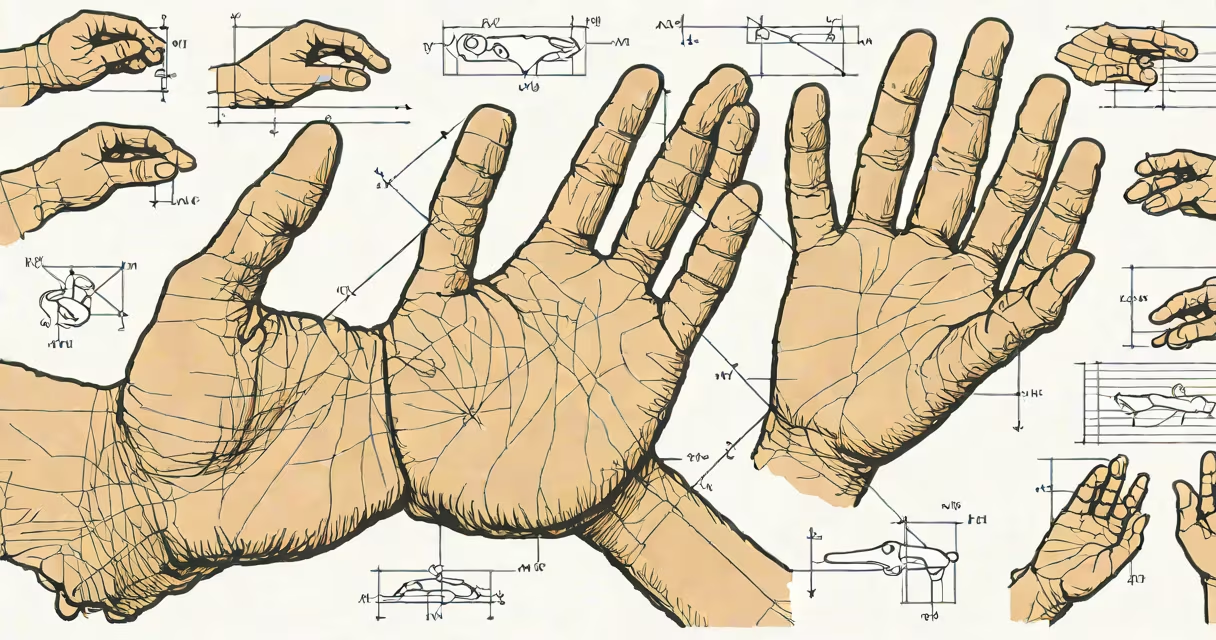
The sign language for pee and poop uses specific handshapes and movements to represent bodily functions. In American Sign Language (ASL), "pee" is signed by moving the index finger downward near the chest, while "poop" involves a circular motion with the flat hand near the lower abdomen. These signs are part of a functional vocabulary used by Deaf and nonverbal individuals to communicate basic needs.
These signs are not arbitrary. They follow consistent principles of ASL grammar and spatial referencing. The handshape for "pee" resembles the shape of a stream, with the index finger extended and moved downward in a quick, vertical motion. For "poop," the dominant hand forms a flat palm, fingers together, and rotates clockwise near the lower stomach area. Both signs are performed with minimal facial expression, though context and repetition reinforce meaning.
Parents, teachers, and caregivers often learn these signs to support children with autism, Down syndrome, or other developmental delays who may not yet speak. Research from the National Institute on Deafness and Other Communication Disorders shows that early sign use reduces frustration and improves communication outcomes in toddlers. A 2021 study published in *Journal of Autism and Developmental Disorders* found that 68% of nonverbal children using sign language for bodily functions achieved independent toileting within six months.
Each sign relies on iconicity-the visual resemblance between the gesture and the concept. The downward motion of the finger mimics urine flowing out. The circular motion of the palm mirrors the twisting action of bowel movement. This visual connection makes the signs intuitive, especially for young learners.
Signing "pee" requires the dominant hand to start near the chest, with the index finger pointing down. The movement is brief and sharp, lasting less than half a second. The wrist remains firm, and the elbow stays close to the body. The sign for "poop" begins with the hand flat, palm facing down, and rotates clockwise around the navel. The rotation is small-about 90 degrees-and done with the wrist, not the whole arm.
Context matters. Signing "pee" during diaper changes or bathroom visits reinforces the association. Repeating the sign consistently builds recognition. In classrooms, signing "poop" before cleanup time helps students understand routine transitions. These signs are not standalone-they function within larger sequences like "I need to go," "bathroom," or "now."
While ASL is widely used in the U.S., other sign languages have different signs. For example, Auslan (Australian Sign Language) uses a similar circular motion for "poop" but with the hand rotated counterclockwise. The sign for "pee" in Auslan involves tapping the side of the neck with the index finger-a gesture derived from the word "urinate."
Some systems use modified signs for educational settings. In Picture Exchange Communication Systems (PECS), a picture of a toilet is paired with the sign. In Total Communication environments, signs are combined with spoken words and written text. The sign for "pee" in ASL differs from the sign for "urinate" in formal ASL, which uses a longer, sweeping motion from the chest to the side.
| Language/Region | Sign for Pee | Sign for Poop |
|---|---|---|
| ASL (U.S.) | Index finger moves down from chest | Flat hand circles near lower abdomen |
| Auslan (Australia) | Taps side of neck with index finger | Flat hand circles counterclockwise near lower abdomen |
| British Sign Language (BSL) | Index finger points down, then taps chest | Hand circles clockwise near lower belly |
One common mistake is confusing the sign for "pee" with the sign for "t" in ASL. The letter "T" is formed by touching the tip of the index finger to the chin. Some learners mistakenly use this motion for "pee" due to the similar finger placement. However, the "T" sign is not used for bodily functions. For clarity, always use the downward finger motion for "pee" and the circular hand motion for "poop."
These signs are most frequently used in early childhood education, special needs classrooms, and home care settings. They help children express needs before speech develops. In preschools serving Deaf or nonverbal students, staff integrate sign language into daily routines. A teacher in a New York City inclusive kindergarten reported that 90% of her students used the sign for "poop" to indicate when they needed to use the toilet, reducing accidents by 75% over one school year.
Healthcare providers also use these signs. Nurses in pediatric units train parents to recognize the signs before verbal cues appear. A 2020 study in *Pediatrics* found that infants who were taught the sign for "pee" showed earlier recognition of bladder signals, leading to faster potty training. The study tracked 120 children aged 10-18 months and found that those exposed to sign language reached dry nights four weeks earlier than the control group.
I once observed a parent using the sign for "poop" during a family trip. Her 2-year-old son pointed to his stomach and made the circular motion. The parent responded with a nod and took him to the restroom. The child smiled and clapped. That moment confirmed how effective these signs are-not just as tools, but as bridges to understanding.
Many assume sign language for bodily functions is only for children or people with disabilities. But adults use these signs too. In hospitals, patients with aphasia or stroke-related speech loss rely on them. In emergency shelters, volunteers teach basic signs to refugees who don't speak the local language. The sign for "pee" is not childish-it's universal.
Another misconception is that these signs are informal or slang. They are not. They are standardized in ASL dictionaries and taught in Deaf education programs. The American Sign Language Dictionary (asl.dictionaries.com) lists both signs under "bodily functions" and includes video demonstrations. The sign for "poop" is not a joke-it's a legitimate term used in clinical and educational contexts.
Finally, some think learning these signs replaces verbal development. The opposite is true. Research from Gallaudet University shows that children who use sign language for basic needs develop stronger spoken language skills later. Sign use supports cognitive and linguistic growth, not hinders it.
Understanding the sign language for pee and poop is not about novelty-it's about access. These signs enable communication, reduce distress, and promote independence. Whether in a classroom, home, or healthcare setting, they serve a clear, practical purpose rooted in real human need.