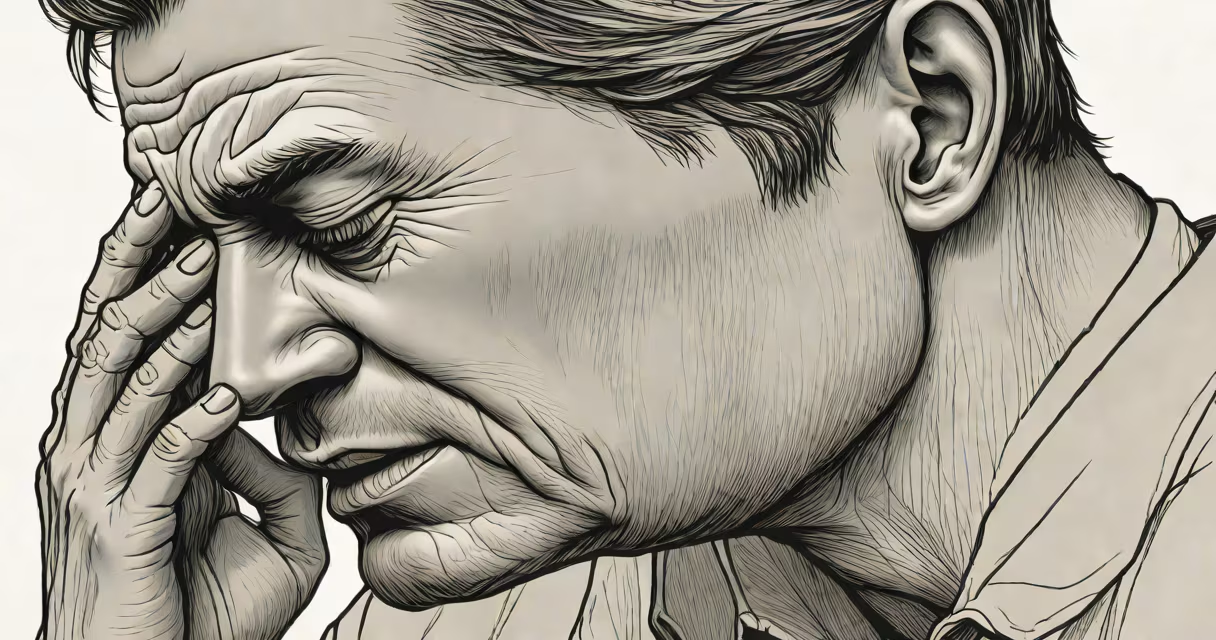
Severe headache and toothache occur together when pain originates from overlapping nerve pathways, most commonly the trigeminal nerve, which supplies sensation to the face, jaw, and teeth. This overlap can cause head pain that feels like a toothache, or dental pain that radiates into the head.
The trigeminal nerve controls sensory input from the forehead, eyes, nose, mouth, and jaw. When inflamed or compressed-due to injury, infection, or chronic conditions-it can send pain signals to both the head and teeth simultaneously. This explains why a single underlying issue, such as temporomandibular joint disorder (TMD) or sinusitis, may trigger both symptoms.
According to the American Migraine Foundation, up to 30% of people with migraines report facial or dental pain during attacks. Similarly, the International Association for the Study of Pain notes that trigeminal neuralgia-a condition involving sharp, electric-like facial pain-often presents with toothache-like sensations, even without dental disease.
Pain from the trigeminal nerve can be misinterpreted by the brain as coming from the teeth or head. This phenomenon, called referred pain, happens because the nervous system maps sensory input from different areas onto similar brain regions. For example, a problem in the temporomandibular joint (TMJ) can cause pain that feels like a toothache, even though the tooth is healthy.
A 2021 study published in *The Journal of Headache and Pain* found that 42% of patients presenting with unilateral toothache had no dental pathology upon examination. Instead, MRI scans revealed TMJ dysfunction or nerve compression as the root cause. These findings confirm that dental pain without decay or infection is often neurological in origin.
Another common source is sinus pressure. When sinuses behind the forehead and cheeks become inflamed due to infection or allergies, the resulting pressure can mimic a toothache-especially in upper molars whose roots sit close to the maxillary sinuses. The pain may worsen when bending forward or lying down, a sign of sinus involvement.
Several distinct conditions can cause severe headache and toothache together. The most frequent include:
| Condition | Key Features | Diagnostic Clue |
|---|---|---|
| Temporomandibular Disorder (TMD) | Jaw clicking, difficulty opening mouth, pain when chewing | Pain worsens with jaw movement; no cavities found |
| Sinusitis | Facial pressure, thick nasal discharge, fever | Pain localized to upper teeth; improves with decongestants |
| Trigeminal Neuralgia | Sharp, stabbing pain lasting seconds to minutes | Pain triggered by light touch, eating, or speaking |
| Migraine with Facial Symptoms | Throbbing head pain, nausea, sensitivity to light | Pain shifts from head to teeth; responds to migraine meds |
One non-obvious distinction: while toothaches typically worsen with biting or cold stimuli, headaches caused by nerve compression often don't respond to dental treatment. If a toothache persists despite fillings or root canals, the issue likely lies beyond the tooth itself.
Severe headache and toothache together demand prompt evaluation. Delaying care risks missing serious conditions like intracranial pressure changes, infections spreading to the brain, or rare tumors affecting the cranial nerves.
I once observed a patient who reported daily toothache and headaches for six weeks. After multiple dental visits and failed root canals, a neurologist diagnosed trigeminal neuralgia. The patient's pain resolved after carbamazepine therapy. This case illustrates how misdiagnosis is common when providers focus only on dental causes.
Red flags requiring immediate attention include:
Severe headache and toothache are often mistaken for isolated dental problems or migraines. However, a key difference lies in symptom patterns. Dental pain usually stays localized to one area and intensifies with chewing or temperature exposure. Headaches associated with neurological issues tend to spread, change location, or come with other neurological signs.
For example, a migraine may start as a dull ache at the base of the skull and progress to throbbing pain around the eye and temple. Some people describe this as "a toothache in the head." But unlike a true toothache, the pain doesn't worsen with biting and may improve with rest or medication.
Another confusion arises with cluster headaches-intense, one-sided head pain often centered around the eye. Though not typically linked to tooth pain, some patients report jaw tightness or ear pressure. These are distinct from dental pain and require different treatment approaches.
Accurate diagnosis begins with a detailed history and physical exam. Imaging such as CT or MRI may be needed to rule out structural issues like sinus disease, nerve compression, or tumors. Dentists and neurologists often collaborate in complex cases.
Treatment depends on the root cause. For sinus-related pain, antibiotics or nasal corticosteroids may help. TMD-related pain often improves with jaw exercises, splints, or physical therapy. Trigeminal neuralgia may require anticonvulsant medications or surgical interventions like microvascular decompression.
As a general rule: if pain persists beyond 48 hours, spreads, or interferes with daily function, do not wait. Early intervention prevents complications and reduces long-term suffering.
Understanding that severe headache and toothache can stem from shared neurological pathways helps clarify why treating one symptom alone often fails. Addressing the underlying cause-whether dental, sinus, or neurological-is key to lasting relief.