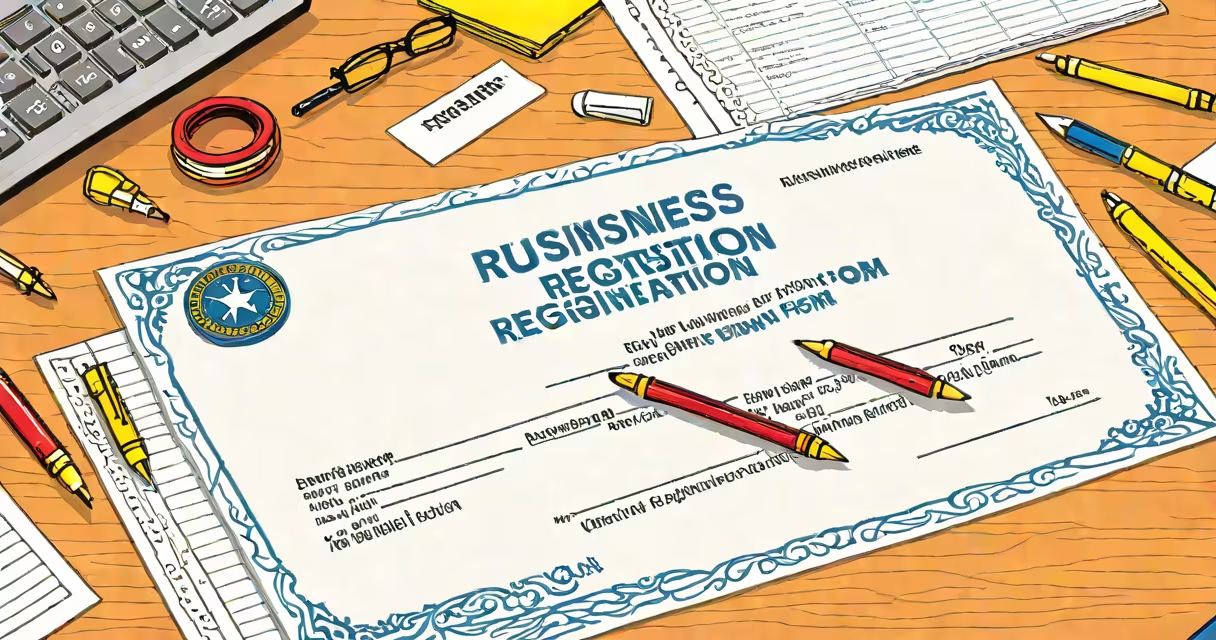
Registering a business creates a legally recognized entity that can operate under a formal name, file taxes, open bank accounts, and enter contracts. This process varies by jurisdiction but generally involves choosing a business structure, selecting a name, filing official paperwork, and obtaining necessary licenses and permits.
The foundation of registering a business lies in deciding your legal structure. Options include sole proprietorship, partnership, limited liability company (LLC), corporation, and nonprofit. Each structure affects liability, taxation, and reporting requirements. For example, a sole proprietorship requires no formal filing beyond a DBA (Doing Business As) certificate in most states, while forming an LLC requires filing Articles of Organization with the state secretary of state office.
Businesses must register with federal, state, and local authorities depending on location and activity. The Internal Revenue Service (IRS) assigns an Employer Identification Number (EIN) for tax purposes. State-level registration often includes submitting formation documents and paying fees. Local governments may require additional permits such as a business license or zoning clearance. Failure to complete all steps can result in fines or loss of legal standing.
Registration begins with selecting a unique business name that complies with state naming rules. Names cannot be misleading or already in use. After choosing a name, you file official documents with the appropriate state agency. For an LLC, this is typically the Articles of Organization. For a corporation, it's the Articles of Incorporation. These forms list the business's legal name, address, registered agent, and purpose.
Once filed, the state issues a Certificate of Organization or similar document confirming the business's existence. This certificate is essential for opening a business bank account, applying for loans, and securing contracts. You then apply for an EIN from the IRS, which is free and available online. The EIN serves as the business's taxpayer identification number, required for payroll, tax filings, and banking.
After federal and state registration, businesses must obtain local licenses and permits. A restaurant, for example, needs a food handler's permit, health department inspection, and signage permit. Some industries require specialized certifications-healthcare providers need state medical licensing, contractors need trade-specific credentials. Skipping any step risks enforcement actions or operational shutdowns.
Different business structures have distinct registration processes and ongoing obligations. Below is a comparison of common structures:
| Structure | Registration Required | Tax Treatment | Liability Protection |
|---|---|---|---|
| Sole Proprietorship | DBA filing in most states | Pass-through (reported on personal tax return) | No protection; owner liable for debts |
| Partnership | Partnership agreement; state registration in some states | Pass-through; partners report income on personal returns | No protection; partners jointly liable |
| LLC | Articles of Organization filed with state | Pass-through or corporate election (can choose) | Yes; members not personally liable for business debts |
| C Corporation | Articles of Incorporation filed with state | Corporate income tax; dividends taxed again at personal level | Yes; shareholders not liable for corporate debts |
Many entrepreneurs assume that forming an LLC automatically provides liability protection. That's false. Protection only applies if the business maintains separation between personal and business finances and follows formal operating procedures. Courts can "pierce the corporate veil" if owners commingle funds or fail to hold meetings and maintain records.
I formed an LLC for my freelance design work in 2021. I filed Articles of Organization with the California Secretary of State, obtained an EIN, and opened a dedicated business bank account. Within six months, I was able to secure a client contract requiring proof of legal registration. Without registration, the client would have declined to engage.
Every U.S. state and territory enforces business registration laws. The process is managed by state-level agencies-typically the Secretary of State or equivalent. For example, in New York, you file with the Department of State; in Texas, with the Secretary of State's Office. Online portals like the California Secretary of State's website allow electronic filing with instant confirmation.
Registration is not optional for formal business operations. A business without proper registration cannot legally sue or be sued, open a business bank account, or claim deductions on tax returns. The IRS requires a valid EIN to file business tax forms. Banks deny applications for business accounts without documentation proving the entity exists.
Some businesses operate informally for years without formal registration. While this avoids upfront costs, it exposes owners to personal liability. If a customer sues for damages, the owner's home, savings, and retirement accounts are at risk. Registration limits exposure and builds credibility with clients, lenders, and vendors.
One widespread error is confusing a business name with a legal entity. Just because you call your venture "GreenLeaf Landscaping Inc." doesn't make it a legal corporation. You must file Articles of Incorporation and receive approval. Without this, the name offers no legal protection.
Another misconception is that registration is a one-time event. It isn't. Most states require annual reports and fee payments to remain in good standing. Failing to file these reports results in administrative dissolution-the business loses its legal status. Reinstatement requires back fees and penalties.
Some think they can skip federal registration. They cannot. Even sole proprietors must obtain an EIN if they hire employees or operate as a single-member LLC. The IRS mandates an EIN for any business with employees or that files certain tax forms. Using a Social Security Number instead leads to compliance issues during audits.
Finally, many assume that a business license equals legal registration. A license permits operation in a specific jurisdiction but doesn't create the business entity. You can't register a business without filing with the state, even if you have a local business license.
Registering a business is not a formality-it's the foundation of legal and financial legitimacy. It enables growth, protects assets, and ensures compliance. scaling a startup, the correct registration process is non-negotiable.