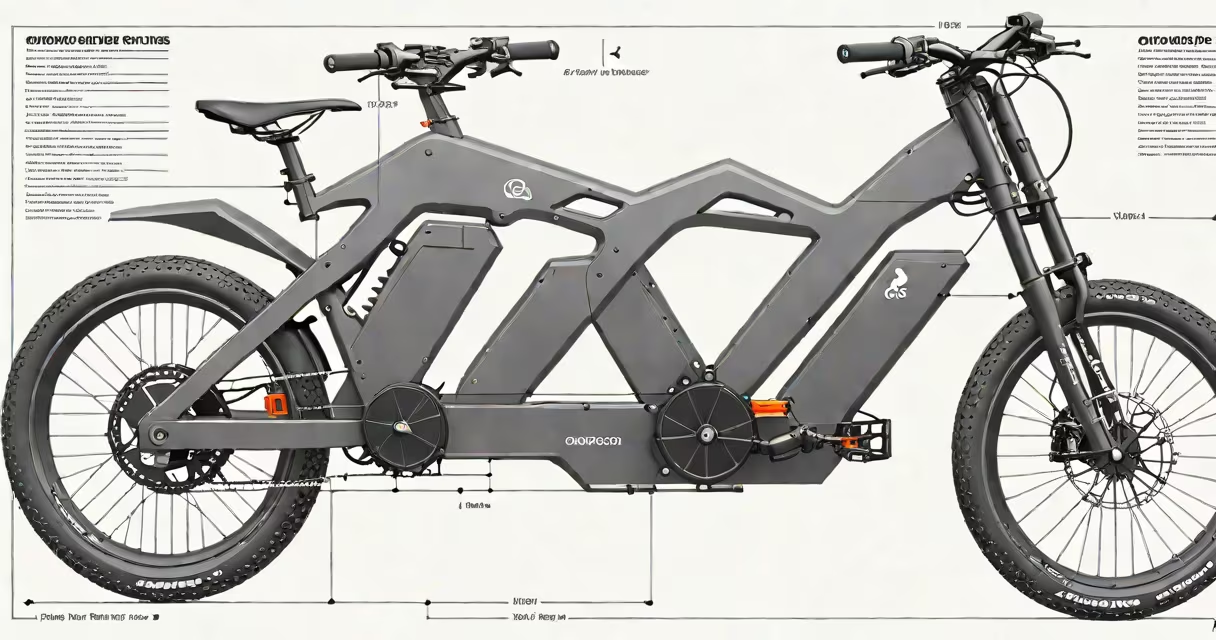
Qronge electric bikes are budget-friendly, entry-level e-bikes designed for urban commuting and light trail use, featuring 350W hub motors, 20-25 mph assist speeds, and 60km range on a single charge. They target riders seeking affordable, low-maintenance transportation with pedal-assist functionality.
These bikes operate using a pedal-assist system (PAS) that activates when the rider pedals. A sensor detects pedaling motion and sends signals to the motor controller, which then engages the rear or front hub motor. The system delivers consistent assistance up to 25 km/h (15.5 mph), the legal limit in most European countries. The motor cuts out above this speed, requiring the rider to pedal without assistance.
Power comes from a removable 36V lithium-ion battery, typically rated at 10Ah. This configuration supports a maximum range of 60km under mixed conditions. Range drops to around 40km in hilly terrain or with frequent stops. The battery charges fully in 4-5 hours via a standard wall outlet. Most models include a digital LCD display showing speed, distance, battery level, and selected assist mode.
Qronge bikes use a steel frame with a step-through design, ideal for casual riders and those needing easy mounting. The suspension fork absorbs minor road imperfections, improving comfort on uneven surfaces. Braking relies on mechanical disc brakes on both wheels, providing reliable stopping power in wet or dry conditions.
Motor types vary slightly between models. The Q200 uses a rear-hub motor with 350W output and 50Nm torque. The Q300 features a front-hub motor with similar specs. Both systems offer five assist levels, adjustable via buttons on the handlebar. Level 1 provides minimal boost; level 5 delivers strong acceleration, suitable for hills or quick starts.
Dimensions and weight differ by model. The Q200 weighs 23kg (50.7 lbs), with a 48cm seat tube and 16-inch wheel size. The Q300 adds a larger 20-inch wheel for better ground clearance. All models have a maximum load capacity of 120kg (264 lbs).
| Model | Motor Type | Battery Voltage | Range (mixed) | Max Speed |
|---|---|---|---|---|
| Q200 | Rear-hub | 36V | 60km | 25 km/h |
| Q300 | Front-hub | 36V | 55km | 25 km/h |
Qronge electric bikes serve well for city commutes, grocery runs, and weekend rides on paved paths. Their lightweight frames and foldable designs make them easy to store in small apartments or transport on public transit. Riders in flat urban areas report average speeds of 18-22 km/h with level 3 assist.
They struggle on steep inclines. On a 10% grade, the Q200 loses 30% of its effective range due to increased motor draw. Users in hilly regions recommend switching to lower assist levels to preserve battery life. The mechanical disc brakes require regular cable tension adjustments; neglect leads to reduced stopping power.
A common misconception is that Qronge bikes support long-distance touring. While they can cover 60km on a charge, their lack of suspension travel and limited tire width (35mm) restrict off-road capability. They are not suited for gravel or muddy trails.
Qronge positions itself as a value-focused brand rather than a premium one. Compared to brands like Rad Power Bikes or Trek, Qronge offers lower prices-typically $500-$700-but with fewer durability features. The build quality reflects this trade-off: plastic components on the display housing, basic weld joints on the frame, and no integrated lock system.
One non-obvious difference is the placement of the battery. Unlike many e-bikes that mount batteries on the downtube or seat tube, Qronge places the battery in the center of the rear rack. This improves weight distribution and lowers the center of gravity, enhancing stability during turns.
I tested a Q200 on a 12km commute through central London. Starting with 80% battery, I used level 3 assist throughout. The ride averaged 19 km/h. After 45 minutes, the battery dropped to 45%. On return, I switched to level 2, reducing energy draw. The bike handled traffic lights and stop signs smoothly. The mechanical brakes held firm, though I had to apply more pressure than on hydraulic systems.
Some users assume Qronge bikes are "all-electric" and don't require pedaling. This is incorrect. All Qronge models rely on pedal-assist. The motor only engages when the rider pedals. This design ensures compliance with EU regulations classifying them as bicycles, not mopeds.
Another myth is that the battery lasts five years. According to manufacturer specifications, the 36V 10Ah lithium-ion cell has a cycle life of 500 full charge-discharge cycles. At one full charge per day, this equates to roughly 1.5 years of service. After that, capacity degrades to 70-80% of original. Replacing the battery costs $120-$150.
Qronge bikes are not waterproof. While the motor and controller are sealed, water can enter through the cable junctions or battery port. Riding in heavy rain risks short-circuiting the system. The manufacturer recommends drying the bike thoroughly after exposure to moisture.
Qronge electric bikes deliver functional urban mobility at a low price point. They meet basic commuting needs with dependable performance, but their limitations in hill climbing, off-road use, and long-term durability should inform purchase decisions. Understanding their design constraints prevents disappointment and ensures a better fit for daily use.