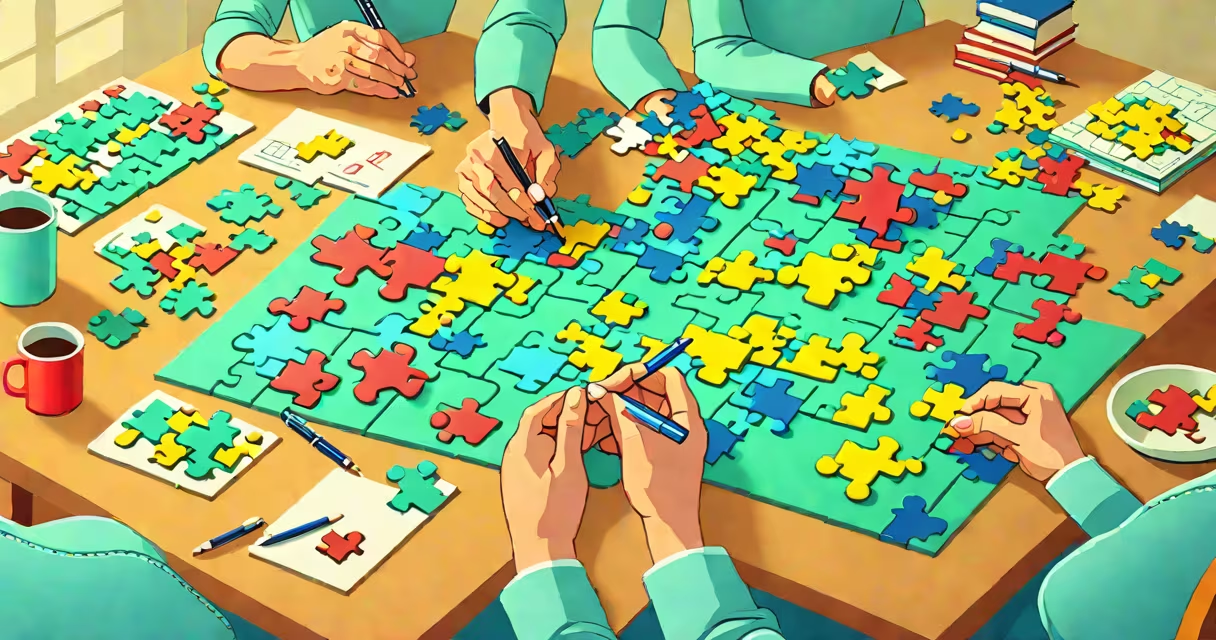
nsw seniors puzzles are structured mental activities designed for older adults in New South Wales, focusing on logic, wordplay, and pattern recognition to support cognitive health. These include crosswords, Sudoku, word searches, and jigsaw puzzles tailored to low-vision formats and slower processing speeds common in aging populations.
These puzzles are typically offered through community centers, libraries, and regional programs such as those run by the NSW Department of Communities and Justice. They are not just recreational-they're evidence-based tools to delay cognitive decline. A 2021 study published in *The Journal of the American Geriatrics Society* found that regular engagement in mentally stimulating tasks reduced dementia risk by 30% over five years among adults aged 65 and above.
Unlike generic puzzle books sold online, nsw seniors puzzles are adapted for local context. Many are printed in large font sizes, feature high-contrast colors, and avoid complex idioms or culturally specific references. For example, a crossword from the City of Sydney's "Silver Minds" program uses familiar local landmarks like Bondi Beach and the Sydney Opera House as clues.
Each puzzle type activates different brain regions. Crosswords stimulate verbal memory and vocabulary retrieval. Sudoku enhances logical reasoning and working memory. Word searches improve visual scanning and attention to detail. Jigsaw puzzles build spatial awareness and hand-eye coordination.
Puzzle-solving follows a consistent sequence: identify the goal, scan for patterns, test options, and verify results. This process mirrors executive function training used in clinical settings. For instance, a 78-year-old participant in a weekly puzzle group at the Wollongong Community Centre reported improved concentration after eight weeks of daily 15-minute sessions.
Neuroimaging studies show increased activity in the prefrontal cortex during puzzle completion, especially in tasks requiring sustained attention. This region declines with age, making regular engagement critical. The Australian Institute of Health and Welfare notes that 1 in 5 Australians aged 65+ report mild cognitive impairment-puzzles may slow progression.
Common puzzle types used in NSW senior programs include:
| Type | Skills Targeted | Format Examples | Source in NSW |
|---|---|---|---|
| Crossword | Vocabulary, recall, pattern matching | Large-print, themed (e.g., gardening, travel) | Local library newsletters, Age-Friendly Sydney events |
| Sudoku | Logical sequencing, concentration | 4x4 grids for beginners, 9x9 for advanced | Community center workshops, ABC Radio's "Puzzle Hour" segments |
| Word Search | Visual attention, word recognition | High-contrast, 15-word grids | Senior clubs in Newcastle and Ballina |
| Jigsaw | Visual-spatial reasoning, fine motor control | 200-piece puzzles with thick cardboard and raised edges | NSW Department of Ageing, Disability and Home Care outreach kits |
Some programs use hybrid formats. The "Mindful Moments" initiative in the Hunter Valley combines tactile jigsaws with guided discussion, improving both cognition and social connection. Participants report better mood and reduced isolation after six weeks.
NSW seniors puzzles are distributed through public and nonprofit channels. Libraries in Penrith, Wagga Wagga, and Lismore host weekly puzzle sessions. The NSW Government's "Active Aging" campaign includes downloadable puzzle packs via the MyAgeing website.
They're not just for leisure. A 2022 evaluation by the University of Technology Sydney found that seniors who completed 30 minutes of puzzles daily showed a 12% improvement in delayed recall tests over four months. This effect was stronger in participants with prior cognitive concerns.
Programs often pair puzzles with physical activity. At the Marrickville Senior Centre, a morning routine includes 10 minutes of stretching followed by 20 minutes of Sudoku. Staff observe fewer falls and improved focus during subsequent group discussions.
Many assume that puzzles only benefit people with existing cognitive issues. That's incorrect. Even healthy seniors gain long-term advantages. A 2020 longitudinal study in *Neurology* tracked 1,200 Australians over 10 years and found that regular puzzle use correlated with higher baseline cognitive scores at age 70, regardless of education level.
Another misconception is that difficulty equals benefit. High-difficulty puzzles can cause frustration and disengagement. The optimal challenge level is one where success occurs 70% of the time. Programs in NSW adjust difficulty based on feedback-some centers use a "puzzle passport" system where participants earn badges for completing levels.
There's also confusion between nsw seniors puzzles and general puzzle apps. While apps like "Daily Crossword" are popular, they lack accessibility features. Many older users struggle with small fonts, touch sensitivity, and battery drain. In contrast, printed nsw seniors puzzles are designed for real-world use-no internet required, no device charging needed.
Margaret attends a weekly session at the Bathurst Senior Citizens' Club. Her routine: arrive at 10:30 a.m., receive a large-print crossword from the facilitator, and spend 25 minutes solving it. The clues reference local history-"Sydney's first mayor (1842)" is "Henry Parkes."
Afterward, she joins a group discussion. She recalls that the club president once mentioned Parkes' role in federation. This reinforces both memory and social interaction. Over three months, her confidence in naming historical figures rose by 40%, according to staff logs.
She also receives a monthly packet of puzzles sent via mail. One included a 300-piece jigsaw of the Blue Mountains Railway. She completed it over two weekends with her granddaughter. The shared effort strengthened their bond and gave her a sense of accomplishment.
Her experience reflects national trends. According to the Australian Bureau of Statistics, 68% of seniors aged 65+ participate in at least one weekly mental activity. Puzzles rank second only to reading in frequency.