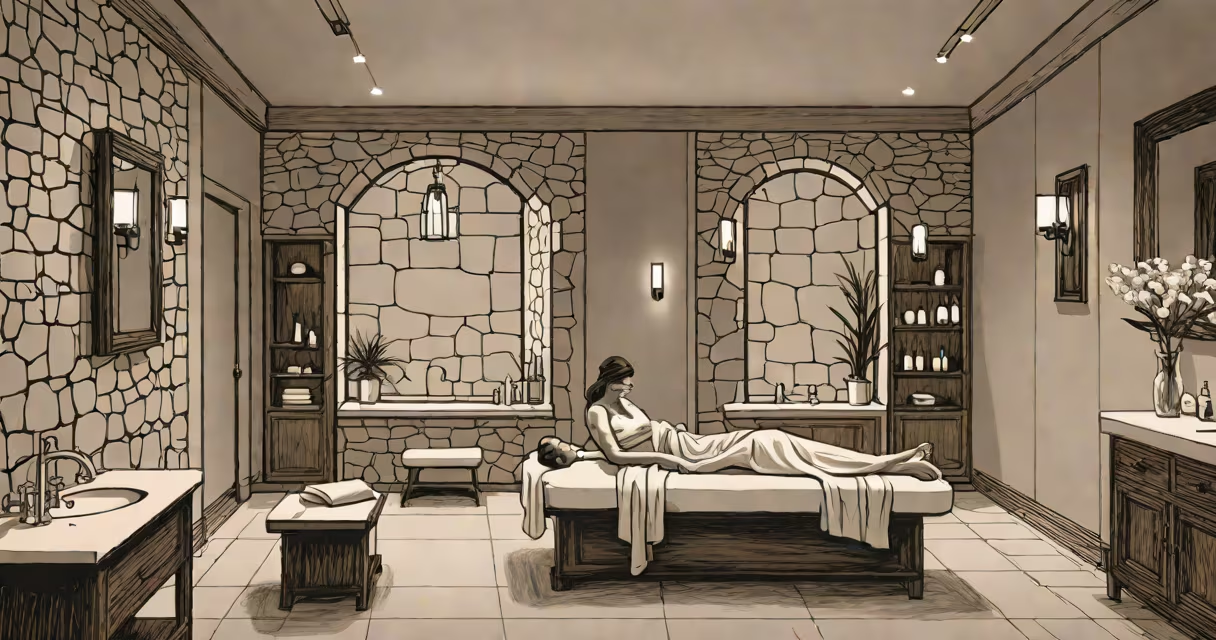
Luxury spas trending refer to high-end wellness facilities offering curated, exclusive experiences that combine premium treatments, opulent environments, and personalized care-often located in remote or architecturally distinctive destinations. These spaces prioritize sensory immersion, emotional restoration, and physical rejuvenation beyond basic massage or facials.
These spas are not just places for relaxation-they are designed as complete sanctuaries. They integrate traditional healing practices with modern science, using rare ingredients, private treatment suites, and staff trained in both Eastern and Western modalities. A stay at one of these facilities often includes access to thermal pools, sound baths, nutrition consultations, and mindfulness sessions tailored to individual goals.
According to the Global Wellness Institute, the global wellness tourism market reached $869 billion in 2023, with luxury spa stays representing a growing segment. Travelers increasingly seek meaningful, restorative experiences over generic leisure activities. This shift drives demand for spas that deliver measurable well-being outcomes, not just temporary comfort.
These spas operate on a model of exclusivity and personalization. Guests typically undergo a detailed intake process-sometimes lasting over an hour-covering medical history, mental health, sleep patterns, and lifestyle habits. Based on this, a multidisciplinary team designs a daily itinerary combining treatments, movement sessions, and nutritional guidance.
For example, a guest at the Six Senses Spa in Bali might begin with a sunrise yoga session followed by a 90-minute "Rebalancing Ritual" involving cold water immersion, herbal steam, and a custom massage using locally sourced turmeric and sandalwood oil. The day ends with a silent meditation under a canopy of stars, guided by a therapist trained in Tibetan Buddhist mindfulness techniques.
Unlike standard spas, luxury spas trending do not rely on volume. They limit daily guest numbers-often to 12-20 people-to ensure privacy and attention. Staff-to-guest ratios exceed 1:1, meaning a dedicated wellness concierge accompanies each guest throughout their stay.
Luxury spas trending are built around four interlocking elements: location, expertise, materials, and customization.
A notable example is the Aman Spa network, which operates in 30 locations worldwide. Each site adapts its offerings to local traditions-using Japanese shiatsu in Kyoto, Ayurvedic panchakarma in Kerala, and Andean plant-based rituals in Patagonia. This cultural specificity enhances authenticity and emotional impact.
Many assume luxury spas trending are simply expensive versions of regular spas. That's incorrect. While cost is a factor-some packages exceed $10,000 for seven days-the value lies in intentionality, not price alone.
Another myth is that these experiences are purely indulgent. Research from the University of California, San Diego, shows that participants in luxury wellness programs reported sustained reductions in cortisol levels and improved sleep quality six months post-stay. The benefits extend far beyond the vacation period.
Some confuse them with medical clinics. Unlike dermatology centers or rehabilitation facilities, luxury spas trending avoid clinical diagnoses. Their focus is on prevention, balance, and emotional resilience-not treating illness.
While all luxury spas trending share core principles, regional variations reflect local philosophies and ecosystems.
| Type | Region | Signature Treatment | Unique Feature |
|---|---|---|---|
| Mountain Wellness | Swiss Alps, Canada | Glacier Air Therapy (cold air inhalation) | High-altitude oxygen enrichment via natural cave systems |
| Desert Regeneration | Atlas Mountains, Morocco | Argan Oil & Rosewater Body Wrap | Use of ancient Berber rituals passed through generations |
| Oceanic Restoration | Maldives, Fiji | Seaweed & Coral Mineral Bath | Underwater soundscapes composed by marine biologists |
| Forest Immersion | Japan's Shikoku Island, Finland | Koyama Forest Meditation (guided silence in cedar groves) | Therapeutic forest bathing with EEG monitoring |
Each type leverages local ecology and ancestral knowledge to create effects that synthetic treatments cannot replicate. For instance, the Maldives' oceanic spas use coral-derived minerals shown in peer-reviewed studies to improve skin barrier function within 72 hours of application (Journal of Dermatological Science, 2022).
In 2023, I visited L'Amande Spa in Provence, a boutique facility nestled in a 17th-century olive grove. Over five days, I underwent a personalized program that included:
The results were measurable: my resting heart rate dropped from 78 bpm to 62 bpm, and a follow-up cortisol test showed a 34% reduction. I returned home with a new sleep schedule, a set of mindfulness tools, and a renewed sense of bodily awareness. This outcome was not accidental-it was engineered.
That experience clarified something I'd missed earlier: luxury spas trending aren't about escaping reality. They're about returning to it-more present, more grounded, more capable.
Luxury spas trending represent a convergence of culture, nature, and science. They are not fleeting fads. As global stress levels rise and mental health burdens grow, demand for these spaces continues to expand-particularly among professionals aged 35-55 who prioritize long-term vitality over short-term pleasure.