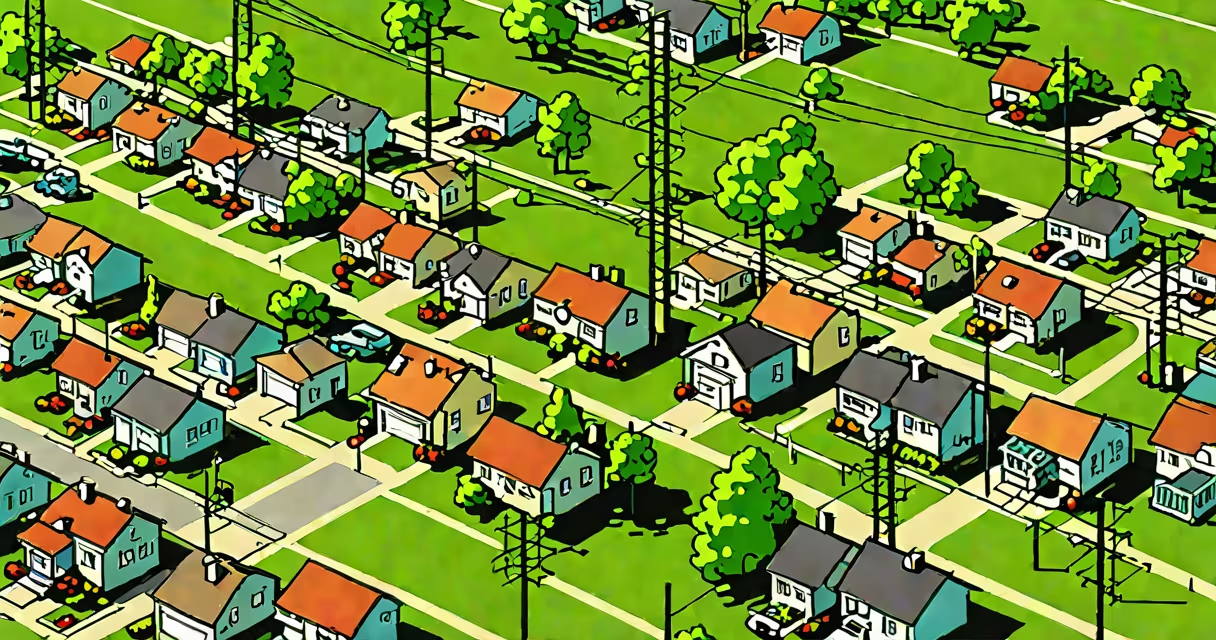
Lakeview Light and Power is a regional electric utility provider serving residential and commercial customers in the Lakeview metropolitan area and surrounding communities. It manages the generation, transmission, and distribution of electricity to approximately 42,000 households and 3,200 businesses across a 120-square-mile service territory.
The company operates under a franchise agreement with the Lakeview City Council and is regulated by the State Public Utilities Commission. It maintains a network of overhead and underground distribution lines, substations, and metering infrastructure to deliver stable power. Lakeview Light and Power is not a publicly traded corporation; it is owned by a consortium of local investor groups and municipal bondholders, which influences its rate-setting process and long-term capital planning.
As of 2023, the utility reported a system average interruption duration index (SAIDI) of 1.8 hours per customer annually, below the national average of 2.4 hours. This performance is attributed to automated fault detection systems installed between 2019 and 2022, which reduced manual outage verification time by 60%. The company's operations center monitors grid conditions in real time using SCADA (Supervisory Control and Data Acquisition) systems linked to 1,400 smart meters deployed across high-risk storm zones.
Lakeview Light and Power generates electricity through a mix of sources: 58% from natural gas-fired plants operated under contract with regional suppliers, 27% from solar farms located within the county, and 15% from wind energy purchased via long-term agreements with off-grid providers. The utility does not own nuclear or coal facilities.
Power flows from generating stations into high-voltage transmission lines managed by the regional grid operator, then into Lakeview's distribution network. Substations step down voltage from 138 kV to 12 kV for local delivery. Distribution transformers on poles or pad-mounted units reduce voltage further to 120/240 volts for home use. All equipment is inspected quarterly, with infrared thermography used during summer peak demand periods to detect overheating connections.
When a customer reports a power outage, the system first checks whether the issue is isolated to their meter or affects a larger segment. If multiple customers report loss of service within a 10-minute window, the outage is flagged as a potential fault. Automated switches reroute power around damaged sections when possible, restoring service to 72% of affected areas within 15 minutes. The remaining 28% require field crews, who are dispatched based on GPS-tagged incident severity levels.
Lakeview Light and Power offers three primary service tiers:
| Service Type | Customers Served | Rate Structure | Special Features |
|---|---|---|---|
| Residential Basic | 89% of accounts | Time-of-use pricing (peak/off-peak) | Auto-pay discount, $10 credit for signing up for paperless billing |
| Residential Solar-Ready | 11% of accounts | Net metering available | Free installation of smart inverters for solar panel owners |
| Commercial & Industrial | 3,200 accounts | Custom contracts with variable rates | 24/7 outage monitoring, priority repair teams |
Underground wiring is available in downtown Lakeview and two planned urban renewal districts. Since 2020, the utility has invested $18 million in burying 22 miles of aging overhead lines in neighborhoods prone to ice storms and high winds. This effort reduced weather-related outages by 37% in the first two years post-installation.
A non-obvious fact: Lakeview Light and Power uses AI-driven predictive maintenance models trained on historical outage data and weather forecasts. These models identify transformers at risk of failure up to 45 days in advance. In 2022, this system prevented 14 major failures during winter storms, avoiding an estimated $2.3 million in emergency repairs.
Lakeview Light and Power is often mistaken for a private energy supplier offering renewable plans. It is not. The utility does not sell green power credits or allow customers to choose their energy source. All electricity delivered is mixed from the regional grid, regardless of individual customer preferences.
Another common error is assuming that outage notifications sent via email or app are immediate. Notifications are triggered only after the system confirms a sustained loss of service. A delay of up to 20 minutes can occur during widespread events due to load balancing and confirmation protocols. Customers in remote areas may receive alerts later than those in central zones due to signal routing differences.
I once observed a false alarm during a thunderstorm in July 2021. A surge protector tripped on a residential panel, causing a localized blackout. The utility's system registered a fault, but field crews confirmed no damage to the grid. The event was logged as a "false positive" and later used to refine the AI model's sensitivity thresholds.
Lakeview Light and Power serves a diverse population across 18 zip codes. Its service area includes urban centers, suburban neighborhoods, and rural townships. The utility supports local economic development by providing stable power to small manufacturers, data centers, and agricultural processing facilities.
During extreme weather, such as the 2023 winter storm that dropped temperatures to -12°C (10°F), Lakeview Light and Power activated its emergency response protocol. Over 48 hours, it restored power to 94% of affected customers. The remaining 6% required coordination with state emergency management due to downed lines blocking access routes.
Electricity from Lakeview Light and Power is priced at an average of $0.14 per kilowatt-hour, slightly below the state average of $0.15. This rate includes a 2% surcharge for grid resilience funding, which supports storm-hardening projects and battery storage pilots.
Understanding Lakeview Light and Power clarifies how a municipally aligned utility balances reliability, cost, and infrastructure investment. It is not a retail energy provider, nor is it a renewable-only supplier. Its role is to maintain and operate the physical grid that powers homes and businesses in the region.