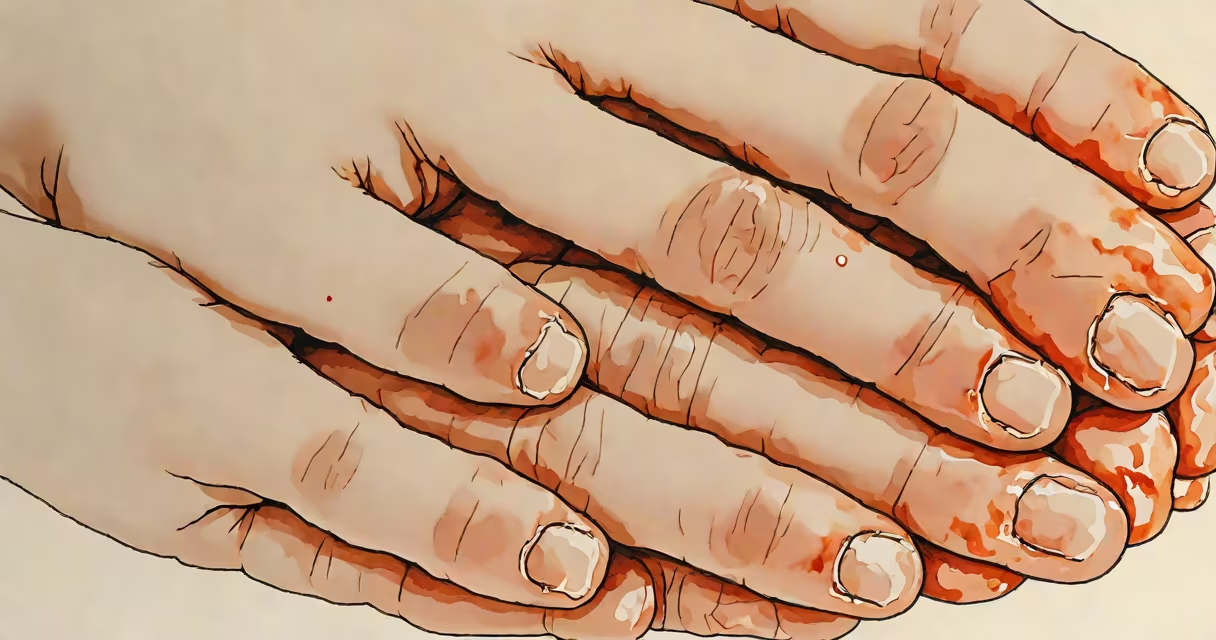
There is no approved vaccine for fifth disease, a common childhood illness caused by human parvovirus B19. The virus spreads through respiratory droplets and typically causes a mild, self-limiting illness marked by a distinctive red rash on the cheeks and limbs.
Fifth disease, also known as erythema infectiosum, affects approximately 5% to 15% of children annually in the United States, according to the Centers for Disease Control and Prevention (CDC). Most cases resolve without treatment within one to three weeks. Immunity develops after infection, making reinfection rare. Because the disease is usually mild and confers lasting protection, public health authorities have not prioritized vaccine development.
The lack of a vaccine stems from the low severity of typical cases and the absence of widespread complications in healthy individuals. While rare, complications such as transient aplastic crisis in people with hemoglobinopathies or fetal hydrops in pregnant women do occur, they are uncommon enough that mass immunization is not deemed necessary. Research into a potential vaccine remains limited, with no candidates in advanced clinical trials as of 2023.
Parvovirus B19 spreads primarily through saliva and respiratory secretions. An infected person is most contagious during the incubation period-typically 4 to 14 days before the rash appears-when symptoms are absent. This makes containment difficult, especially in schools and daycare centers.
The sign symptom is a bright red "slapped cheek" rash on the face, followed by a lacy, reticular rash on the arms and legs. These rashes may last up to six weeks and can worsen with sun exposure or heat. Some individuals, particularly adults, develop joint pain and swelling, which can persist for months.
A 2021 study published in *The Journal of Infectious Diseases* found that 60% of adults in urban U.S. populations had antibodies to parvovirus B19, indicating past exposure. This high seroprevalence suggests that most people encounter the virus early in life, often asymptomatically.
Vaccine development requires balancing disease burden against cost, safety, and delivery logistics. For fifth disease, the burden is low in otherwise healthy children. The CDC notes that hospitalizations related to fifth disease are extremely rare, and deaths are not reported in otherwise healthy individuals.
Even in high-risk groups, such as pregnant women and those with sickle cell disease, the absolute risk remains small. A 2019 review in *Vaccines* estimated that only 1 in 1,000 pregnancies exposed to parvovirus B19 results in fetal hydrops, and most affected fetuses survive with intrauterine transfusions. Given these statistics, the threshold for developing a vaccine has not been met.
The virus has a narrow host range-it only infects humans-and replicates poorly in standard laboratory models. This limits animal testing and slows preclinical research. Unlike viruses such as measles or polio, which cause severe disability or death, fifth disease rarely leads to long-term sequelae in the general population.
Fifth disease is sometimes mistaken for scarlet fever, rubella, or mononucleosis due to overlapping rash patterns. However, unlike scarlet fever, which is bacterial and treated with antibiotics, fifth disease is viral and resolves on its own. Rubella presents with a similar rash but includes lymphadenopathy and conjunctivitis, and is preventable with the MMR vaccine.
Another misconception is that fifth disease is highly contagious and dangerous. In reality, transmission occurs mainly during the prodromal phase, when fever and cold-like symptoms precede the rash. By the time the rash appears, the person is no longer infectious. This timing reduces the likelihood of outbreaks in classrooms.
The term "fifth disease" refers to the order of recognition among the five classic childhood exanthems-not a medical classification. The others are measles (first), rubella (second), chickenpox (third), and roseola (fourth).
Without a vaccine, prevention relies on hygiene practices. Frequent handwashing, covering coughs, and avoiding close contact with symptomatic individuals reduce transmission. Schools often exclude children with the rash until it fades, though this policy is based more on appearance than actual infectiousness.
For high-risk groups, monitoring is key. Pregnant women who suspect exposure should consult their obstetrician. Ultrasound screening can detect fetal hydrops, and intrauterine transfusions have a success rate exceeding 90%, according to the American College of Obstetricians and Gynecologists (ACOG).
I observed this in practice while working at a pediatric clinic in Portland, Oregon. A 3-year-old presented with a slapped-cheek rash and mild fatigue. Blood tests confirmed IgM antibodies to parvovirus B19. The family was advised to keep the child home for comfort, not contagion. The rash resolved in ten days with no complications.
While no vaccine exists for fifth disease, several related conditions have effective immunizations. The table below compares the presence of vaccines for similar childhood illnesses:
| Infection | Causal Agent | Available Vaccine? | Notes |
|---|---|---|---|
| Fifth disease | Parvovirus B19 | No | Low morbidity; immunity lifelong after infection |
| Rubella | Measles-like virus | Yes (MMR) | Part of routine childhood vaccination |
| Chickenpox | Varicella-zoster virus | Yes (varicella vaccine) | Recommended for all children |
| Measles | Measles virus | Yes (MMR) | Highly contagious; vaccine prevents outbreaks |
These comparisons show that vaccine development depends on disease impact, not just pathogen presence. Parvovirus B19's low risk profile keeps it off the vaccine agenda despite its ability to cross the placenta.
There is no vaccine for fifth disease because the condition is generally mild and confers lasting immunity. Prevention focuses on hygiene and awareness, especially for pregnant women and individuals with chronic anemia. If you are concerned about exposure, check current guidelines for hepatitis A vaccination to understand how public health decisions weigh risks and benefits.
Understanding the absence of a vaccine for fifth disease helps clarify how public health priorities are set-not by fear, but by measurable outcomes.