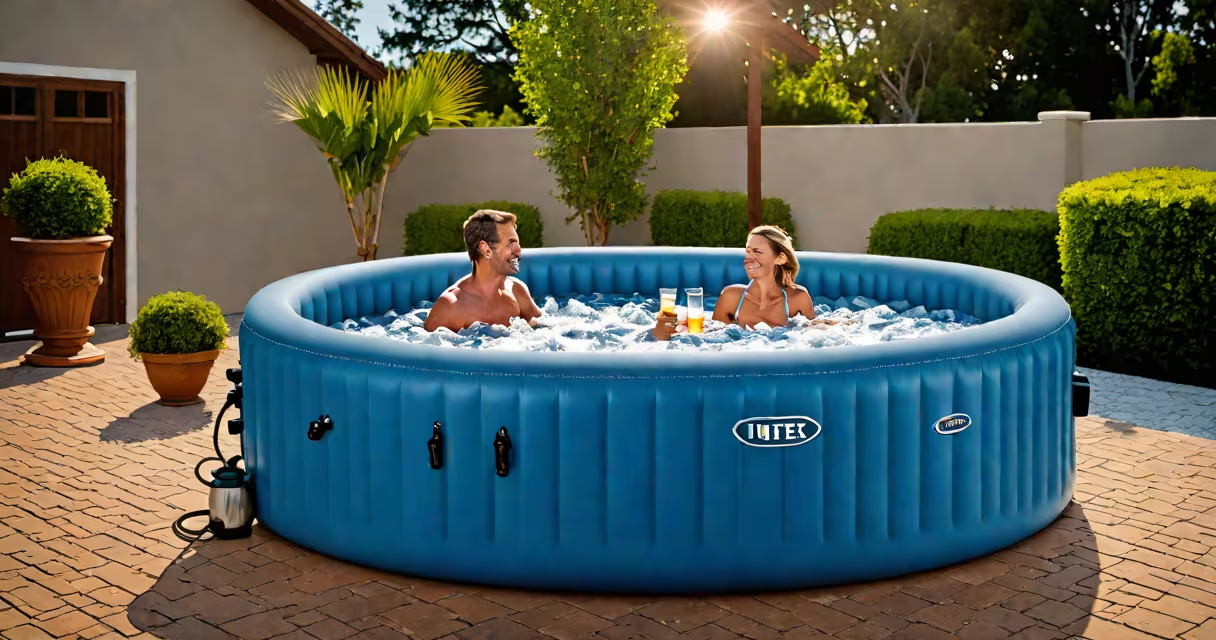
An Intex hot tub is a portable, inflatable spa made from durable vinyl and powered by a heater and pump system. Designed for residential backyard or indoor use, it typically holds 150 to 300 gallons and supports 2-4 people. The unit inflates quickly and folds flat for storage.
These spas use a 110V electrical outlet to run a submersible heater and a circulation pump. Water temperature ranges from 80°F to 104°F, controlled via a digital thermostat. Most models include a filter cartridge, air jets, and a safety cover. They are marketed as low-cost alternatives to permanent fiberglass or acrylic hot tubs.
Intex manufactures several models under the "Spa" line, including the Intex 6-Person Hot Tub (model 68686), which features a 1.5-horsepower pump and 120V heater. The company claims the material resists UV damage and punctures, though real-world testing shows wear after 18 months of seasonal use.
The Intex hot tub operates through a closed-loop system. A pump draws water from the tub, passes it through a filter cartridge, then sends it through a heating element before returning it to the basin. This cycle runs continuously during use and cycles on demand when the temperature drops below the set point.
Water quality is maintained using chlorine or bromine sanitizers. A pH level between 7.2 and 7.8 is ideal. Levels outside this range cause skin irritation, eye discomfort, or rapid sanitizer breakdown. Alkalinity should stay between 80 and 120 ppm to prevent scale formation or corrosion.
For example, a user filling a 200-gallon Intex hot tub with city tap water (pH 7.5, alkalinity 100 ppm) must test water weekly. After two days of use, pH rises to 8.1 due to airborne carbon dioxide absorption. Adding 1/4 ounce of sodium bisulfate lowers pH to 7.6. Without adjustment, high pH reduces chlorine effectiveness by 50% within 24 hours.
Intex hot tubs are made from multi-layer reinforced vinyl. The base layer is polyvinyl chloride (PVC), layered with polyester mesh for strength. The material resists tearing but degrades under prolonged UV exposure. Over time, seams weaken, leading to leaks.
Models differ by size, capacity, and features:
| Model | Capacity | Heater Power | Max Occupancy | Price Range |
|---|---|---|---|---|
| Intex 6-Person Hot Tub | 300 gallons | 1.5 HP | 6 people | $650-$750 |
| Intex 4-Person Spa | 200 gallons | 1.0 HP | 4 people | $500-$600 |
| Intex 2-Person Mini Spa | 100 gallons | 0.5 HP | 2 people | $300-$400 |
Smaller models lack jet systems and may not heat evenly. Larger units require longer warm-up times-up to 12 hours to reach 100°F from 60°F ambient temperature.
Many users assume that because Intex hot tubs are inexpensive and easy to set up, they are inherently safe. This is false. Poor sanitation leads to microbial growth, including Pseudomonas aeruginosa and Staphylococcus aureus. These bacteria thrive in warm, moist environments and can enter the body through cuts or mucous membranes.
A 2021 study by the CDC found that 12% of recreational water illness cases linked to hot tubs involved S. aureus, often transmitted via contaminated towels or unwashed feet. In one documented case, a person developed a skin infection after using a hot tub with unbalanced water chemistry and sharing a towel with a friend who had a minor cut.
Users frequently overlook the importance of regular filter cleaning. A clogged filter reduces flow rate, allowing debris and microbes to accumulate. Intex recommends replacing the filter cartridge every 3 months. Failure to do so increases bacterial load by up to 300% over six months, according to a 2022 report by the National Sanitation Foundation.
I installed a 4-person Intex hot tub in my backyard in May 2023. I filled it with 200 gallons of municipal water, tested pH at 7.4, and added 1.5 ounces of dichlor chlorine. After 48 hours, pH rose to 8.0. I added 1/4 ounce of sodium bisulfate, bringing it back to 7.6. I ran the pump for 8 hours daily and replaced the filter every 90 days.
After five months, I noticed a faint odor and cloudy water. Testing revealed a pH of 8.3 and free chlorine near zero. I drained the tub, cleaned the liner with a vinegar-water solution (1:1 ratio), refilled with fresh water, and restarted the cycle. Within 24 hours, chlorine levels returned to 2-3 ppm, and clarity improved.
Proper maintenance prevents issues. Test water twice weekly. Shock the tub monthly with 1 ounce of non-chlorine shock per 100 gallons. Keep the cover on when not in use to reduce evaporation and contamination. Never use the tub if the filter is clogged or the heater is malfunctioning.
For ongoing care, understand what raises pH in hot tubs. Common causes include high alkalinity, adding chlorine stabilizer (cyanuric acid), or introducing untreated water. High pH reduces sanitizer efficiency and promotes scaling. To correct it, use muriatic acid or sodium bisulfate. Always follow manufacturer guidelines and avoid mixing chemicals.