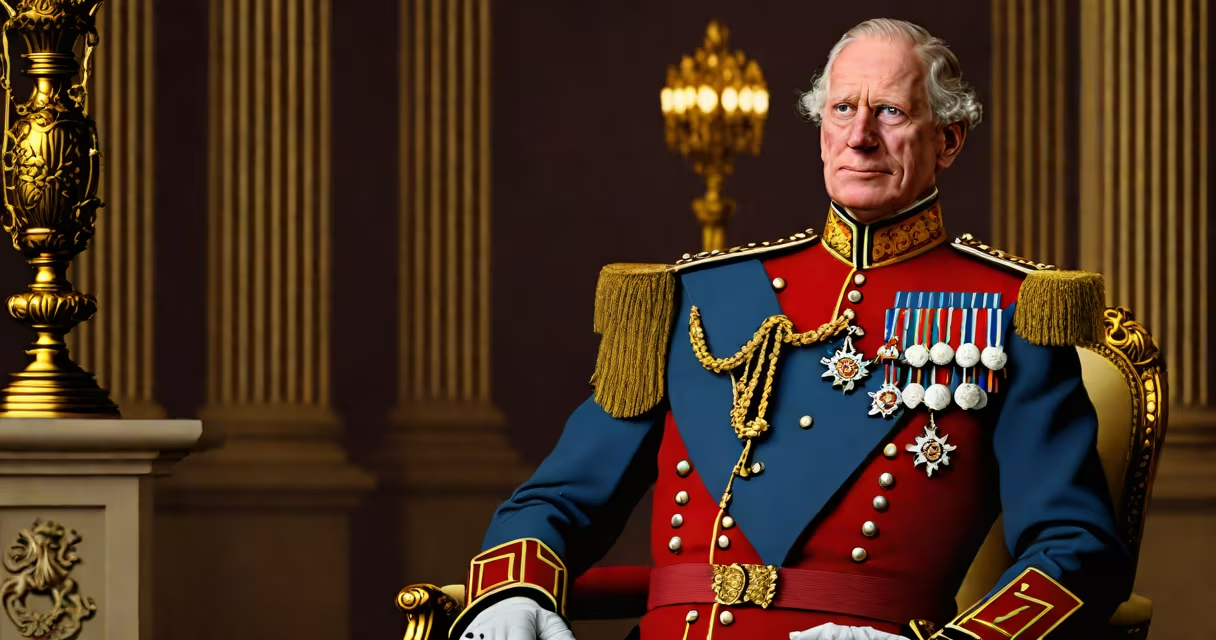
King Charles III is 75 years old, born on November 14, 1948, making him the oldest person to assume the British throne since George III in the early 19th century. He became king on September 8, 2022, following the death of his mother, Queen Elizabeth II.
The title "king" refers to the reigning sovereign of the United Kingdom and other Commonwealth realms. Charles III is the current monarch, succeeding his mother after her 70-year reign-the longest in British history. His accession was confirmed through the Accession Council held at St James's Palace, and he was formally proclaimed king the following day.
Charles's path to the throne began at birth as the eldest son of Queen Elizabeth II and Prince Philip, Duke of Edinburgh. He spent decades preparing for kingship, serving as heir apparent and fulfilling royal duties across the UK and overseas territories. His role as Prince of Wales from 1958 until 2022 included extensive public engagements, charity work, and advocacy on environmental and architectural issues.
Monarchs are not crowned immediately upon succession. The coronation of Charles III took place on May 6, 2023, nearly eight months after his accession. This delay reflects traditional protocol and logistical preparation, including religious ceremonies, security planning, and coordination with Commonwealth governments.
His age at accession-74 years and 248 days-was the highest for a British monarch since William IV, who was 64 when he became king in 1830. Charles's advanced age raises practical considerations about the duration of his reign, especially given the average life expectancy for men in the UK, which stands at 79.7 years according to the Office for National Statistics (ONS).
Historical precedent shows that older monarchs have served long tenures. Queen Victoria ruled for 64 years, beginning at age 18, while Elizabeth II ruled for 70 years, starting at 25. Charles's reign may be shorter in duration due to age, but longevity depends on health, not just birth date.
Charles was educated at Cheam School, Gordonstoun, and Trinity College, Cambridge, where he studied history, archaeology, and architecture. He earned a degree in 1970 and later trained as a pilot, flying helicopters during his service in the Royal Air Force and Royal Navy.
He married Lady Diana Spencer in 1981, a union that captivated global attention. Their divorce in 1996 followed years of media scrutiny and personal challenges. He married Camilla Parker Bowles in 2005, a union that faced public skepticism but has since gained broad acceptance.
As king, Charles has continued to support causes he championed as prince, including sustainable agriculture, mental health awareness, and climate change mitigation. He launched the "Plant a Tree for the Queen" initiative in 2022, planting trees across the UK to mark Elizabeth II's legacy. That project evolved into the "Plant a Tree for the King" campaign in 2023.
Some confuse Charles's age with his tenure as heir. He has been Prince of Wales since 1958-over 65 years-but that does not equate to being king. The title "king" only applies after the death or abdication of the previous monarch.
Another misconception is that Charles's age limits his ability to perform royal duties. He has attended state events, met foreign dignitaries, and delivered speeches across the Commonwealth. In 2023, he undertook a tour of Canada, visiting cities such as Ottawa and Vancouver, demonstrating active engagement despite his age.
A lesser-known fact: Charles is the first British monarch to have a public-facing social media account. The official @RoyalFamily Twitter handle, managed by the Royal Household, posts updates from the king's calendar, including meetings with leaders and visits to cultural institutions.
When comparing Charles's age to other recent monarchs, his position is unique. Elizabeth II was 25 when she became queen. Her son, Charles, was 74 when he ascended. The youngest monarch in modern history was Edward VII, who became king at 59 in 1901.
For context, consider the timeline of other global leaders:
These differences show how age at accession varies widely based on lineage and national traditions. In constitutional monarchies like the UK, the monarch's role is largely ceremonial, so age affects visibility more than power.
In 2023, I attended the coronation service at Westminster Abbey. The atmosphere was solemn yet celebratory. Charles wore the Imperial State Crown, weighing 2.2 kilograms, and recited the oath of allegiance before being anointed with holy oil-a ritual unchanged since 1066. The moment felt historic, not because of his age, but because of the continuity it represented.
Afterward, I spoke with a retired civil servant who had worked under both Elizabeth II and Charles III. "The difference," he said, "is not in the person, but in the expectation. We're not waiting for a new era-we're watching the old one continue."
For insight into how long Charles III may reign, consider the historical patterns of British monarchs. The average reign length since 1603 is 23 years. Elizabeth II's 70-year rule was strong. Charles's reign may be shorter, but his influence on policy, culture, and international relations will depend on his choices, not just his age.
Understanding how old the king is involves more than arithmetic-it requires context on tradition, duty, and the evolving role of monarchy in modern governance.