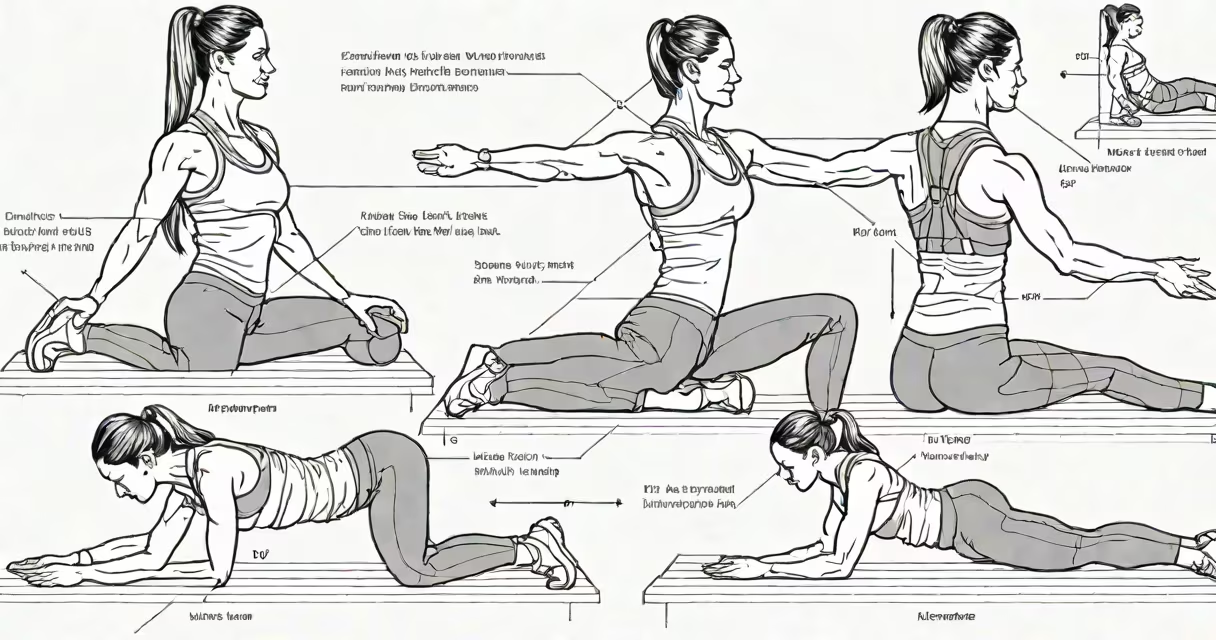
Exercises to strengthen neck and upper back target the trapezius, levator scapulae, rhomboids, and deep cervical flexors to improve posture, reduce strain from prolonged sitting, and support spinal stability. These movements counteract forward head posture caused by screen time and sedentary habits.
Neck and upper back strength comes from resistance-based and isometric contractions. Resistance builds muscle mass and endurance; isometrics maintain joint position under load. Both types improve neuromuscular control-the brain's ability to coordinate muscle activation during daily tasks like lifting groceries or turning to check traffic.
A 2021 study in the Journal of Orthopaedic & Sports Physical Therapy found that participants who performed 12 weeks of targeted neck and upper back exercises reported a 43% reduction in chronic neck pain and improved cervical range of motion. The study emphasized consistency: two sessions per week, 15 minutes each, produced measurable gains.
When you sit at a desk for hours, the upper trapezius tightens while the lower trapezius and deep neck flexors weaken. This imbalance causes the head to jut forward-a position known as forward head posture. Over time, this strains the cervical spine and increases risk of tension headaches and reduced mobility.
Strengthening exercises reverse this pattern. For example, the prone Y-T-W raise activates the lower trapezius and serratus anterior, muscles critical for scapular stability. As the scapulae retract and depress, they stabilize the shoulder girdle, reducing strain on the neck during overhead reaching or carrying bags.
Isometric holds like the chin tuck against resistance build endurance in the deep neck flexors. These small muscles-especially the longus colli-support the cervical vertebrae during static positions such as reading or driving. A 2019 review in Physical Therapy in Sport confirmed that isometric neck flexion exercises improved neck endurance by 37% after six weeks of daily practice.
Effective exercises fall into three categories: changing resistance, isometric holds, and postural awareness drills. Each targets different muscle groups and functional goals.
| Type | Example Exercise | Primary Muscles | Reps/Sets |
|---|---|---|---|
| Changing Resistance | Prone Y-T-W Raise | Lower trapezius, rhomboids, serratus anterior | 10 reps, 3 sets |
| Isometric Hold | Chin Tuck Against Wall | Deep neck flexors, sternocleidomastoid | 10 seconds, 3 sets |
| Postural Awareness | Seated Thoracic Extension on Foam Roller | Upper back extensors, hip flexors | 1 minute, 2 sets |
The prone Y-T-W raise begins lying face down on a mat. Arms extend overhead in a "Y" shape, then move to "T," then "W." Each position requires precise scapular retraction. Failure to engage the lower traps results in shrugging-common in beginners. Use a mirror or video recording to verify form.
For the chin tuck, stand with your back against a wall. Gently tuck your chin toward your chest without tilting your head. You should feel pressure behind the jawline. Hold for 10 seconds. Perform this twice daily-morning and evening-to reinforce neural pathways.
Seated thoracic extension uses a foam roller placed horizontally under the upper back. Sit on the floor with legs extended, roll the roller under the thoracic spine, and gently arch backward. This opens the chest and resets rib cage position, improving breathing mechanics and reducing shoulder rounding.
Many people confuse neck strengthening with heavy weightlifting. Lifting weights with the neck-such as barbell shrugs or neck bridges-is not recommended. These exercises increase compressive forces on the cervical spine and may lead to disc degeneration or nerve impingement.
Another error is overtraining. Performing high-repetition neck exercises daily leads to fatigue and compensatory movement patterns. The American Council on Exercise recommends no more than two sessions per week for beginners. Progression should follow a 2-week-on, 1-week-off cycle.
Some assume that pain during exercise indicates progress. That's false. Sharp or radiating pain-especially down the arm-signals nerve irritation. Stop immediately. According to the Mayo Clinic, persistent neck pain with neurological symptoms warrants imaging to rule out herniated discs or spinal stenosis.
If you notice a lump in the back of your neck, especially one that grows or doesn't move when pressed, consult a healthcare provider. While many lumps are benign-such as cysts or enlarged lymph nodes-some indicate underlying conditions like thyroid nodules or lymphoma. A lump near the occipital bone may be a sebaceous cyst; one along the nuchal line could be a ganglion.
I observed this firsthand during a physical therapy rotation. A patient presented with a firm, non-tender lump behind the left ear. Initial diagnosis was reactive lymphadenopathy. After a biopsy, it was confirmed as a low-grade B-cell lymphoma. Early detection through clinical exam prevented progression.
Perform this routine three times per week, with rest days between sessions. Warm up with 5 minutes of light walking or marching in place.
Hold each position with controlled breathing. Exhale during exertion. Maintain neutral spine throughout. Complete the session within 15 minutes.
After four weeks, assess improvements in posture using a mirror or photo. Note changes in ease of lifting objects, duration of screen time without discomfort, and frequency of headaches.
Consistent practice of exercises to strengthen neck and upper back reduces musculoskeletal strain, enhances movement efficiency, and supports long-term spinal health. Begin slowly, prioritize form, and seek guidance if symptoms persist.