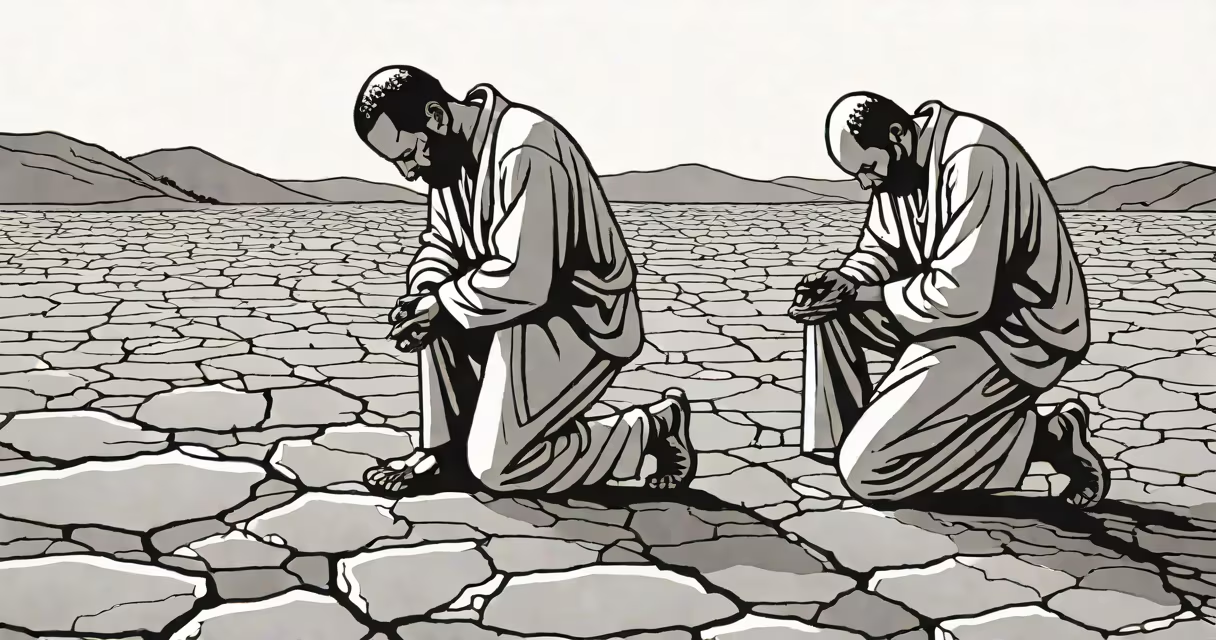
Suffering in the Bible refers to physical pain, emotional distress, or spiritual hardship experienced by individuals or communities under God's sovereignty, often serving redemptive, disciplinary, or prophetic purposes. It appears throughout both the Old and New Testaments as a structure for understanding human vulnerability, divine justice, and ultimate hope.
The concept is not limited to personal hardship. Biblical suffering includes national consequences for sin, such as exile in Babylon (2 Kings 25:8-12), and cosmic dimensions, like the suffering of creation under the curse (Romans 8:22). It is not random. Suffering in the Bible is framed within a narrative of covenant, judgment, and restoration.
Jesus Christ embodies the ultimate expression of suffering in Scripture. He endured betrayal, false accusation, scourging, and crucifixion-not as a victim of fate, but as a willing sacrifice fulfilling God's plan (Isaiah 53:3-12; Philippians 2:8). His suffering was not meaningless; it was redemptive.
Suffering in the Bible operates through several distinct roles: punishment for disobedience, testing of faith, preparation for service, and participation in God's redemptive work. These functions are not mutually exclusive and often overlap.
In the Book of Job, suffering is presented as a test of loyalty. Job loses his wealth, children, and health, yet refuses to curse God. His friends assume suffering results from hidden sin-but God later rebukes them for misrepresenting His character (Job 42:7-8). The story concludes with restoration, affirming that suffering does not imply divine abandonment.
Paul writes that suffering produces perseverance, character, and hope (Romans 5:3-5). This is not passive endurance. It is active discipleship. Christians are called to "rejoice in sufferings" because they are part of a greater transformation (Colossians 1:24).
When Paul was beaten, shipwrecked, imprisoned, and stoned, he did not see these events as defeats. He described them as opportunities to "complete what is lacking in Christ's afflictions" (Colossians 1:24). This is not a claim of adding to Christ's atonement-it reflects the ongoing nature of Christ's mission through His followers.
Biblical suffering varies by context. The following table outlines major categories, their defining features, and representative passages.
| Type | Primary Purpose | Key Passages | Example |
|---|---|---|---|
| Divine discipline | To correct and restore | Hebrews 12:5-11 | God disciplines those He loves, like a father disciplines a child. |
| Prophetic suffering | To convey divine messages | Jeremiah 1:8; Ezekiel 4:4-8 | Jeremiah wore a yoke and walked bound to symbolize Israel's coming captivity. |
| Redemptive suffering | To bring salvation | Isaiah 53:4-6; 1 Peter 2:21-24 | Jesus bore the sins of many, taking punishment on behalf of others. |
| Persecution for righteousness | To strengthen faith and witness | Matthew 5:10-12; Acts 7:54-60 | Stephen, the first martyr, prayed for his killers while being stoned. |
A common misunderstanding is equating suffering with failure. The Bible consistently rejects this. Joseph was sold into slavery, imprisoned, and forgotten-but God used his suffering to save nations (Genesis 50:20). Moses spent forty years in exile before leading Israel out of Egypt. David fled from Saul's wrath for years before ascending the throne.
These stories show that suffering is not a sign of God's absence. It is often the setting where His presence becomes most evident.
Many interpret suffering in the Bible as punishment for specific sins. This view oversimplifies complex narratives. While sin leads to suffering (Genesis 3:17-19), not all suffering results from individual wrongdoing.
Jesus explicitly rejected this equation when asked about a man born blind: "Neither this man nor his parents sinned," Jesus said, "but this happened so that the works of God might be displayed in him" (John 9:3). This challenges the idea that suffering always reflects personal guilt.
Another misconception is that enduring suffering guarantees reward. The Bible does not promise comfort or healing in exchange for endurance. Paul speaks of "the sufferings of this present time" being "not worthy to be compared with the glory that will be revealed in us" (Romans 8:18), but he also endured thorns in the flesh (2 Corinthians 12:7-9), which were not removed despite his prayers.
Even Jesus, in Gethsemane, prayed, "Father, if you are willing, take this cup from me," yet submitted to the Father's will (Luke 22:42). His suffering was not alleviated-only sanctified.
Consider the crucifixion of Jesus. It was the culmination of suffering in the New Proof. Roman flogging left Him near death. He carried the crossbeam for miles, weakened by blood loss. Nails pierced His hands and feet. He died in agony.
Yet this suffering had purpose. Paul wrote that Christ "was delivered over to death for our sins and was raised for our justification" (Romans 4:25). The suffering was not accidental. It was foretold in Isaiah 53:7-9: "He was oppressed and afflicted, yet he did not open his mouth."
Jesus' suffering fulfilled prophecy, exposed human sin, and opened access to God. The resurrection confirms that suffering does not have the final word. Death was defeated.
When I stood at the Church of the Holy Sepulchre in Jerusalem, I saw the stone where tradition holds Jesus was laid. The air was still. The weight of that moment-of a man who suffered, died, and rose-was tangible. Not a triumph of power, but of love.
Defining suffering in the Bible is not academic. It shapes how believers respond to pain, injustice, and loss. It informs pastoral care, evangelism, and ethical decisions.
For example, when someone faces illness, grief, or trauma, the biblical model offers a structure: suffering is real, God sees it, and He walks through it with the believer. It does not remove pain-but it transforms meaning.
Scripture does not promise immunity from suffering. It promises presence in suffering. "I am with you always," Jesus said, "to the very end of the age" (Matthew 28:20).
Understanding suffering in the Bible prevents both fatalism and false prosperity theology. It grounds hope in God's character, not in outcomes. It invites trust, not performance.
Suffering in the Bible is not a puzzle to solve. It is a lens through which to see God's faithfulness, justice, and love. It is not the end of the story. It is part of the plot.