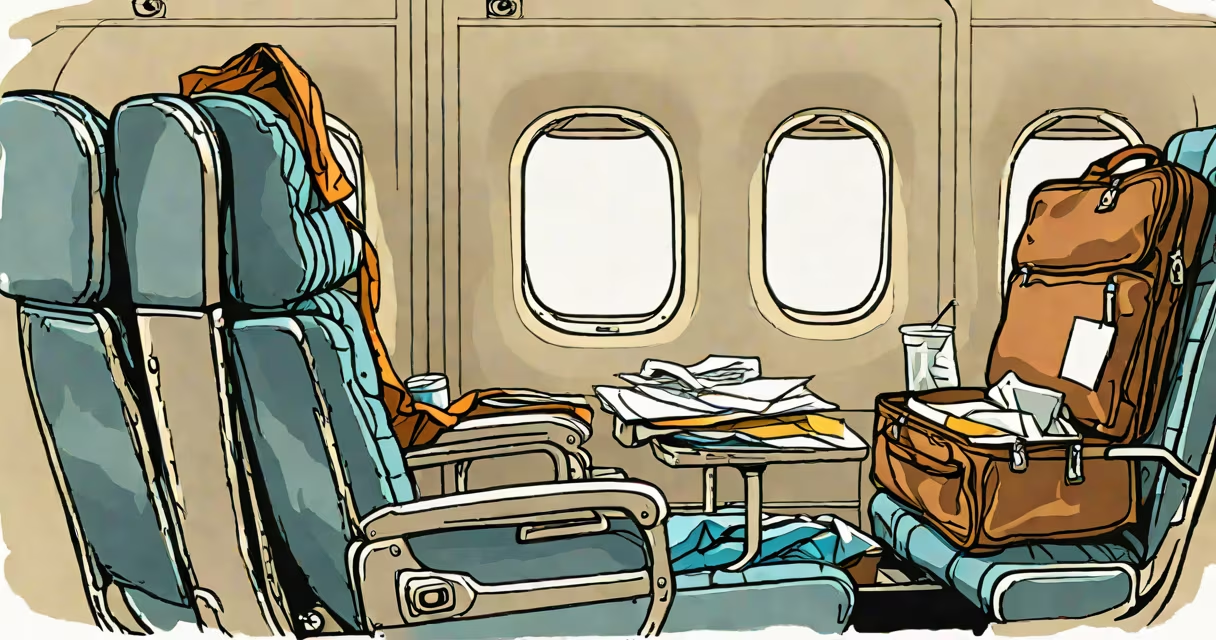
A cabin bag in flight is a personal carry-on suitcase or bag that passengers bring into the airplane cabin, typically stowed under the seat in front or in the overhead compartment. Most airlines allow one cabin bag per passenger, subject to size and weight limits set by the carrier and aviation authorities.
Cabin bags are designed to fit within standard aircraft storage spaces. They must not exceed 22 x 14 x 9 inches (56 x 36 x 23 cm) in most cases, though exceptions exist based on airline policy and route type. This size ensures compatibility across major carriers such as Delta, American Airlines, United, and Lufthansa. Bags exceeding these dimensions may be denied boarding or require checked baggage fees.
The Federal Aviation Administration (FAA) and International Air Transport Association (IATA) do not mandate specific cabin bag sizes, but they enforce safety standards for stowage and access during emergencies. Airlines define their own rules, which are often stricter than minimum industry guidelines. For example, while IATA recommends a maximum volume of 30 liters for carry-ons, many U.S. domestic flights require bags under 22 x 14 x 9 inches to avoid gate checks.
Passengers board with their cabin bag already in hand. Flight attendants visually inspect bags at the jet bridge or gate to confirm compliance with size and weight rules. If a bag exceeds the allowed dimensions, it may be transferred to the cargo hold at no extra charge on domestic flights-but this is not guaranteed. On international routes, oversized bags are often rejected outright and require rebooking or paying for checked baggage.
Once onboard, the cabin bag must fit under the seat in front or in the overhead bin. Overhead bins have limited space, especially on narrow-body aircraft like the Boeing 737 or Airbus A320. During peak travel times, such as holidays or summer months, bins fill quickly. Passengers who arrive late may find no room for their bag, leading to gate-checking or being asked to check the bag at the counter.
For example, a traveler flying from New York to Los Angeles on Delta Airlines brought a 24-inch rolling suitcase. Despite being labeled "carry-on," it was too wide for the overhead bin. The gate agent asked the passenger to check the bag at the counter, resulting in a $35 fee. This outcome highlights that airline-specific rules take precedence over general size guidelines.
To qualify as a cabin bag in flight, a piece of luggage must meet three criteria: size, weight, and accessibility. Size is measured in linear inches (sum of length + width + height). Most U.S. domestic carriers cap this at 45 linear inches (22 + 14 + 9 = 45). International flights may apply different standards-some European carriers allow up to 55 linear inches for economy class.
Weight limits vary widely. While many domestic flights permit up to 32 pounds (14.5 kg), some low-cost carriers impose lower caps-such as 22 pounds (10 kg)-and charge extra for overweight bags. The Transportation Security Administration (TSA) does not regulate carry-on weight, but airlines enforce it during boarding. Exceeding weight limits can result in mandatory check-in or additional fees.
Accessibility matters too. A bag must be easy to lift and stow without assistance. Rolling suitcases with large wheels and sturdy handles are preferred. Soft-sided duffels or backpacks are acceptable if they maintain structural integrity and don't collapse during handling. Bags with detachable wheels or external pockets may fail inspection if they create hazards during turbulence or emergency evacuation.
| Airline | Max Size (inches) | Max Linear Inches | Weight Limit (lbs) |
|---|---|---|---|
| American Airlines | 22 x 14 x 9 | 45 | 32 |
| Delta | 22 x 14 x 9 | 45 | 32 |
| United | 22 x 14 x 9 | 45 | 32 |
| British Airways | 23 x 18 x 10 | 51 | 23 |
| Emirates | 23 x 18 x 10 | 51 | 33 |
These differences show the importance of checking airline-specific policies before travel. Even small deviations-like a 1-inch difference in width-can trigger a gate check.
Many travelers assume that any bag labeled "carry-on" automatically qualifies as a cabin bag in flight. This is false. Some manufacturers label soft-sided bags as "carry-on" to imply compliance, but they may exceed size limits. A 23-inch duffel bag from a popular brand failed inspection on a United flight because its width measured 15 inches-just over the 14-inch limit.
Another frequent error is assuming that liquids in a cabin bag follow the same rules as checked baggage. The TSA allows liquids in containers of 3.4 ounces (100 ml) or less, packed in a single clear quart-sized bag. This rule applies to all carry-ons, regardless of destination. Violations result in removal of the item at security screening. A passenger once had a 4-ounce bottle of perfume confiscated at Chicago's O'Hare Airport despite claiming it was "for personal use."
One lesser-known fact: some airlines allow a second small personal item, such as a laptop bag or purse, to the main cabin bag. This is not universal. Southwest Airlines permits one carry-on and one personal item (e.g., tote, backpack) free of charge. Other carriers charge for the second item unless it's purchased with a premium ticket.
I flew from Seattle to Miami on Alaska Airlines with a 21 x 14 x 9 inch roller suitcase. The bag weighed 28 pounds-within the 32-pound limit. I packed a 12-ounce bottle of shampoo in a sealed plastic bag, along with a 3.4-ounce toothpaste tube. All liquids were placed in a single clear ziplock bag, fitting easily in my carry-on pocket.
At security, I removed the bag from my carry-on and placed it in the bin. The screener scanned it without issue. Boarding began 30 minutes later. I stowed the bag under the seat in front of me with no problems. The flight was uneventful, and I retrieved the bag upon arrival. No fees, no delays.
Understanding what constitutes a cabin bag in flight prevents last-minute stress and avoids unexpected fees. Always verify size, weight, and liquid rules based on your airline and route. A well-prepared cabin bag streamlines travel and enhances the flying experience.