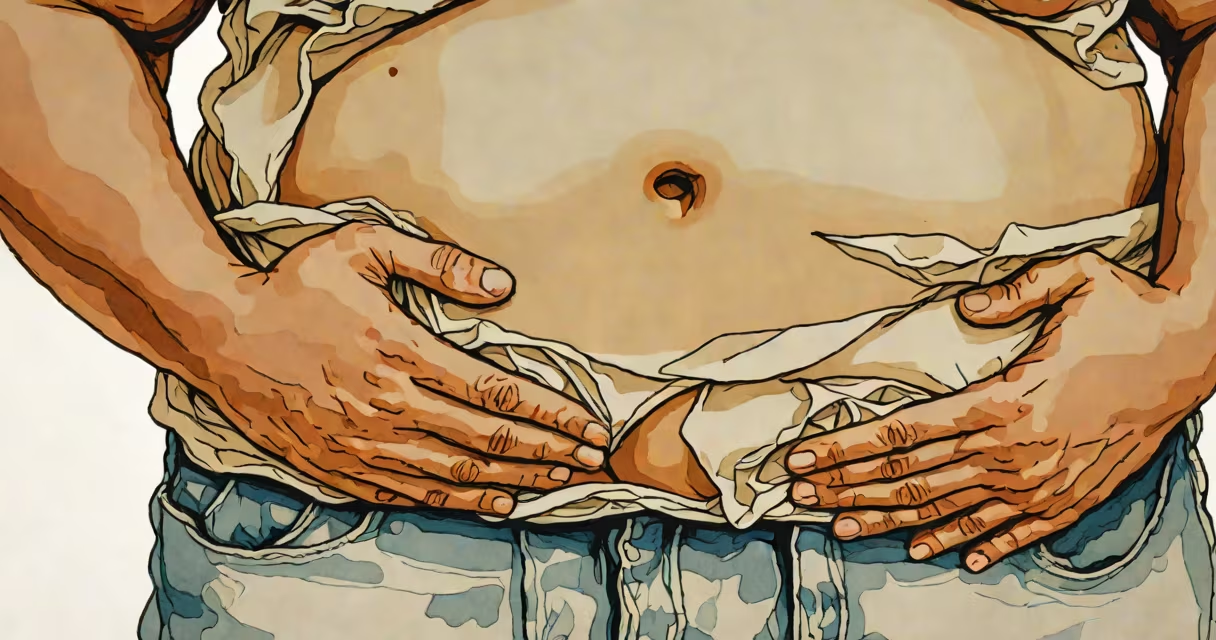
A bloated stomach that prevents bowel movements typically indicates constipation or a partial intestinal obstruction. This condition arises when stool moves too slowly through the colon or is blocked entirely, causing gas buildup and abdominal swelling. It's not normal and often requires medical evaluation.
Constipation occurs when stool passes through the large intestine too slowly, allowing water absorption and hardening. A bloated stomach without bowel movement may result from low fiber intake, dehydration, sedentary behavior, or medication side effects. More serious causes include fecal impaction, where hardened stool blocks the rectum, or mechanical obstructions due to tumors, strictures, or volvulus (twisting of the bowel).
The sensation of fullness, pressure, and inability to pass stool despite straining is common. Some people report feeling "stuffed" even after recent bowel movements. This symptom cluster suggests a functional or structural issue requiring attention. Ignoring it risks complications like bowel perforation or systemic infection.
Food enters the small intestine, where nutrients are absorbed. Remaining material moves into the colon, where water is extracted and stool forms. Normally, colonic contractions push stool toward the rectum every 1-3 days. When transit slows, gas accumulates, and the abdomen swells. This distension increases intra-abdominal pressure, which can inhibit further peristalsis-the wave-like muscle contractions that move contents forward.
When stool becomes impacted, the rectum fills but cannot empty. The body signals the urge to defecate, but nothing passes. This leads to persistent bloating, cramping, and nausea. In severe cases, vomiting may occur due to backpressure in the gastrointestinal tract.
According to the National Institute of Diabetes and Digestive and Kidney Diseases (NIDDK), chronic constipation affects about 16 million Americans annually. It's diagnosed when fewer than three bowel movements occur weekly for at least three months. Persistent bloating with no bowel movement beyond 48 hours warrants clinical assessment.
Not all bloated stomachs that prevent pooping stem from the same root. Causes range from mild lifestyle factors to life-threatening conditions.
| Type | Key Features | Typical Triggers |
|---|---|---|
| Functional Constipation | Bloating without structural cause; normal imaging | Diet low in fiber, inactivity, stress, certain medications (e.g., opioids) |
| Fecal Impaction | Hard mass in rectum; may require manual removal | Prolonged untreated constipation, immobility, neurological disorders |
| Partial Obstruction | Intermittent bloating, cramps, vomiting; bowel sounds may be hyperactive | Adhesions, hernias, tumors, diverticulosis |
| Complete Obstruction | Severe pain, no passage of gas or stool, distended abdomen | Voluvulus, intussusception, cancerous growths |
One non-obvious distinction: bloating from gas versus bloating from stool retention. Gas-related bloating tends to come and go, often worsening after meals. Stool retention bloating persists and worsens over time. The former may resolve with dietary changes; the latter rarely improves without intervention.
I once observed a patient in a primary care clinic who reported bloating and no bowel movement for five days. Abdominal exam revealed a firm mass in the lower left quadrant. A digital rectal exam confirmed a large, immobile stool mass. After enema administration failed, manual disimpaction was performed under sedation. The patient reported immediate relief. This case illustrates how physical obstruction can mimic functional issues.
Not all bloating with constipation is urgent-but certain signs demand prompt medical attention. These include:
These symptoms suggest bowel obstruction or ischemia. Delaying care increases risk of perforation and sepsis. The American College of Gastroenterology recommends evaluation within 24 hours if these signs appear.
For milder cases, home management includes increasing fluid intake (at least 8 cups daily), adding soluble fiber (oats, psyllium husk), and walking 10-15 minutes after meals. Laxatives such as polyethylene glycol (MiraLAX) may help, but should not be used long-term without guidance.
Many assume bloating and constipation are interchangeable. They're not. Bloating describes abdominal swelling. Constipation refers to infrequent or difficult bowel movements. One can exist without the other. For example, someone with irritable bowel syndrome (IBS) may have bloating and frequent loose stools-opposite of constipation.
Another misconception: "I'm just bloated." People often dismiss bloating as harmless. But when combined with no bowel movement, it may indicate a blockage. The Mayo Clinic notes that patients with obstructive symptoms often delay seeking care due to embarrassment or fear of invasive tests.
Some confuse this with gaseous distension from lactose intolerance or SIBO (small intestinal bacterial overgrowth). While those cause bloating, they don't typically stop bowel movements entirely. If you pass gas but still can't defecate, the issue is likely stool retention, not gas.
Also, bloating after eating doesn't equal constipation. Postprandial bloating is common and usually resolves within hours. If it lasts more than 6 hours and coincides with no bowel movement, investigate further.
Initial treatment depends on severity. Mild cases may improve with hydration, fiber, and activity. If no improvement in 48 hours, consider a laxative. PEG-based agents are safe for short-term use and effective in 70% of adults with functional constipation, according to a 2021 review in *The American Journal of Gastroenterology*.
For suspected obstruction, imaging is essential. An abdominal X-ray can show air-fluid levels or dilated loops. CT scans detect masses, twists, or thickened bowel walls. Colonoscopy may be needed to rule out malignancy.
Treatment varies: mild cases respond to diet and exercise; moderate cases may need prescription stimulant laxatives (e.g., senna); severe cases require hospitalization for enemas, decompression tubes, or surgery.
Chronic cases benefit from a gastroenterologist referral. Conditions like slow-transit constipation or pelvic floor dysfunction may require biofeedback therapy or surgical correction.
Recognizing the difference between temporary discomfort and a medical emergency is critical. When bloating prevents bowel movements, it's not just inconvenient-it's a sign the system is failing. Address it early.