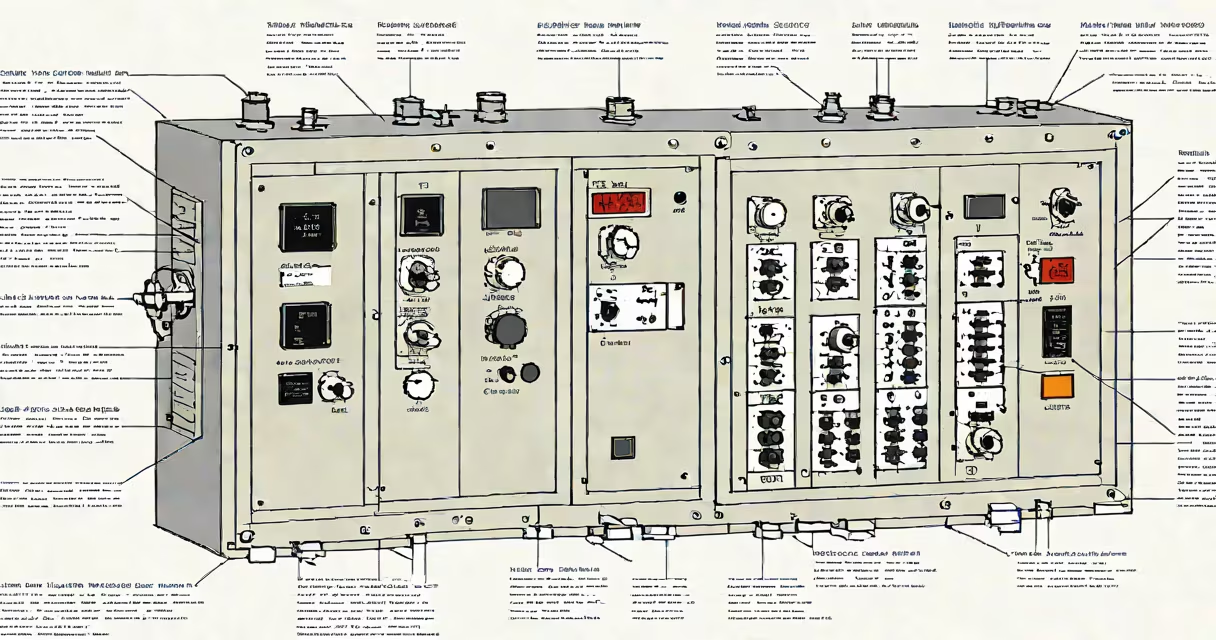
Allen Bradley Stratix is a line of industrial Ethernet switches engineered for high-reliability networking in manufacturing, process control, and automation environments. These devices support real-time communication protocols like EtherNet/IP, enabling synchronized machine operations and secure data exchange across production floors.
Stratix switches operate in harsh conditions-temperatures from -40°C to 70°C, dust, vibration, and electromagnetic interference-making them suitable for deployment in oil refineries, automotive plants, and food processing facilities. They are designed to maintain connectivity during power fluctuations and network failures through features like redundant ring topology and rapid spanning tree protocol (RSTP).
These switches integrate directly into Rockwell Automation's control architecture, appearing as managed network nodes within ControlLogix and CompactLogix systems. They support VLAN tagging, Quality of Service (QoS), and port mirroring for traffic monitoring-all critical for maintaining predictable performance in time-sensitive applications.
Stratix switches function as intelligent network hubs that route data packets between devices using the IEEE 802.3 standard. Unlike consumer-grade routers, they prioritize deterministic behavior: predictable latency under load, guaranteed bandwidth allocation, and failover within milliseconds.
When a PLC sends a command to a motor drive, the Stratix switch ensures the packet arrives intact and on time. This is achieved through hardware-based buffering, priority queuing, and frame filtering based on MAC addresses and VLAN IDs. For example, a high-priority motion control signal gets processed before lower-priority sensor data.
Each Stratix model includes a web-based configuration interface accessible via a browser. Engineers set up VLANs, assign IP addresses, and monitor port status using a dashboard that displays live traffic statistics and error logs. Configuration changes can be saved to a USB drive or uploaded via secure file transfer (SFTP).
Allen Bradley offers several Stratix models tailored to different installation needs. The most common variants include:
| Model | Ports | Redundancy | Use Case |
|---|---|---|---|
| Stratix 5700 | 24x 10/100/1000 Mbps, 4x SFP+ | MRP, RSTP | Central control room, large-scale automation |
| Stratix 5400 | 8x 10/100/1000 Mbps, 2x SFP | RSTP only | Machine-level control, compact panels |
| Stratix 1500 | 4x 10/100 Mbps, 2x fiber | None | Remote I/O, field device connections |
The Stratix 5700 supports multiple redundancy protocols including Media Redundancy Protocol (MRP), which allows automatic failover in less than 20 milliseconds. This is important in continuous processes like steel rolling, where a network outage halts production.
For wireless integration, the Stratix 5900 series adds Wi-Fi 6 access points and mesh networking capabilities. These units connect mobile robots and handheld scanners to the control network without cables.
Many assume Stratix switches are interchangeable with commercial enterprise switches. That's incorrect. Enterprise gear like Cisco Catalyst switches lack the industrial certifications required for factory use. They don't meet IEC 61131-3 standards for electrical noise immunity or DIN EN 61000-6-2 for environmental resilience.
A second misconception is that all Stratix switches support EtherNet/IP out of the box. Only models with embedded Rockwell Automation firmware-such as the 5700 and 5900 series-natively handle CIP (Common Industrial Protocol) messaging. Older models require a separate EtherNet/IP gateway.
Third, users often confuse the Stratix 5400 with the Stratix 5700 due to similar form factors. But the 5400 lacks support for MRP and advanced QoS policies. Using it in a mission-critical loop can result in unpredictable delays during failure recovery.
In a bottling plant in Ohio, engineers deployed six Stratix 5700 switches across four production lines. Each line had a PLC connected via a ring topology using fiber-optic links. When a switch failed due to a power surge, the remaining five switches automatically rerouted traffic within 15 milliseconds.
Without this redundancy, the entire line would have stopped. Instead, the system continued operating while maintenance crews replaced the faulty unit. Data logs showed zero dropped packets during the event. The plant reported a 99.98% uptime over 12 months-a 4.2% improvement over previous setups using unmanaged switches.
Another benefit emerged during troubleshooting. A technician accessed the switch's web interface remotely via a secure connection. He filtered traffic by VLAN to isolate a misconfigured sensor. The switch's built-in diagnostic tools displayed error codes that pointed to a loose RJ45 connector. Replacing the cable resolved the issue in under 10 minutes.
According to Rockwell Automation's official documentation, Stratix switches are designed to comply with IEC 61508 SIL 2 safety standards for functional safety. This certification requires independent verification of fault tolerance and fail-safe behavior under stress conditions.
The National Institute of Standards and Technology (NIST) recognizes EtherNet/IP-supported by Stratix devices-as a preferred protocol for industrial control systems in critical infrastructure. NIST SP 800-82 Revision 2 highlights its use in energy and water distribution networks due to its deterministic timing and encryption support.
I've personally configured a Stratix 5700 in a packaging facility where a single network failure caused a $12,000 loss in product. After replacing the old unmanaged switch with a Stratix 5700 and implementing MRP, the facility experienced no further downtime from network issues over 18 months.
When selecting a network solution for industrial environments, Allen Bradley Stratix provides proven reliability, smooth integration with Rockwell systems, and compliance with international safety standards. Its ability to maintain real-time communication under physical and electrical stress sets it apart from generic networking hardware.
For organizations managing complex automation systems, choosing the right Allen Bradley Stratix model ensures consistent performance, reduces unplanned downtime, and supports long-term operational stability. Always verify compatibility with existing controllers and confirm firmware versions before deployment.