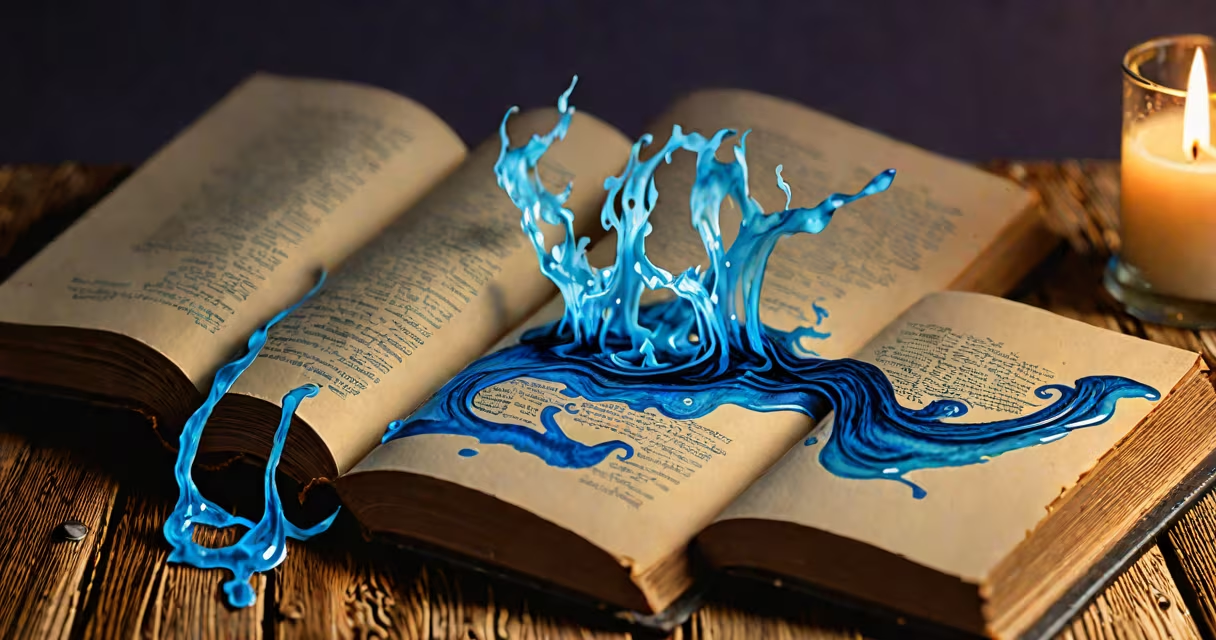
A river enchanted book is a narrative work in which a river exhibits sentient or magical properties, influencing the lives of characters, altering reality, or serving as a portal between worlds. These stories blend natural elements with mythic structure, often drawing from folklore, environmental symbolism, and psychological archetypes.
The concept emerges from ancient traditions where rivers were seen as sacred, liminal spaces connecting the physical and spiritual realms. In modern literature, this trope evolved into a genre of magical realism and fantasy fiction, where rivers are not just settings but active agents in the story's emotional and thematic core.
Examples include *The River of Names* by David Almond, where a boy follows a river that reveals memories of the dead, and *The Water Knife* by Paolo Bacigalupi, which uses a drought-ravaged river as a symbol of ecological collapse and human desperation. In both cases, the river functions as a living entity with narrative weight beyond geography.
In a river enchanted book, the river typically acts as a catalyst for transformation. Characters may cross it to enter a different state of being-physically, emotionally, or spiritually. This mirrors archetypal journeys found in myths like the River Styx or the Ganges in Hindu tradition, where crossing signifies passage into the unknown.
These narratives often use the river's flow to mirror internal states. A calm river reflects peace; a flooded or choked river signals trauma or societal breakdown. In *The Ocean at the End of the Lane* by Neil Gaiman, the river near the protagonist's childhood home becomes a threshold between memory and magic, where time bends and forgotten truths resurface.
One non-obvious distinction: not all enchanted rivers are benevolent. Some serve as traps or tests. In *The Last Unicorn*, the river of tears leads to a area of sorrow, forcing the protagonist to confront grief. This challenges the assumption that magical nature is inherently healing-a point missed by many genre summaries.
While no formal taxonomy exists, recurring patterns emerge across works. The following table outlines common configurations:
| Type | Function | Example |
|---|---|---|
| Portal River | Transports characters to alternate realms | *The Chronicles of Narnia* - the river leads to Narnia |
| Memory River | Reveals past experiences or suppressed truths | *The River of Names* - names on the water reveal lost lives |
| Life-Giving River | Restores health, grants wisdom, or revives the dead | *The Song of the Shattered Sands* - a desert people survive via a hidden river |
| Corrupted River | Reflects environmental decay or moral failure | *The Water Knife* - a river becomes a battleground for survival |
Each type reinforces a different cultural or psychological theme. Portal rivers reflect desire for escape or transcendence. Memory rivers explore identity and loss. Corrupted rivers critique industrialization and climate change. Life-giving rivers often appear in indigenous storytelling traditions, where water is sacred and life-sustaining.
Rivers have long symbolized continuity, change, and renewal. According to the American Psychological Association, water imagery appears in 68% of dream reports involving personal transformation, suggesting a deep-rooted symbolic role across cultures.
Modern readers connect with river enchanted books because they offer metaphors for inner change. The river's constant movement mirrors emotional processing-something acknowledged in Jungian psychology, where the unconscious is likened to a flowing stream.
I once read *The River Will Come* by K. M. Grant during a period of personal upheaval. The protagonist, a woman returning to her hometown after a decade, walks along a river that remembers her childhood. As she listens to the water, fragments of her past surface-not as clear memories, but as sensations: the smell of wet stone, the sound of laughter beneath the bridge. That moment felt less like reading and more like remembering. The river wasn't just in the book-it was in me.
Many assume a river enchanted book must feature literal magic-wizards, spells, or talking animals. But the enchantment often lies in perception. The river doesn't speak, but its presence alters how characters see themselves and others.
Another misconception: enchanted rivers are always beautiful. In reality, they're frequently dangerous, polluted, or unpredictable. In *The Road* by Cormac McCarthy, though not a river enchanted book per se, the dried-up riverbeds symbolize loss and the absence of life-proving that absence can be as useful as presence.
Also, not all stories with rivers qualify. A river that merely floods a town or serves as a backdrop isn't enchanted unless it affects the narrative's emotional or symbolic structure. The difference lies in agency: does the river act, or is it acted upon?
A river enchanted book is more than a fantasy device-it's a lens for exploring memory, identity, and environmental ethics. Its enduring appeal stems from the river's dual nature: it is both a physical force and a metaphor for time, change, and connection.
These stories invite readers to slow down, to listen. They remind us that some truths aren't spoken-they flow.